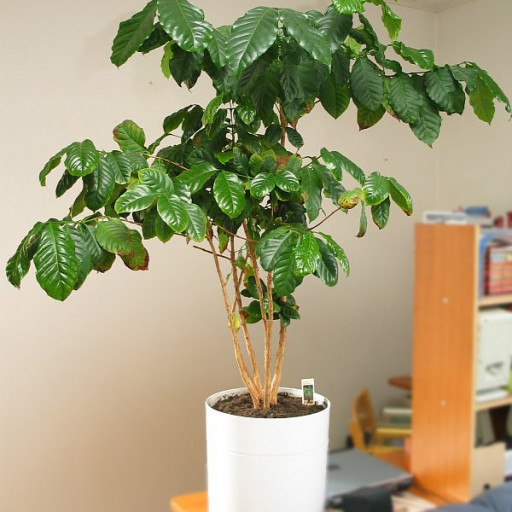
Plant Overview
Often called the "Mountain Coffee" or "Arabica Coffee," this lush evergreen is the source of about 60% of the world’s coffee production. Originating from the misty highlands of Ethiopia, it has evolved from a wild forest shrub into one of the most beloved houseplants for those who want a piece of the tropics—and their morning caffeine—right in their living room.
🔍 How to Identify
- 🍃 Glossy Foliage: The leaves are its most striking feature; they are deep emerald green, highly reflective (waxy), and feature distinctively "wavy" or ruffled margins.
- 🌸 Star-Shaped Blooms: When mature (usually after 3–4 years), it produces clusters of small, snow-white flowers that emit a heavy, sweet fragrance reminiscent of jasmine.
- 🍒 Coffee Cherries: Following the flowers, small green berries appear. Over several months, these ripen into a brilliant "pulp" red, each containing two coffee beans (which are actually the seeds).
🏡 In Your Garden & Home
- ☁️ Filtered Light Lover: In the wild, Arabica grows under the canopy of larger trees. In your home, it prefers bright, indirect light. Direct midday sun can actually "scorch" the leaves, turning them brown and crispy.
- 💧 Humidity is Key: Because it hails from cloud forests, it thrives in high humidity. If the air is too dry, the leaf tips will turn brown. It loves being grouped with other plants or sitting near a humidifier.
- 🪴 Acidic Soil: This plant prefers a "sour" soil (low pH). Using a peat-based mix or adding a little organic compost helps mimic the volcanic soils of its ancestral home.
⚠️ Safety & Toxicity
- 🐾 Toxic to Pets: While we love the caffeine kick, it is dangerous for cats and dogs. Ingesting the leaves, stems, or raw beans can lead to caffeine toxicity, causing rapid heart rate and tremors.
- 👶 Child Safety: Keep the bright red berries out of reach of curious children. While not "poisonous" in the traditional sense, the concentrated caffeine in the seeds is far too potent for little ones.
✨ Fun Fact
According to popular legend, the energizing properties of Coffea arabica were first discovered by an Ethiopian goat herder named Kaldi. He noticed his goats became so energetic after eating the red berries that they "danced" and refused to sleep at night!

Detailed Care Instructions
Yes! Coffee plant is a super easy plant to grow. With the right light, water, and humidity, it's a welcome addition to your home.
How fast does coffee plant grow?
Coffee plant takes three to five years to reach maturity.
Can coffee plant grow indoors?
Absolutely! While when planted outdoors a coffee plant can reach 6-feet tall, most indoor growers prune them so they stay within a manageable size of 1 to 2 feet.
| Color | White |
| Soil Ph | Acidic To Neutral |
| Humidity | Normal |
| Lighting | Part Sun |
| Toxicity | Poisonous |
| Soil Type | Rich And Moist |
| Bloom Time | Spring |
| Difficulty | Medium |
| Plant Type | Evergreen Perennial |
| Hibernation | Cold Period |
| Mature Size | 6 Feet Tall And 3 Feet Wide |
| Native Area | Tropical Africa And Tropical Asia |
| Temperature | 18°C - 25°C |
| Sun Exposure | Bright, Indirect Light |
| Hardiness Zones | 9 To 11 |
Growing Coffea Arabica plants requires the right conditions and care to thrive. Here are some steps to help you grow Coffea Arabica:
- Choose the right location: Coffea Arabica plants prefer a warm, tropical climate with temperatures between 60°F and 70°F (15°C to 24°C). Select a spot with bright, indirect sunlight, away from strong drafts or cold air.
- Soil preparation: Coffea Arabica plants prefer well-draining soil with a pH range between 6 and 6.5. Prepare the soil by mixing compost or organic matter to improve its fertility and drainage.
- Planting: Coffea Arabica is usually grown from seeds or seedlings. Plant the seeds or seedlings in small pots, about 6 inches deep, filled with well-draining soil. Ensure the pots have drainage holes to prevent waterlogging.
- Watering: Keep the soil consistently moist but not waterlogged. Water when the top inch of soil feels dry to the touch. Avoid overwatering as it can lead to root rot and other problems.
- Fertilization: Fertilize your Coffea Arabica plant every 2-3 months with a balanced, water-soluble fertilizer. Follow the instructions on the fertilizer packaging for the appropriate dosage.
- Pruning: Regularly prune your Coffea Arabica plant to maintain its shape and encourage new growth. Trim any dead or diseased branches, as well as any overcrowded or crossing branches.
- Pests and diseases: Keep an eye out for common pests like aphids, mealybugs, and spider mites. Treat infestations promptly with organic insecticides or by using natural pest control methods. Coffea Arabica is also susceptible to fungal diseases like coffee leaf rust, so monitor the plant carefully and treat any signs of disease.
- Harvesting: Coffea Arabica plants typically start producing beans after three to five years. Ripe coffee cherries should be harvested by hand when they turn a deep red or purple color. The cherries can then be processed to extract the coffee beans within.
Remember that growing Coffea Arabica plants can be challenging, especially outside their native regions. Be patient and attentive to the plant's needs, and enjoy the process of growing your own coffee!

Place in a window with dappled sun or a spot in the middle of a room. Or directly in a window facing west or east.

To water this plant, ensure that the soil is completely dry before watering it thoroughly. Avoid watering the leaves and instead water at the soil level, gradually adding water to ensure it is being absorbed. Make sure the pot has proper drainage to prevent root rot. Watering frequency may vary depending on the temperature and humidity of the area.
To fertilize this plant, use a balanced fertilizer with equal amounts of nitrogen, phosphorus, and potassium. Apply the fertilizer once a month during the growing season, which is typically from spring to fall. Only apply the fertilizer to moist soil, as applying it to dry soil can burn the plant's roots. Be sure to dilute the fertilizer according to package instructions and avoid over-fertilizing, as this can harm the plant.
The Coffea Arabica plant prefers to grow in a specific soil type that is well-draining and acidic, with a pH range of 5.0 to 6.0. The soil should be rich in organic matter, but not too dense or compact. It is important to avoid using soil mixes that contain high levels of peat moss, as this can prevent proper drainage and lead to root rot. Instead, a blend of sand, perlite, and a high-quality potting mix is ideal for creating the perfect soil environment for the Coffea Arabica plant to thrive. Additionally, the plant requires regular fertilization with a balanced liquid fertilizer to promote healthy growth and successful fruit production.
To propagate this plant, the first step is to carefully remove a stem from the parent plant, taking care not to damage the roots or leaves. The stem should be at least 4-6 inches long and have a few leaves attached.
Next, remove the bottom leaves from the stem so that there are no leaves touching the soil or water. This will prevent the stem from rotting.
If propagating in soil, make a small hole in the soil with a pencil or your finger, and gently insert the stem. Pack the soil around the stem to hold it in place.
If propagating in water, fill a glass or jar with water and place the stem in the water, making sure that the bottom of the stem is submerged. Change the water every few days to keep it fresh.
In both cases, place the newly propagated plant in a warm, bright location with indirect sunlight. Water the soil or change the water regularly to keep the plant hydrated.
After a few weeks, the stem should begin to grow roots. Once the roots are established, the new plant can be transplanted into a larger pot with soil, or into the ground if growing outdoors.
Common pests of the coffee include Scale insect, mealybugs, spider mites. Make a habit of checking your coffee frequently for pests so that any infestations can be caught and managed early.








