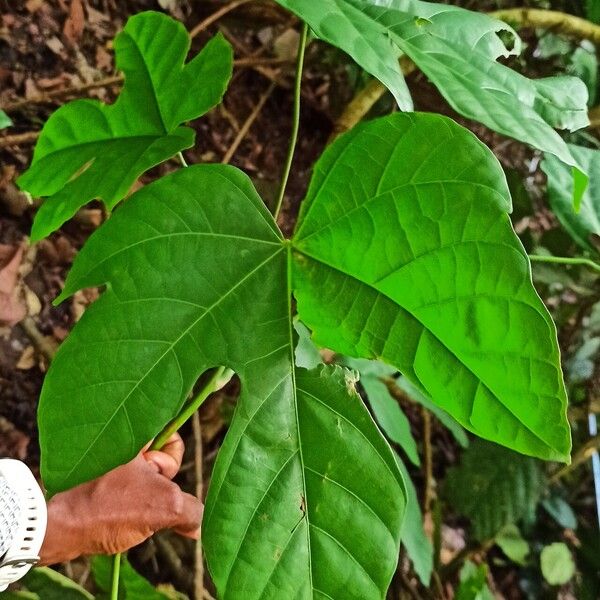
Plant Overview
Commonly known as the Red Cola or Monkey Cola, Cola lateritia is a striking tropical tree that hails from the lush rainforests of West and Central Africa. While its famous cousins provide the caffeine for world-renowned soft drinks, this species is celebrated for its stunning, star-shaped red fruits and its impressive, architectural foliage. In its native habitat, it’s a vital part of the ecosystem, providing food for forest dwellers and shade for the understory.
🔍 How to Identify
- 🍃 The Leaves: Look for massive, deeply lobed leaves that can resemble a giant hand or a stylized maple leaf. They are glossy green and can grow quite large, giving the tree a prehistoric, lush appearance.
- 🌸 The Flowers: Unlike many trees, the Red Cola exhibits "cauliflory," meaning its small, creamy-pink flowers grow directly out of the main trunk and older branches rather than at the tips of new twigs.
- 🎒 The Fruit: The most iconic feature is the bright, brick-red fruit pods. These woody follicles usually grow in star-shaped clusters and split open when ripe to reveal large, fleshy seeds.
🏡 In Your Garden
- 🌳 Space Requirements: In the wild, this tree can reach significant heights, so it is rarely kept as a standard houseplant. However, young specimens are sometimes grown in large conservatories or tropical gardens for their dramatic foliage.
- 💧 Humidity and Soil: Because it originates in the rainforest, it thrives in high humidity and deep, nutrient-rich soil. It has a sensitive root system that dislikes being moved, so if you are planting one, choose its "forever home" carefully.
- ☁️ Light Preferences: As a forest-dwelling species, young plants prefer dappled sunlight or partial shade, mimicking the protection of a larger canopy.
⚠️ Safety & Toxicity
- ✅ General Status: Cola lateritia is generally considered non-toxic to humans and is often used in traditional medicine or as a wild food source in Africa.
- ☕ Stimulant Content: Like other members of the Cola genus, the seeds contain caffeine and theobromine. While not "poisonous," ingesting the seeds can cause jitters, increased heart rate, or sleeplessness in pets and small children.
- 🐾 Pet Warning: Keep the seeds away from dogs and cats, as their bodies are much more sensitive to caffeine-like stimulants than humans.
✨ Fun Fact
The genus name Cola is actually the origin of the word "Cola" used in carbonated sodas! While Cola lateritia isn't the primary species used for modern flavoring, its close relatives provided the original "kick" for the world's first cola recipes.

Detailed Care Instructions







