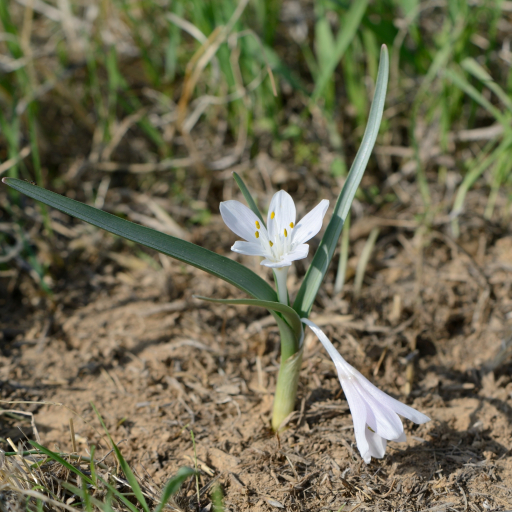
Plant Overview
Known as the Desert Meadow Saffron or Ritchi’s Colchicum, this resilient beauty is a rare jewel of the arid landscapes across the Middle East and North Africa. Emerging when most other plants are dormant, it looks like a cluster of delicate, pale stars dropped onto the dry, sun-baked sand. In its native regions, it is celebrated as a harbinger of the winter rains, signaling a brief but vibrant window of life in the desert.
🔍 How to Identify
- 🌸 The Bloom: Small, star-shaped flowers with six petals that range from pure white to a soft, translucent pink or lilac.
- 🌱 The Foliage: Long, narrow, lance-shaped leaves that are deep green; they often emerge at the same time as the flowers or shortly after, forming a lush tuft near the ground.
- 📏 The Stature: A "stemless" appearance—the flowers grow directly from the underground corm, keeping a low profile to protect themselves from harsh desert winds.
🏡 In Your Garden
- ⏳ Seasonal Rhythm: This plant is a geophyte, meaning it survives the brutal desert summer by retreating into an underground bulb (corm). If you grow it, expect it to "disappear" entirely during the hot months.
- 🏜️ The Dry Spell: It is evolutionarily programmed to hate "wet feet." In a garden setting, it requires incredibly well-draining, sandy soil and should be kept almost completely dry during its summer dormancy to prevent the bulb from rotting.
⚠️ Safety & Toxicity
- 🚫 Status: Highly Toxic. Like all members of the Colchicum family, this plant contains colchicine, a potent alkaloid.
- 🐾 Details: Every part of the plant—especially the bulb—is toxic if ingested. Keep it far away from curious pets and children. Ingestion can cause severe gastrointestinal distress and, in high doses, can be fatal. Always wear gloves when handling the corms if you have sensitive skin.
✨ Fun Fact
While the plant is deadly if eaten raw, the chemical it produces—colchicine—has been used by humans for thousands of years. It was mentioned in ancient Egyptian papyri as a treatment for rheumatism and swelling, and it remains a primary component in modern medicine to treat gout!

Detailed Care Instructions








