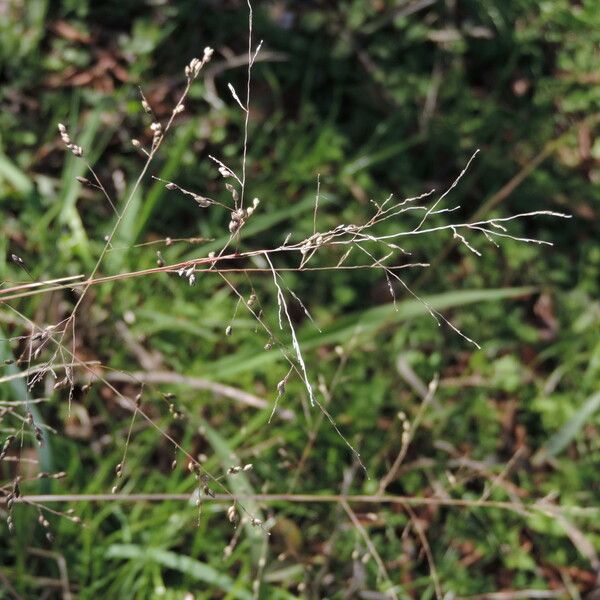
Plant Overview
Known colloquially as the Beaked Panicgrass, this resilient native perennial is a master of the North American wetlands. While it may look like a humble meadow grass at first glance, its architectural seed heads and ability to thrive in "difficult" soggy soils make it a hidden gem for ecological gardening. Its species name, anceps, is Latin for "two-edged," a nod to its uniquely flattened, sword-like stems.
🔍 How to Identify
- 🌾 Flattened Stems: Unlike many grasses with round stalks, the base of this plant is noticeably compressed and two-edged, feeling almost flat if you pinch it between your fingers.
- 🕊️ "Beaked" Spikelets: The tiny green or purple-tinged flowers (spikelets) are slightly curved at the tip, resembling the tiny beak of a bird—hence its common name.
- 🍃 Hairy Junctions: The long, slender leaves often have a distinct "fuzz" or fine hairs where the leaf blade meets the stem, especially on the upper surface.
🏡 In Your Garden
- 💧 The Drainage Solution: If you have a spot in your yard where water "sits" or the soil stays stubbornly muddy, this grass is your best friend. It loves wet feet and helps stabilize soil in rain gardens.
- 🐦 A Songbird Buffet: This isn't just a plant; it’s a bird feeder. In late summer and fall, the heavy clusters of seeds provide a high-energy snack for ground-feeding birds like sparrows and juncos.
- 🌱 Rhizome Growth: It spreads via underground runners (rhizomes). While not aggressively invasive, it will slowly form a dense, lush colony, making it excellent for filling out large, naturalized areas.
⚠️ Safety & Toxicity
- ✅ Safe for All: Beaked Panicgrass is generally considered non-toxic to humans, dogs, cats, and horses.
- 🌾 Hay Sensitivity: While safe, like many ornamental or wild grasses, the dried seed heads can be a minor mechanical irritant to the eyes or nose of curious pets if they run through a dense patch.
✨ Fun Fact
The "Panic" in its name doesn't mean the plant is stressed! It comes from the Latin word paniculum, referring to its branching "panicle" flower clusters. Historically, these grasses were so abundant in the American Southeast that they were often harvested as wild forage for early pioneer livestock.

Detailed Care Instructions

Place in a bright room that is sun drenched almost all day. Or directly in a south-facing window.

Some plants require more regular watering than others, which should be done every few days. It's critical to maintain the soil moist all of the time. The water requirements of the same plant placed in pots with varying sizes will differ. Because the water in the smaller pot evaporates faster than the water in the larger pot, it will require more watering. Regardless of pot size, the surface should constantly be maintained moist.








