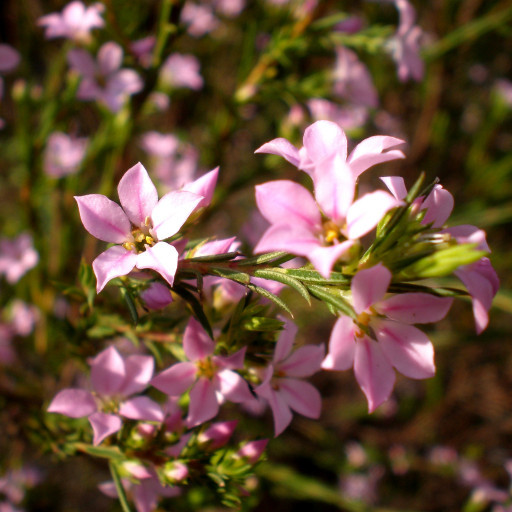
Plant Overview
Often called "Breath of Heaven," Coleonema pulchellum is a soft, cloud-like shrub that seems to glow when in full bloom. Originating from the fynbos of South Africa, it earned its "Confetti Bush" nickname because its tiny, starry flowers look like they’ve been delicately sprinkled over the fine foliage. It is a sensory delight, releasing a sweet, herbal scent whenever a breeze passes through or a hand brushes against it.
🔍 How to Identify
- 🌿 Fine Foliage: The leaves are incredibly thin, needle-like, and soft to the touch, resembling a cross between heather and rosemary.
- 🌸 Starry Blooms: It produces a profusion of tiny, five-petaled flowers, usually in a soft pastel pink or white, that appear at the tips of the branches.
- ☁️ Mounding Habit: It grows in a wispy, rounded shape, often reaching about 3 to 5 feet tall, giving it a "misty" appearance from a distance.
🏡 In Your Garden
- 🌊 Coastal Warrior: This plant is exceptionally hardy against salt spray and wind. It’s a perfect choice for seaside gardens where other delicate-looking plants might wither.
- ✂️ The "Haircut" Rule: To keep it from becoming "leggy" or woody in the center, give it a light shear immediately after its main flowering flush. This encourages that iconic dense, cloud-like shape.
- 🪴 Root Sensitivity: Like many South African species, it has a sensitive root system. It hates being moved once established, so pick its "forever home" carefully in well-drained, slightly acidic soil.
⚠️ Safety & Toxicity
- ✅ Safe Status: Coleonema pulchellum is considered non-toxic to humans, dogs, and cats.
- 🧤 Skin Sensitivity: While not poisonous, the aromatic oils in the leaves can occasionally cause mild skin irritation or "contact dermatitis" for gardeners with very sensitive skin. Wearing gloves during heavy pruning is a good precaution.
✨ Fun Fact
In its native South Africa, fishermen have historically rubbed the crushed leaves of this plant on their hands. The potent, spicy-lemon scent is so effective at neutralizing odors that it was the traditional way to remove the smell of fish!

Detailed Care Instructions
| Humidity | Normal |
| Lighting | Full Sun |
| Difficulty | Medium |
| Hardiness Zones | 8 - 12 |
To grow Coleonema Pulchellum, also known as Pink Breath of Heaven, follow these steps:
- Choose a suitable location: Coleonema Pulchellum thrives in full sun to partial shade. Select a spot in your garden that receives at least 6 hours of direct sunlight each day.
- Prepare the soil: The plant prefers well-draining soil, so add organic matter such as compost or peat moss to improve drainage if needed. Work the organic matter into the soil before planting.
- Planting: Dig a hole that is slightly larger than the root ball of the Coleonema Pulchellum plant. Place the plant in the hole, making sure the top of the root ball is level with the surrounding soil. Backfill the hole with soil, gently firming it around the plant.
- Watering: After planting, give the plant a deep watering to help settle the soil and encourage root establishment. Water regularly during the first growing season, keeping the soil moist but not waterlogged. Once established, Pink Breath of Heaven is tolerant of drought conditions and requires less frequent watering.
- Pruning: Coleonema Pulchellum has a naturally bushy growth habit. Pruning should be done in early spring before new growth begins. Trim back any dead or damaged branches as well as any overgrown or straggly growth. Light pruning throughout the year can also help maintain a tidy shape.
- Fertilization: Regular fertilization is not generally necessary for this plant. However, you can apply a balanced, slow-release fertilizer in early spring to give it a nutrient boost. Follow the instructions on the fertilizer packaging for proper application rates.
- Pests and diseases: Coleonema Pulchellum is generally resistant to pests and diseases. However, occasional pests like aphids or spider mites may be a problem. Monitor the plant regularly and treat any infestations as necessary using organic or chemical solutions.
- Mulching: Apply a layer of organic mulch, such as wood chips or straw, around the base of the plant to help retain soil moisture, suppress weeds, and regulate soil temperature.
By following these steps, you can successfully grow Coleonema Pulchellum and enjoy its beautiful pink flowers and aromatic foliage.

Place in a window with dappled sun or a spot in the middle of a room. Or directly in a window facing west or east.

Coleonema pulchellum plant should be watered regularly and consistently to keep the soil consistently moist but not waterlogged. It is important to water the plant deeply, ensuring that the water goes down to the root system. The amount of water needed will depend on the type of soil and the weather conditions. During periods of high heat or drought, the plant may need more frequent watering. It is important to avoid overwatering the plant, as this can lead to root rot. The best time to water the plant is in the morning or early evening when temperatures are cooler. To prevent fungal diseases, it is also important to avoid getting water on the foliage when watering.
To fertilize the coleonema pulchellum plant, you should apply a balanced fertilizer in the spring and summer months. Use a slow-release fertilizer and follow the manufacturer's instructions for proper application rates. Avoid over-fertilizing the plant as it can lead to nutrient burn and damage to the roots. It is recommended to fertilize the plant when the soil is moist to help distribute the nutrients evenly. Always water the plant after fertilization to ensure the nutrients are absorbed properly by the roots.
Coleonema Pulchellum is a type of shrub that requires well-draining soil that is slightly acidic and rich in organic matter. It is best to use a soil mix that is specifically formulated for acid-loving plants. The soil should also be well-aerated to ensure proper root growth and prevent waterlogging. A suitable soil mix can be made by combining peat moss, perlite, and sand in equal parts. Additionally, it is recommended to incorporate some slow-release fertilizer into the soil mix to provide the plant with essential nutrients throughout the growing season. Overall, the ideal soil for Coleonema Pulchellum should be light, friable, and nutrient-rich to support healthy plant growth.
To propagate this plant, you will need to take stem cuttings from a healthy mother plant. Choose a stem that is sturdy and at least 4-6 inches long and has a few pairs of leaves. Use a clean, sharp pair of shears to make a clean cut just below a node (where a leaf attaches to the stem).
Remove any leaves from the bottom 2 inches of the cutting. Dip the cut end of the stem into rooting hormone powder to encourage root growth. Prepare a potting mix that is well-draining and sandy. Fill a small pot with the mix and make a hole in the center. Insert the cutting into the hole and firm the soil around it.
Place the pot in a warm, bright location where it will receive indirect sunlight. Keep the soil moist but not waterlogged. Cover the pot with a clear plastic bag or a propagation dome to create a humid microclimate around the cutting.
After a few weeks, check for root growth by gently tugging on the stem. If you feel resistance, the cutting has rooted. Remove the plastic bag or dome and gradually acclimate the plant to drier conditions by decreasing humidity. After a few more weeks, the plant should be ready to transplant into a larger pot or into the ground.
Common pests of the pink breath of heaven include Scale insect, mealybugs, spider mites. Make a habit of checking your pink breath of heaven frequently for pests so that any infestations can be caught and managed early.








