Plant Overview
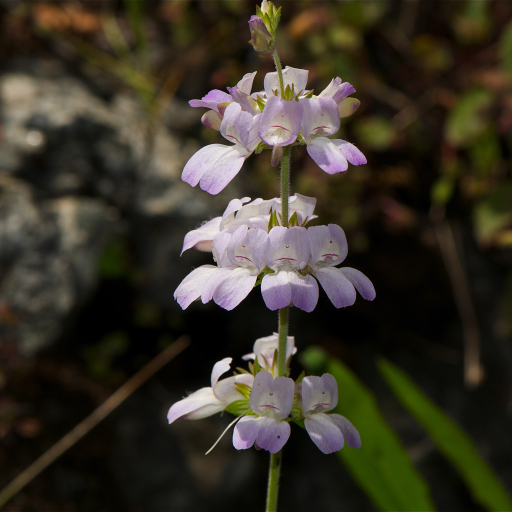
Known as White’s Collinsia or the Seaside Blue-eyed Mary, this delicate wildflower is a California native that looks like a miniature work of architectural art. It belongs to the "Chinese Houses" family, named for the way its blossoms stack in tiers, resembling the rooflines of a pagoda. Whether found clinging to a coastal bluff or a sandy interior slope, it brings a touch of whimsy to the rugged Western landscape.
🔍 How to Identify
- 🌸 The "Pagoda" Bloom: Small, two-lipped flowers that grow in distinct circular clusters (whorls) around the stem, creating a stacked, multi-story appearance.
- ⚪ Color Variations: While often pure white (hence the name bartsiifolia), many specimens feature soft lavender or violet tints on the lower lips, accented by tiny purple dots.
- 🍃 Fuzzy Foliage: The leaves are narrow and opposite, but if you look closely, the stems and leaves are often covered in fine, sticky glandular hairs.
- 📏 Growth Habit: A slender annual that usually stays tucked low to the ground, reaching between 2 to 14 inches depending on the moisture of the season.
🏡 In Your Garden
- 🌱 The Sandy Specialist: This plant is a "specialist" for well-draining, lean soils. It thrives in sandy or gravelly spots where other plants might struggle, making it perfect for rock gardens or coastal restoration.
- 🐝 Pollinator Buffet: It is a vital early-season food source for native bees and butterflies. Because it is an annual, it focuses all its energy into one spectacular spring show before dropping seeds for the following year.
- 💧 Low Drama Care: It dislikes "wet feet" and heavy clay. If you are growing it from seed, mimic its natural habitat by providing a sunny spot and letting the soil dry out completely between spring rains.
⚠️ Safety & Toxicity
- ✅ Safe Status: Collinsia bartsiifolia is generally considered non-toxic and safe for gardens shared with curious pets or children.
- 🌼 Mild Irritation: As with many wild plants, the sticky hairs on the stems can occasionally cause very mild skin irritation for those with sensitive skin. It is not meant for consumption, as wild plants can cause digestive upset if eaten in quantity.
✨ Fun Fact
The genus name Collinsia honors Zaccheus Collins, a 19th-century botanist from Philadelphia. Despite its delicate appearance, this plant is a survivor—its seeds can remain dormant in the soil for years, waiting for the perfect "Goldilocks" rainfall year to carpet the hillsides in white.

Detailed Care Instructions

Place in a window with dappled sun or a spot in the middle of a room. Or directly in a window facing west or east.

Water-loving plants flourish in wet or sloppy soil and near ponds. The extensive root system enables these plants to absorb plenty of water. The surface of the soil should be kept moist at all times. Place your pot in a container filled with water to guarantee that plants get enough water. If the ground becomes dry, it is recommended that you water it well. Plants in smaller pots will need to be watered more frequently. Water the soil in which the plant is standing thoroughly using a watering can.








