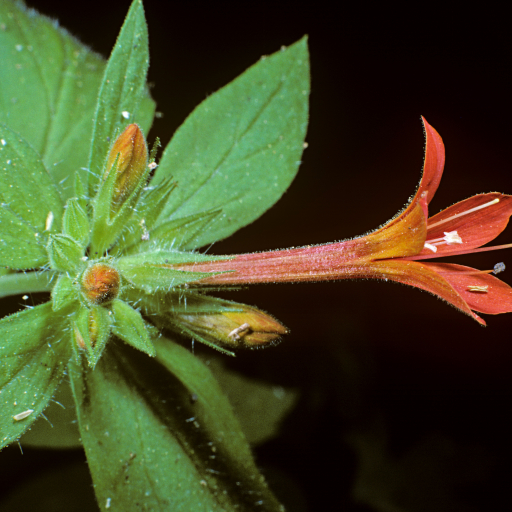
Plant Overview
Often called Rawson’s Flaming Trumpet, this rare beauty is a hidden gem of the Sierra Nevada mountains. Known for its striking, salmon-colored blossoms, it looks more like a tropical escape than a mountain wildflower. It is a "local celebrity" in the botanical world because it grows in only a few specific spots on Earth, making it a prized find for hikers and native plant enthusiasts.
🔍 How to Identify
- 🎺 The Flowers: Deeply tubular, trumpet-shaped blooms that range from a soft salmon to a fiery orange-red. They often cluster at the ends of the stems.
- 🍃 The Foliage: Bright green, lance-shaped leaves with distinct "toothed" or serrated edges that give the plant a textured, lush appearance.
- 🌱 Growth Habit: It spreads via underground rhizomes, forming low-growing, leafy mats that thrive in the dappled light of the forest floor.
🏡 In Your Garden
- 💧 Thirst for Moisture: Unlike many drought-tolerant California natives, Rawson’s Collomia is a "water baby." It naturally lives near stream banks and wet meadows, so it requires consistently moist soil to prevent drooping.
- ⛅ The Shade Factor: This plant is sensitive to the harsh afternoon sun. In a garden setting, it needs a "woodland" environment—think filtered light or morning sun with total shade during the hottest part of the day.
- ⛰️ Soil Preference: It thrives in rich, organic soil that mimics the decaying leaf litter of its native forest home. It isn't a fan of heavy clay or stagnant water; drainage is still key despite its love for moisture.
⚠️ Safety & Toxicity
- ✅ Status: Generally considered non-toxic.
- 🐾 Details: There are no documented reports of Collomia rawsoniana being poisonous to humans or common household pets. However, because it is so rare and localized, it is best kept as an ornamental plant rather than something to be nibbled on. Always monitor curious pets around new garden additions to avoid mild stomach upset from eating fiber-rich leaves.
✨ Fun Fact
Rawson’s Flaming Trumpet is a true "California Exclusive." It is endemic to a very small region in the Sierra Nevada (mostly Madera County). Because its range is so limited, it is considered a rare species, making any sighting in the wild a significant event for conservationists!

Detailed Care Instructions
To grow Collomia rawsoniana, follow these steps:
- Climate and sunlight: Collomia rawsoniana grows best in full sun to partial shade. It is a cool-season plant, so it prefers cooler temperatures. The USDA hardiness zones for this plant are 3-8.
- Soil: The plant prefers well-draining soil with a slightly acidic to neutral pH level. Amend heavy or compacted soil with organic matter, such as compost, to improve drainage.
- Planting: Collomia rawsoniana can be grown from seeds. Start seeds indoors 6-8 weeks before the last frost date in your area. Sow the seeds in seed trays or small pots filled with seed-starting mix. Lightly press the seeds into the soil surface, but do not cover them with soil as they need light to germinate. Keep the soil moist and warm (around 70°F or 21°C) until the seeds germinate. Transplant the seedlings outdoors after the last frost date.
- Outdoor planting: Choose a location with well-draining soil and prepare the soil as mentioned above. Dig small holes that are slightly larger than the root ball of the seedlings. Space the plants about 6-12 inches (15-30 cm) apart to allow for adequate airflow and growth. Gently place the seedlings in the holes and cover the roots with soil. Water thoroughly after planting.
- Watering: Collomia rawsoniana prefers evenly moist soil. Water regularly, especially during dry periods, but avoid overwatering. Check the top inch of soil and water when it feels slightly dry.
- Fertilization: Apply a balanced, slow-release fertilizer once or twice during the growing season to provide essential nutrients. Follow the instructions on the fertilizer packaging for application rates.
- Pruning: Collomia rawsoniana does not require extensive pruning. However, you can remove any dead or damaged stems to maintain the plant's appearance. Deadheading (removing spent flowers) can also encourage continuous blooming.
- Pests and diseases: Collomia rawsoniana is relatively resistant to pests and diseases. However, keep an eye out for common garden pests like aphids or snails and take appropriate measures, such as handpicking or using organic insecticides, to control them if necessary.
- Mulching: Apply a layer of organic mulch around the base of the plant to help conserve moisture, suppress weed growth, and maintain a cool root temperature. Keep the mulch a few inches away from the stem to avoid rotting.
- Winter care: In colder areas, Collomia rawsoniana may not overwinter well. Consider providing mulch or a protective cover to shield the plant from extreme cold and frost. Alternatively, you can grow it as an annual and replant seeds each year.
With proper care and suitable growing conditions, your Collomia rawsoniana plant should thrive and produce vibrant flowers.

Place in a bright room that is sun drenched almost all day. Or directly in a south-facing window.

Collomia rawsoniana is a perennial flowering plant that requires proper watering to thrive. Here are some guidelines to help you water this plant effectively:
1. Soil moisture: Collomia rawsoniana prefers well-draining soil that can hold some moisture. Before watering, check the soil moisture by inserting your finger into the soil up to the second knuckle. If the soil feels dry at this depth, it's time to water. Avoid overwatering as it can lead to root rot.
2. Frequency: The frequency of watering depends on various factors such as climate, temperature, and the plant's growth stage. Generally, this plant needs regular watering during its active growing season, which can be once or twice a week. During cooler months or periods of dormancy, reduce watering frequency.
3. Watering technique: To avoid excessive soil moisture and promote healthy root growth, water the plant at the base rather than using overhead sprinklers. This helps prevent wet foliage, which can lead to fungal diseases. Slowly pour water directly onto the soil around the plant, allowing it to soak in.
4. Deep watering: When watering Collomia rawsoniana, ensure that the water penetrates deep into the soil. This encourages the roots to grow deeply, making the plant more resilient to drought conditions. Water until the soil is moist to a depth of at least 6-8 inches.
5. Mulching: Applying a layer of organic mulch around the plant helps retain soil moisture, reduce weed growth, and regulate soil temperature. Use a mulch such as wood chips, straw, or compost, and spread it around the base of the plant. Mulching also helps prevent evaporation and maintains an even level of soil moisture.
6. Rainwater and quality: Collomia rawsoniana prefers natural rainwater whenever possible. Rainwater is usually free from harsh chemicals found in tap water, making it the ideal choice for watering. If using tap water, let itsit out overnight to allow chlorine and other chemicals to dissipate before using.
Remember, the watering needs of Collomia rawsoniana may vary depending on your specific growing conditions. Keep a close eye on the plant's overall health and adjust watering accordingly. Providing consistent moisture without overwatering will help your Collomia rawsoniana plant thrive and produce beautiful flowers.
To fertilize Collomia rawsoniana plant, follow these instructions:
- Use a balanced, slow-release fertilizer with equal amounts of nitrogen (N), phosphorus (P), and potassium (K) or a ratio close to 10-10-10.
- Begin fertilizing in early spring when new growth starts to emerge.
- Dilute the fertilizer according to the package instructions or use a granular form by scattering it evenly around the base of the plant.
- Avoid direct contact between the fertilizer and the plant's leaves to prevent leaf burn.
- Gently work the fertilizer into the soil surface using a hand rake or cultivator, ensuring it is evenly distributed.
- Water the plant thoroughly after fertilizing to help the nutrients reach the plant's root system.
- Continue to fertilize the Collomia rawsoniana plant every 4-6 weeks during the growing season, usually from spring to early fall.
- Monitor the plant's response to fertilization; if foliage turns yellow or growth is stunted, decrease the frequency or strength of fertilizer application.
- In late fall to early winter, stop fertilizing as the plant enters its dormant phase. Resume fertilization when new growth appears in the following spring.
Remember to always read and follow the instructions provided on the fertilizer packaging specific to the brand and type you are using.
Collomia rawsoniana is a species of plant that requires a specific type of soil to thrive. It prefers a well-draining soil that is rich in organic matter. The soil should ideally be loamy, which means it should have a balanced mixture of sand, silt, and clay particles.
A pH level of around 6.0 to 7.0 is considered suitable for Collomia rawsoniana. This pH range is slightly acidic to neutral, providing an optimal environment for the plant's growth and development.
Additionally, Collomia rawsoniana prefers soil that is loose and friable. This means that the soil particles should not be tightly compacted, allowing for good aeration and root penetration. The looseness of the soil also aids in moisture retention while ensuring excess water drains away effectively, preventing waterlogging.
The chosen soil should have good water-holding capacity as well. It should be able to retain moisture to ensure a consistent supply for the plant's roots. However, it is crucial to avoid overwatering, as excessive moisture can lead to root rot and other issues.
Organic matter, such as compost or well-rotted manure, can be incorporated into the soil prior to planting Collomia rawsoniana. This will enrich the soil, improving its fertility and nutrient content. It will also contribute to the overall soil structure, enhancing its ability to hold moisture and providing essential nutrients to the plant.
Finally, regular soil testing and monitoring are recommended to ensure that the soil remains in optimal condition for Collomia rawsoniana. Adjustments can be made based on the specific needs of the plant, such as altering the pH levels or adding nutrients if deficiencies are detected.
Remember, providing the right soil conditions is crucial for the healthy growth and development of Collomia rawsoniana.
Collomia rawsoniana is a perennial plant that can be propagated through several methods. Here is a detailed description of the propagation process:
- Seeds: The most common way to propagate Collomia rawsoniana is through seeds. Here's how you can do it:
a) Collect mature seed heads from healthy plants in late summer or autumn.
b) Place the seed heads in a paper bag or envelope and let them dry for a couple of weeks. This will allow the seeds to fully mature.
c) Gently crush the dry seed heads, and then separate the seeds from the chaff.
d) Fill a seed tray or small pots with a well-draining potting mix. Ensure that the medium is moist but not waterlogged.
e) Sprinkle the seeds evenly over the soil surface and lightly press them into the soil. Avoid burying the seeds too deep.
f) Cover the tray or pot with a plastic lid or clear plastic wrap to create a mini-greenhouse effect that will help retain moisture.
g) Place the tray or pot in a warm and bright location, but avoid direct sunlight. Provide bottom heat if possible, as this can enhance germination.
h) Keep the soil consistently moist by misting it regularly or using a spray bottle. Avoid overwatering, as it can lead to damping-off diseases.
i) Germination typically occurs within 2-4 weeks. Once the seedlings have developed a few true leaves, you can transplant them into individual pots or directly into the garden if the weather conditions are suitable.
- Stem cuttings: Collomia rawsoniana can also be propagated using stem cuttings.
a) Take a healthy stem cutting from a mature plant using clean, sharp pruners. Choose a non-flowering stem that is 3-4 inches long.
b) Remove any leaves from the lower part of the cutting, retaining only a few on the upper portion.
c) Dip the cut end into a rooting hormone powder or gel to stimulate root development.
d) Fill a small pot with a well-draining potting mix and make a planting hole using a pencil or similar tool.
e) Insert the cutting into the hole and gently firm the soil around it to ensure good contact.
f) Mist the cutting and cover the pot with a clear plastic bag or a plastic dome to create a humid environment.
g) Place the pot in a warm, bright location with indirect sunlight. Avoid direct sun as it can scorch the cutting.
h) Keep the soil slightly moist but not waterlogged, and mist the cutting occasionally to maintain humidity.
i) Roots should develop within 4-6 weeks. Once the cutting has rooted, you can remove the plastic covering and gradually acclimate it to normal growing conditions.
j) After a few weeks, when the rooted cutting has established, you can transplant it into a larger pot or directly into the garden if desired.
By following these propagation methods, you can successfully propagate Collomia rawsoniana and enjoy the beauty of this plant in your garden.








