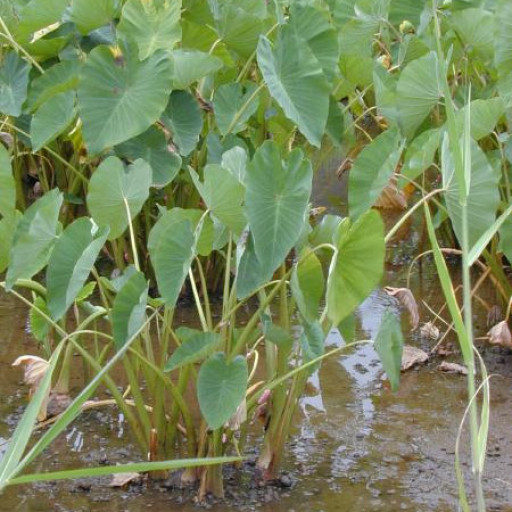
Plant Overview
Commonly known as "Taro" or "Elephant Ear," this lush tropical giant has been a staple of human civilization for over 10,000 years. Its massive, velvety leaves look like the flapping ears of a jungle elephant, instantly turning any backyard or living room into a prehistoric oasis. While it’s a beloved ornamental today, it remains one of the most important food crops in the world, particularly across Asia and the Pacific Islands.
🔍 How to Identify
- 🐘 Leaf Shape: The leaves are famously heart-shaped (peltate) and can grow up to 3 feet long. A key ID tip: the stem attaches to the back of the leaf rather than at the notch, which distinguishes it from its cousin, the Alocasia.
- 💧 Texture: The foliage has a soft, matte finish that often repels water, causing raindrops to bead up and roll off like liquid silver.
- 🌱 Growth Habit: These plants grow from thick, starchy underground tubers called corms. They send up long, succulent stalks that can range from lime green to deep burgundy depending on the specific variety.
🏡 In Your Garden
- 🌊 Thirsty Roots: Unlike many houseplants that fear "wet feet," Colocasia thrives in damp, boggy soil. It is even happy growing at the muddy edge of a pond. if the leaves start to droop, it is usually a dramatic plea for a heavy watering.
- 🍲 Heavy Feeders: To produce those massive, show-stopping leaves, this plant needs plenty of "fuel." Regular organic fertilizer during the growing season is the secret to achieving a true "Jurassic Park" look in your landscape.
- ❄️ Winter Dormancy: These are true tropicals. If you live in a climate with frost, the plant will die back in winter. In colder zones, the tubers must be dug up and stored in a dry, dark place until the warmth of spring returns.
⚠️ Safety & Toxicity
- 🚫 Hazardous if Raw: Every part of the plant contains needle-like calcium oxalate crystals. If any part of the plant is eaten raw, these crystals cause intense stinging, burning, and swelling of the mouth and throat.
- 🐾 Pets & Kids: It is considered toxic to cats, dogs, and horses. Ingestion leads to excessive drooling, pawing at the mouth, and vomiting. Always keep this plant out of reach of curious nibblers.
- 🧤 Skin Irritation: The sap can cause "Taro itch" or mild dermatitis for some people. It is wise to wear gloves when pruning or dividing the tubers.
✨ Fun Fact
In Hawaiian mythology, the Taro plant (Kalo) is considered the elder brother of the Hawaiian people. Legend says the first Kalo plant grew from the burial site of a stillborn prince, and the first human grew from that same spot later, forever linking the people to the land and this specific plant.

Detailed Care Instructions
| Color | Variable |
| Humidity | High |
| Lighting | Part Sun |
| Toxicity | Poisonous |
| Soil Type | Rich, Well-Drained Potting Mix |
| Difficulty | Medium |
| Plant Type | Perennial, Bulb |
| Mature Size | 3 To 6 Ft. |
| Native Area | Southern India, Southeast Asia |
| Temperature | 15°C - 32°C |
| Sun Exposure | Filtered Sun, Part Shade |
| Hardiness Zones | 8-10 |
To grow Colocasia Esculenta, also known as taro or elephant ear, follow these steps:
- Choose a suitable location: Colocasia thrives in full or partial sun, so select a spot that receives at least 4-6 hours of direct sunlight per day. Make sure the soil is well-draining.
- Prepare the soil: Clear the area of weeds and loosen the soil using a garden fork or tiller. Incorporate organic matter like compost or well-rotted manure to improve soil fertility and drainage.
- Planting: Plant the tubers or rhizomes of Colocasia Esculenta at a depth of 2-4 inches, with the growing buds or "eyes" facing upward. Space the tubers around 2-3 feet apart to allow room for growth.
- Watering: Keep the soil consistently moist but not waterlogged. Colocasia grows best in areas with regular rainfall or in places where you can provide adequate irrigation.
- Fertilizing: Apply a balanced, slow-release fertilizer or organic matter like compost during planting. Supplement with diluted liquid fertilizer every 2-4 weeks during the growing season to promote healthy growth.
- Mulching: Apply a layer of organic mulch around the base of the plants to retain moisture, suppress weeds, and regulate soil temperature.
- Pests and diseases: Colocasia is generally resistant to most pests and diseases. However, watch out for aphids, snails, and slugs. Apply organic or chemical insecticides accordingly.
- Winter care: If you live in an area with cold winters, allow the foliage to die back naturally in the fall. After the leaves have withered, carefully dig up the tubers and store them over winter in a dry, cool place. Rinse off any soil and remove excess foliage before storage.
- Propagation: Colocasia can be propagated by division. Dig up the tubers in early spring, separate the offset tubers from the main plant, and replant them in well-prepared soil.
By following these steps, you should be able to successfully grow and enjoy your Colocasia Esculenta plants.

Place in a window with dappled sun or a spot in the middle of a room. Or directly in a window facing west or east.

To water the plant, start by checking the soil moisture level before each watering to avoid over-watering or under-watering. Stick your finger into the soil about 1 inch deep and if it feels dry, it's time to water. Fill a watering can with room temperature water and pour it gently around the base of the plant, making sure not to wet the leaves. Allow the water to soak into the soil and drain completely to avoid waterlogging. Water the plant regularly, about once a week or more depending on the climate and humidity levels. It's important to keep the soil consistently moist but not soggy. Reduce watering during the winter months when the plant is dormant. Finally, avoid watering the plant from overhead as it can rot the leaves and promote the growth of fungal diseases.
To provide nutrients to this plant, use a balanced fertilizer with equal amounts of nitrogen, phosphorus, and potassium. Apply the fertilizer during the growing season every two weeks, making sure not to over-fertilize as it can damage the plant. Water the plant before and after fertilizing to ensure proper absorption. Also, adding organic matter to the soil can help improve nutrient availability.
The best soil to use with this plant is a loose and well-draining soil that is rich in organic matter. It is important to avoid heavy clay soils as they may retain too much moisture and cause root rot. A pH level of about 5.5 to 6.5 is ideal. The soil should also be kept moist but not waterlogged, so a regular watering schedule is important. Additionally, adding a layer of mulch around the base of the plant can help retain moisture and also provide some nutrient support as it breaks down over time.
Colocasia Esculenta can be propagated in various ways. One way is by dividing the plant. Gently remove the plant from its container or the ground and separate the rhizomes with a sharp knife or pruner. Ensure that each rhizome section has at least one sprout and some roots.
Another way to propagate Colocasia Esculenta is by using offsets. Offsets are small plants that grow from the parent plant's base. Carefully separate the offsets from the parent plant, making sure that each has its roots.
Propagation can also be achieved through stem cuttings. Take a healthy stem cutting from the parent plant and ensure that it has several leaves on it. Dip the stem cutting in rooting hormone powder and plant it in a suitable potting mix. Water it gently and keep the soil moist till new growth appears.
Finally, propagating Colocasia Esculenta through seeds is also possible. Collect mature seeds from the parent plant and sow them in a suitable moist and well-drained soil mix. The seeds will germinate in approximately two to three weeks.
Common pests of the elephant's-ear include Mealybugs, spider mites, fungus gnats, thrips. Make a habit of checking your elephant's-ear frequently for pests so that any infestations can be caught and managed early.








