Plant Overview
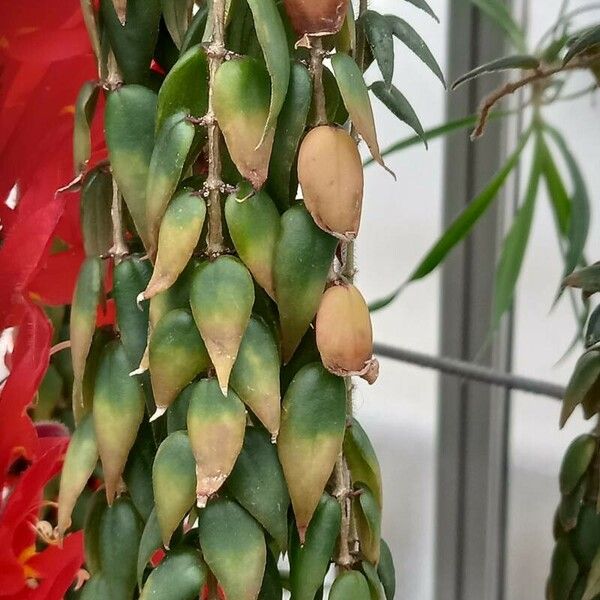
Often called the Goldfish Plant or the Staghorn Columnea, Columnea arguta is a show-stopping epiphyte native to the humid rainforests of Panama and Costa Rica. It earns its nickname from its spectacular, tubular orange-red flowers that appear to be jumping like tiny goldfish through a sea of green. In its natural habitat, it drapes elegantly from tree branches, making it a perfect candidate for hanging baskets in modern homes.
🔍 How to Identify
- 🐠 The "Goldfish" Blooms: The flowers are the star—vibrant, two-lipped, and curved in a way that perfectly mimics the silhouette of a fish. They usually appear in shades of fiery orange or red with yellow throats.
- 🍃 Pointed Foliage: Unlike some of its relatives with rounded leaves, Arguta features small, lance-shaped (pointed) leaves that are waxy and arranged densely along trailing stems.
- 🌿 Trailing Habit: This plant produces long, slender vines that can cascade down three feet or more, creating a dramatic "curtain" of greenery.
🏡 In Your Garden
- ☁️ Epiphytic Roots: Because it naturally grows on trees rather than in the ground, it hates "wet feet." Use a very airy, well-draining mix (like orchid bark and perlite) rather than heavy potting soil to prevent root rot.
- 💧 Humidity over Watering: It craves high humidity more than soggy soil. If the air in your home is dry, the plant may drop leaves; a pebble tray or a humidifier will make it much happier than frequent watering.
- ☀️ Light Sensitivity: It needs bright, filtered light to produce those famous flowers. Direct afternoon sun will scorch the leaves, but too little light will result in a "leggy" plant with no blooms.
⚠️ Safety & Toxicity
- 🟢 Pet Safe: Good news for pet parents! Columnea arguta is generally considered non-toxic to cats and dogs, making it a safe choice for low-hanging baskets.
- 👶 Child Friendly: It is non-toxic to humans as well, though the sap may cause very mild irritation to those with sensitive skin if stems are broken during pruning.
✨ Fun Fact
In the wild, the specific shape and bright color of the Goldfish Plant aren't just for show—they are perfectly engineered to attract hummingbirds. The birds can hover and dip their long beaks into the tubular flowers to reach the nectar, acting as the plant's primary pollinators!

Detailed Care Instructions
To grow Columnea Arguta, also known as the Goldfish Plant, you can follow these steps:
- Choose the right location: Columnea Arguta requires bright, indirect light. Avoid direct sunlight, as it can burn the leaves.
- Provide a warm environment: This plant prefers temperatures between 65-80°F (18-27°C). Avoid placing it in drafty areas or near air conditioning or heating vents.
- Use well-draining soil: Prepare a potting mix with peat moss, perlite, and compost or organic matter to ensure good drainage.
- Select an appropriate container: Use a pot with drainage holes to prevent waterlogging. Ensure the container is slightly larger than the plant's root ball.
- Water properly: Water the plant when the top inch of soil feels dry. Do not let it completely dry or stay soggy. Keep the soil evenly moist but not overly wet. Use room temperature or lukewarm water to avoid shocking the roots.
- Feed regularly: Apply a balanced, water-soluble fertilizer every two weeks during the growing season (spring and summer) and once a month during the dormant period (fall and winter).
- Prune if necessary: Trim back leggy or overgrown branches in early spring to encourage bushier growth.
- Provide humidity: Columnea Arguta enjoys humidity, so mist the foliage regularly or place a humidifier nearby. You can also place the pot on a tray filled with water and pebbles to create a humid microclimate.
- Propagate: Columnea Arguta can be propagated through stem cuttings. Take a 3-4 inch cutting and remove the lower leaves. Plant it in moist potting soil and cover it with a plastic bag or a propagator to retain humidity. Keep it in a warm, bright location until roots develop.
- Monitor for pests: Keep an eye out for common houseplant pests like aphids, mealybugs, or spider mites. If you notice any infestations, treat them promptly with organic pest control methods.
With proper care, Columnea Arguta can thrive and produce its unique and vibrant goldfish-like flowers.

Place in a window with dappled sun or a spot in the middle of a room. Or directly in a window facing west or east.

Columnea arguta is a flowering plant that belongs to the family Gesneriaceae. To properly water this plant, follow these guidelines:
1. Understand the watering needs: Columnea arguta prefers consistently moist soil, but it should not be waterlogged. It is crucial to find the right balance for watering.
2. Use well-draining soil: Ensure that the soil is well-draining to prevent the plant from sitting in water, as this can lead to root rot. A lightweight soil mixture with good drainage properties is recommended.
3. Check the moisture level: Before watering, check the moisture level of the soil by inserting your finger about 1-2 inches deep. If the soil feels dry at that depth, it's time to water the plant.
4. Watering frequency: Columnea arguta may require frequent watering, especially during the growing season. Depending on the environmental conditions, you may need to water it every 2-3 days or as soon as the soil feels dry.
5. Watering method: Use room temperature water to avoid shocking the roots. Slowly pour water at the base of the plant until it starts to come out through the drainage holes. Avoid wetting the foliage as it can increase the risk of diseases.
6. Allow proper drainage: After watering, make sure the excess water drains away. Empty the saucer or tray under the pot to prevent the roots from sitting in water.
7. Adjust watering during different seasons: During winter or when the plant is in its dormant phase, reduce the watering frequency but ensure that the soil doesn't dry out completely.
8. Humidity levels: In addition to regular watering, Columnea arguta appreciates high humidity levels. You can provide humidity by misting the plant with water, placing it on a pebble tray filled with water, or using a room humidifier.
9. Monitor the plant's response: Observe the plant closely after watering. If the leaves appear droopy, it may be a sign of overwatering or underwatering. Adjust the watering schedule accordingly.
Remember that these guidelines provide generalized information, and individual plants may have specific needs. It's always a good idea to monitor your Columnea arguta closely and adjust watering as per its response to ensure optimal growth and health.
To properly fertilize the Columnea Arguta plant, follow these instructions:
- Choose a balanced, water-soluble fertilizer with equal proportions of nitrogen (N), phosphorus (P), and potassium (K). A general-purpose 10-10-10 fertilizer works well.
- Dilute the fertilizer according to the manufacturer's instructions, usually adding 1/4 to 1/2 teaspoon per gallon of water.
- Apply the diluted fertilizer solution to the plant's soil, making sure to saturate it evenly. Avoid getting the solution on the leaves or stem as it may cause damage.
- Fertilize the Columnea Arguta during the active growing season, which is typically spring and summer. Reduce or halt fertilizer application during fall and winter when the plant enters a period of dormancy.
- Repeat the fertilization process every two to four weeks during the growing season to provide a steady supply of nutrients.
- Observe the plant closely for any signs of over-fertilization, such as burnt or yellowing leaves. If this occurs, water the plant thoroughly to flush out excess fertilizer.
Remember to always follow the specific instructions on the fertilizer package and adjust the dosage based on the size and health of your Columnea Arguta plant.
Columnea arguta is a tropical evergreen plant that belongs to the Gesneriaceae family. When selecting soil for this plant, it is crucial to provide a well-draining medium that retains some moisture. Here are some important details about the soil preferences of Columnea arguta:
- Soil Type: This plant thrives in a soil mix that is light and well-draining. It is beneficial to use a loose and porous soil, allowing excess water to drain away quickly to prevent waterlogging.
- pH Level: Columnea arguta prefers a slightly acidic to neutral soil pH, ideally ranging from 5.5 to 7.0. It is advisable to avoid extremely alkaline or highly acidic soils.
- Organic Matter: Incorporating organic matter into the soil mixture enhances its fertility, nutrient content, and water retention capabilities. You can add organic materials like compost, well-rotted manure, or leaf mold to improve the overall quality of the soil.
- Moisture Retention: While it is crucial to provide well-draining soil, Columnea arguta also requires some moisture retention to maintain adequate hydration. The soil should have a good balance of both drainage and moisture-holding capacity, ensuring that the roots receive moisture without becoming waterlogged.
- Aeration: The soil should promote good aeration around the root zone to prevent the roots from suffocating. This can be achieved by adding coarse materials like perlite or horticultural-grade sand to the soil mix, improving its overall texture and promoting proper air circulation.
These details about the soil requirements of Columnea arguta will help provide a favorable growing environment for the plant, ensuring its healthy growth and development.
Columnea Arguta is a tropical plant that can be easily propagated through several methods such as stem cuttings, leaf cuttings, and division. Here is a detailed explanation of these propagation techniques:
- Stem cuttings:
- Select a healthy stem with multiple leaves, preferably from the end of the plant.
- Using clean pruning shears or a sharp knife, cut a 4-6 inch section of the stem just below a leaf node. Ensure that the cutting has at least 2-3 leaves.
- Remove the lower leaves from the cutting and dip the cut end in a rooting hormone powder (optional but can enhance rooting success).
- Insert the treated end of the cutting into a well-draining potting mix or a mixture of perlite and peat moss.
- Mist the cutting with water and maintain high humidity by covering it with a plastic bag or placing it in a propagator.
- Place the cutting in a warm and bright location, but avoid direct sunlight.
- Keep the potting mix slightly moist, not soggy, and mist the cutting occasionally to maintain humidity.
- After a few weeks, new roots should start to develop. Wait until the roots are 1-2 inches long before transferring the cutting into a larger pot with regular potting soil.
- Select a healthy stem with multiple leaves, preferably from the end of the plant.
- Leaf cuttings:
- Choose a healthy leaf without any signs of damage or disease. Gently remove the leaf from the stem, ensuring that a small section of the leaf stalk (petiole) remains intact.
- Fill a small pot with a well-draining rooting medium, such as a mixture of perlite and peat moss.
- Make a small hole in the rooting medium using a pencil or your finger.
- Dip the cut end of the leaf stalk in rooting hormone powder (optional but can increase success rate) and insert it into the hole in the rooting medium.
- Firmly press the medium around the leaf stalk to ensure it is secure.
- Place the pot in a location with bright, indirect light and maintain high humidity by covering it with a plastic bag or using a propagator.
- Keep the rooting medium slightly moist and mist the leaf cutting occasionally to maintain humidity.
- After a few weeks, new plantlets should emerge from the base of the leaf. Once these plantlets have several leaves and roots, they can be transplanted into individual pots.
- Choose a healthy leaf without any signs of damage or disease. Gently remove the leaf from the stem, ensuring that a small section of the leaf stalk (petiole) remains intact.
- Division:
- Carefully remove the Columnea Arguta plant from its container and gently separate the root mass into smaller sections.
- Ensure that each divided portion has its own set of healthy leaves and roots.
- Pot each division into appropriately sized individual pots filled with regular potting soil.
- Water the newly potted divisions thoroughly and place them in a location with bright, indirect light.
- Keep the soil evenly moist and avoid overwatering to prevent root rot.
- As the divisions establish and grow, continue to care for them as you would for mature Columnea Arguta plants.
Remember to provide appropriate care, including regular watering, well-draining soil, and proper lighting conditions, to promote healthy growth after propagating Columnea Arguta.
- Carefully remove the Columnea Arguta plant from its container and gently separate the root mass into smaller sections.








