Plant Overview
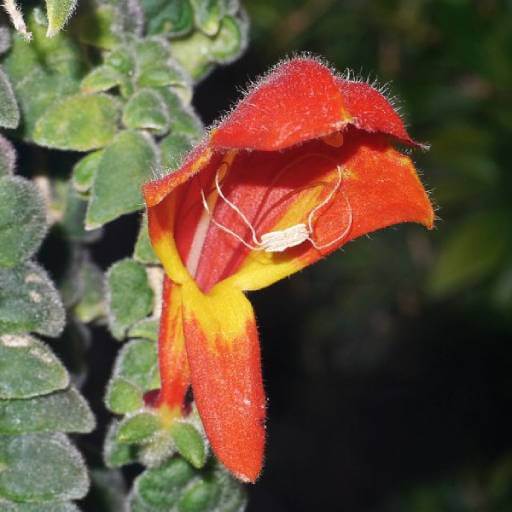
Known as the Tiny Calyx Goldfish Plant, this neotropical gem is a showstopper in hanging baskets. Native to the humid rainforests of Central and South America, it earns its nickname from its vibrant, tubular flowers that look remarkably like orange goldfish leaping through a sea of green leaves. It is an "epiphyte" by nature, meaning in the wild, it spends its life perched high on tree branches rather than in the dirt.
🔍 How to Identify
- 🐠 The Flowers: Look for tubular, long-necked flowers in brilliant shades of orange or reddish-orange. They feature a distinct hooded upper lip and a smaller lower lip, mimicking the shape of a fish.
- 🍃 The Foliage: The leaves are small, oval, and slightly succulent. They often have a fine layer of tiny hairs, giving them a matte or velvety texture that contrasts beautifully with the waxy flowers.
- 🌿 Growth Habit: This is a strictly trailing plant. Its stems are thin and flexible, cascading downward for several feet, making it perfect for high shelves or ceiling hangers.
🏡 In Your Garden
- ☁️ Atmospheric Needs: Because it originates from misty cloud forests, this plant thrives on high humidity. If the air in your home is too dry, the leaves may brown at the tips or drop prematurely; a pebble tray or a nearby humidifier works wonders.
- 💧 The "Goldilocks" Watering: It hates "wet feet" due to its epiphytic roots, which need air to breathe. Use a chunky, well-draining mix (like an orchid or African violet blend) and always use room-temperature water—cold tap water can shock the roots and cause leaf spotting.
- ☀️ Light Nuance: It prefers "dappled" sunlight. In the wild, it is shaded by the forest canopy. Direct afternoon sun will scorch its delicate leaves, but too little light will stop those "goldfish" from blooming.
⚠️ Safety & Toxicity
- 🟢 Status: Generally considered non-toxic.
- 🐾 Details: Columnea microcalyx is widely regarded as safe for cats, dogs, and children. However, ingesting any plant material can cause mild stomach upset or drooling in pets, so it’s still best to keep its tempting "leaping fish" flowers out of reach of curious mouths.
✨ Fun Fact
In their natural habitat, these "goldfish" flowers aren't just for show—their specific shape and bright red-orange color are evolutionarily designed to attract hummingbirds, who act as the plant’s primary pollinators!

Detailed Care Instructions
To grow Columnea Microcalyx plants, follow these steps:
- Light: Find a location with bright, indirect sunlight. Avoid direct sunlight, as it can scorch the leaves. A north or east-facing window is usually a good choice.
- Temperature: Columnea Microcalyx plants prefer a temperature range of 60-75°F (15-24°C). Avoid placing the plant in drafty areas or near heat vents.
- Watering: Keep the soil consistently moist but not soggy. Water when the top inch of soil feels dry. Ensure good drainage by using a well-draining potting mix and a pot with drainage holes.
- Humidity: Columnea Microcalyx plants appreciate high humidity levels. You can increase humidity by placing a tray of water near the plant or using a humidifier. Misting the leaves occasionally can also help.
- Fertilizer: Use a balanced, water-soluble fertilizer every 2-4 weeks during the growing season (spring to fall). Follow the instructions on the fertilizer package for the correct dosage.
- Pruning: Trimming the plant regularly helps maintain a compact shape and encourages bushier growth. Pinch off the tips of the stems to promote branching.
- Propagation: Columnea Microcalyx plants can be propagated through stem cuttings. Take a cutting with at least two pairs of leaves and plant it in moist soil or water. Roots should develop in a few weeks.
- Repotting: As the plant grows, it may outgrow its current pot. Repot into a slightly larger pot with fresh potting soil in the spring. Make sure the new pot has drainage holes.
- Pests and diseases: Monitor the plant for common pests such as aphids or mealybugs. Treat any infestations promptly with insecticidal soap or neem oil. Avoid overwatering, as it can lead to root rot.
By following these care guidelines, you should be able to successfully grow Columnea Microcalyx plants.

Place in a window with dappled sun or a spot in the middle of a room. Or directly in a window facing west or east.

Columnea Microcalyx is a plant that needs to be watered moderately. It prefers to have its soil remain evenly moist, but not waterlogged. It is very important to avoid letting the soil dry out completely or for extended periods of time. To prevent overwatering, ensure to have drainage holes in the pot and check the soil moisture level regularly. Water from the base of the pot, and avoid getting water on the foliage as it may lead to fungal diseases. Additionally, the water used should be at room temperature or slightly warm. Watering requirements may vary depending on the light, temperature, and humidity levels of the plant environment.
To properly fertilize Columnea Microcalyx plant, follow these instructions:
- Begin fertilizing in the spring or summer when the plant is actively growing.
- Choose a balanced, water-soluble fertilizer specifically formulated for flowering houseplants.
- Dilute the fertilizer according to the package instructions, usually at a rate of half or quarter strength.
- Water the plant thoroughly before applying the fertilizer to avoid root burn.
- Apply the diluted fertilizer directly to the soil around the base of the plant.
- Avoid getting fertilizer on the foliage or flowers as it may cause damage.
- Repeat the fertilizing process every two to four weeks throughout the growing season.
- During the dormant period in fall or winter, reduce or stop fertilizing as the plant requires less nutrients.
- Monitor the plant's growth and adjust the fertilizer application accordingly.
- Regularly flush the soil with plain water to prevent salt buildup from excessive fertilizing.
The ideal soil type for the Columnea Microcalyx plant should be well-draining and rich in organic matter. It should be acidic in nature, with a pH ranging from 5.5 to 6.5. A blend of peat moss, perlite, and vermiculite could be a good choice for this plant, as it provides good drainage as well as proper aeration. Additionally, a small amount of sand can also be added to the soil blend to enhance drainage further. When planting the Columnea Microcalyx, make sure to choose a pot with drainage holes at the bottom and fill it with the prepared soil mix. Water the plant when the top layer of soil feels dry to the touch, and ensure that excess water drains out of the pot to prevent waterlogging.
Propagating Columnea Microcalyx involves the following steps:
- Select a healthy plant: Choose a mature and robust Columnea Microcalyx plant with no signs of disease or pest infestation. This will ensure successful propagation.
- Prepare a cutting: Locate a stem that is approximately 4-6 inches long and has several nodes. Nodes are the small bumps on the stem where leaves emerge. Make a clean cut below a node using a sharp and sterilized tool, such as pruning shears or a knife.
- Remove lower leaves: Trim off the lower leaves of the cutting, leaving only two to three sets of leaves at the top. This encourages the cutting to focus its energy on developing roots instead of sustaining unnecessary foliage.
- Optional rooting hormone: Although not necessary, you may choose to dip the cut end of the stem in a rooting hormone powder or gel to promote root development. This can increase the chances of successful propagation but is not mandatory.
- Plant the cutting: Prepare a well-draining potting mix by combining equal parts of perlite and peat moss or coconut coir. Moisten the mixture slightly to make it damp but not waterlogged. Create a small hole in the potting mix and insert the cutting, ensuring that at least one node is buried in the soil.
- Provide suitable conditions: Place the potted cutting in a warm and bright area away from direct sunlight. Ideally, the temperature should be around 70-80°F (21-27°C). Maintain a humid environment by covering the cutting and pot with a plastic bag or using a propagator. Ensure the plastic does not touch the leaves to avoid damage.
- Regularly mist the cutting: Mist the cutting and the potting mix regularly to maintain high humidity. This helps prevent the cutting from drying out before roots develop. Ensure the potting mix remains lightly moist but not overly saturated.
- Monitor and wait for root development: Check the cutting periodically by gently tugging on it after a few weeks. If you feel resistance, it indicates root growth. Once roots have established, remove the plastic cover and gradually expose the plant to normal room conditions.
- Transplanting: After a few more weeks or when the roots have become well-developed, carefully transfer the rooted cutting to a slightly larger pot filled with a well-draining potting mix suitable for Columnea Microcalyx. Handle the plant gently to avoid damaging the newly formed roots.
- Provide proper care: Keep the newly potted Columnea Microcalyx in bright, indirect light and maintain a consistent watering routine. Water the plant only when the top inch of the soil feels dry to the touch. Mist the foliage regularly to simulate its natural humid environment.
By following these steps, you should be able to successfully propagate Columnea Microcalyx and expand your collection of these beautiful plants.
Common pests of the goldfish plant include Mealybugs, spider mites, aphids, thrips. Make a habit of checking your goldfish plant frequently for pests so that any infestations can be caught and managed early.








