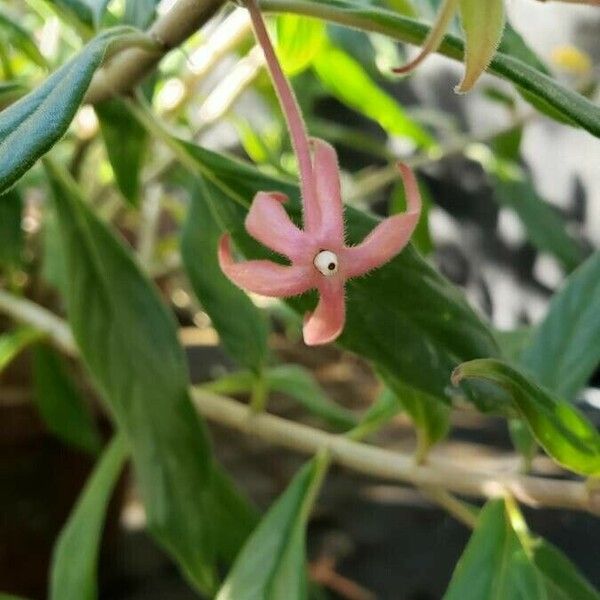
Plant Overview
Often called the Leopard Columnea or the Long-Leaf Goldfish Plant, this Mexican native is a true showstopper for vertical spaces. Its cascading vines and peculiar, speckled flowers make it look less like a common houseplant and more like a collection of exotic creatures swimming through the air. In its natural jungle habitat, it lives high up in the trees, drinking in the misty mountain air.
🔍 How to Identify
- 🐆 The Bloom: Large, tubular flowers that are pale yellow or orange, heavily decorated with dark maroon or chocolate-brown "leopard" spots and stripes.
- 🌿 The Foliage: Long, lance-shaped leaves that are deep green and velvety to the touch, often featuring a subtle reddish tint on the undersides.
- 🧶 The Habit: Long, pendulous stems that can trail several feet, creating a dense curtain of greenery when grown in a hanging basket.
🏡 In Your Garden
- ☁️ The Epiphyte Lifestyle: Because it grows on trees in the wild, its roots crave oxygen. Avoid heavy potting soil; instead, use a chunky mix of orchid bark, perlite, and peat to keep the roots "breathing."
- 💧 Watering Nuance: This plant is sensitive to temperature shocks. Always use room-temperature water, as cold tap water can cause permanent yellow spotting on its beautiful velvet leaves.
- ☀️ Light Logic: It loves bright, filtered light. Too much direct sun will scorch the leaves, but too little light will prevent those iconic "goldfish" blooms from appearing.
⚠️ Safety & Toxicity
- 🐾 Status: Non-Toxic.
- 👶 Details: Columnea schiedeana is generally considered safe for homes with curious cats, dogs, and children. While it isn't poisonous, it is best to keep it out of reach to protect the delicate, trailing vines from being pulled down.
✨ Fun Fact
In the wild, these plants have a "partnership" with hummingbirds. The flowers are specifically shaped and angled to brush pollen onto a hummingbird’s forehead while the bird sips nectar, ensuring the plant can reproduce across the forest canopy!

Detailed Care Instructions
To successfully grow Columnea Schiedeana, commonly known as the Goldfish plant, you can follow these steps:
- Light: Provide your Goldfish plant with bright, indirect light. It prefers filtered sunlight rather than direct sunlight, as too much direct sun can scorch the leaves. Place the plant near a window facing east or west, or a few feet away from a south-facing window.
- Temperature: Keep the plant in a warm environment, as it prefers temperatures between 60-80°F (15-27°C). Protect it from drafts and sudden temperature changes.
- Humidity: Goldfish plants thrive in high humidity. You can increase humidity around the plant by misting it regularly or placing a tray with water and pebbles near the plant to provide moisture.
- Watering: Water your Goldfish plant when the top inch (2.5 cm) of the soil feels dry to the touch. Avoid overwatering, as it can lead to root rot. Ensure that the pot has good drainage to prevent waterlogging.
- Soil: Use a well-draining potting mix that retains some moisture but allows excess water to drain away. A mix consisting of peat moss, perlite, and organic matter like compost works well for Goldfish plants.
- Fertilizer: Feed your Goldfish plant with a balanced, water-soluble fertilizer diluted to half the recommended strength. Fertilize once every 2-4 weeks during the growing season (spring and summer) to encourage healthy growth. Reduce or stop fertilizing during the colder months.
- Pruning: Prune your Goldfish plant regularly to control its size and promote bushier growth. Pinch back the growing tips to encourage branching. Remove any dead, damaged, or yellowing leaves to keep the plant looking healthy.
- Repotting: As the Goldfish plant grows, it may require repotting every 1-2 years. Choose a slightly larger pot with good drainage and fresh potting soil. Spring is the best time for repotting.
- Propagation: You can propagate the Goldfish plant by stem cuttings. Take a cutting that has a few pairs of leaves and dip it in rooting hormone powder before placing it in a well-draining potting mix. Keep the cutting moist and warm until roots develop.
With proper care and attention to its requirements, your Columnea Schiedeana plant can thrive and reward you with colorful, fish-shaped flowers.

Place in a window with dappled sun or a spot in the middle of a room. Or directly in a window facing west or east.

Columnea Schiedeana is a tropical plant species that requires regular watering to thrive. Here are some guidelines for watering this plant:
1. Soil Moisture: It is essential to keep the soil adequately moist for Columnea Schiedeana. Check the moisture level by inserting your finger about an inch deep into the soil. If it feels dry, it's time to water the plant.
2. Frequency: Water the plant consistently to maintain constant moisture in the soil. The frequency may vary depending on factors such as temperature, humidity, and the size of the plant. Generally, water Columnea Schiedeana every 7-10 days, but adjust the schedule to suit the specific conditions of your indoor or outdoor environment.
3. Watering Method: Use a watering can or a gentle spray nozzle to water the plant. Avoid using a strong jet of water, as it may damage the leaves or disturb the fragile flowers. Pour the water directly onto the soil around the base of the plant, allowing it to soak the roots.
4. Drainage: Ensure that the pot or container has proper drainage holes to prevent waterlogging. Excess water should be able to drain freely, as stagnant water can lead to root rot or other fungal diseases.
5. Avoid Overwatering: While Columnea Schiedeana appreciates regular watering, it's important not to overdo it. If the soil remains overly wet for long periods, it can lead to root rot and other problems. Always observe the moisture level of the soil and adjust the watering frequency accordingly.
6. Environmental Factors: Keep in mind that environmental conditions, such as temperature and humidity, can affect the watering needs of the plant. During hotter or drier weather, the plant may require more frequent watering, while in cooler or more humid conditions, watering needs may decrease.
Remember that these guidelines provide a general overview of watering Columnea Schiedeana. Always monitor the plant's response and adjust the watering routine as needed to ensure its optimal health and growth.
To fertilize the Columnea Schiedeana plant, follow these instructions:
- Choose a well-balanced fertilizer specifically formulated for flowering houseplants. Look for one with a ratio of equal nitrogen (N), phosphorus (P), and potassium (K) levels, such as a 10-10-10 or 20-20-20 blend.
- Dilute the fertilizer according to the package instructions. Typically, a concentration of 1/4 to 1/2 of the recommended strength is suitable for indoor plants.
- Water the plant thoroughly before applying the fertilizer. This helps prevent root burn and allows proper absorption.
- Pour the diluted fertilizer solution around the base of the plant, avoiding direct contact with the foliage and flowers.
- Ensure that the excess fertilizer solution drains out of the pot to prevent salt buildup. Empty the saucer beneath the pot once the drainage is complete.
- Repeat the fertilization process every 4-6 weeks during the plant's active growing season, which generally occurs in spring and summer. Reduce or stop fertilizing during the plant's dormant period in fall and winter.
- Monitor the plant's health closely after fertilization. If leaf burn, yellowing, or other signs of nutrient imbalance occur, reduce the fertilizer concentration or frequency.
Remember to always follow the packaging instructions and adjust the fertilization routine according to the specific needs of your Columnea Schiedeana plant.
Columnea Schiedeana is a tropical epiphytic plant that belongs to the Gesneriaceae family. When selecting soil for this plant, it is important to consider its natural habitat and growth requirements.
- Well-draining soil: Columnea Schiedeana prefers soil that is well-draining to prevent waterlogging, as excessive moisture can lead to root rot. Choose a soil mix that provides good drainage to ensure the plant's health.
- Moisture-retentive: While proper drainage is essential, it is also essential to provide a soil mix that retains some moisture. Columnea Schiedeana enjoys slightly moist soil, but not consistently wet or dry conditions. A soil mixture that retains adequate moisture while allowing excess water to drain away is ideal.
- Organic matter-rich: The addition of organic matter, such as compost or well-rotted leaf litter, is beneficial for Columnea Schiedeana. Organic matter improves the soil structure, encourages beneficial microbial activity, and enhances nutrient availability. It also aids in moisture retention and provides some insulation for the plant's delicate roots.
- Lightweight and airy texture: Columnea Schiedeana is a epiphyte, which means it naturally grows on other plants rather than in soil. As a result, it benefits from a lightweight and airy soil mixture that resembles its natural environment. Avoid heavy or compacted soil, as it may hinder root aeration and drainage.
- pH-neutral to slightly acidic: Columnea Schiedeana thrives in a slightly acidic to neutral soil pH range. A pH level of around 6.0 to 7.0 is preferable for optimal growth and nutrient uptake.
Based on these considerations, a suitable soil mix for Columnea Schiedeana can include a combination of ingredients such as peat moss, perlite, vermiculite, and well-rotted organic matter. This ensures a well-draining yet moisture-retentive soil that provides adequate nutrition and supports the plant's overall health.
To propagate Columnea schiedeana, you can follow the steps mentioned below:
- Choose a healthy and mature plant: Select a parent plant that is at least a year old and appears to be free from any diseases or pests.
- Prepare the supplies: Gather the necessary materials, including a sharp and sterilized pair of pruning shears, clean pots or containers for planting, well-draining potting mix, and a clear plastic bag or plastic wrap for covering.
- Prepare the parent plant: Trim back the parent plant to encourage new growth and branching. Make sure to remove any dead or damaged branches, as well as any excessive foliage that may hinder propagation efforts.
- Take stem cuttings: Select healthy stems with a length of about 4-6 inches. Make clean cuts just below a node using the sterilized pruning shears. Nodes are the points on the stem where leaves emerge.
- Remove lower leaves: Strip off the leaves from the bottom one-third to half of the stem. This will create a clean section that can be inserted into the rooting medium and reduce moisture loss during propagation.
- Plant the cuttings: Fill clean pots or containers with well-draining potting mix. Moisten the mix, ensuring it is damp but not soaking wet. Insert the stem cuttings into the potting mix, burying them up to the lowest node. Gently press the mix around the stem to secure it.
- Provide a suitable environment: Place the potted cuttings in a warm and bright location, away from direct sunlight. Maintaining a temperature of around 70-75°F (21-24°C) and high humidity is ideal for their successful rooting.
- Enclose in a plastic covering: Cover the potted cuttings with a clear plastic bag or plastic wrap to create a greenhouse-like environment. This will help retain moisture and increase humidity levels around the cuttings. Make sure that the covering does not touch the leaves to avoid rotting.
- Monitor and maintain moisture: Check the moisture content of the potting mix regularly and water whenever it feels slightly dry. Avoid overwatering, as it can cause root rot. Mist the cuttings occasionally to increase humidity if needed.
- Wait for root development: Be patient and allow the cuttings to establish roots. It typically takes several weeks to a couple of months for roots to grow. You can gently tug on the cuttings to check for resistance, indicating root formation.
- Transplanting: Once the roots have developed and are about an inch or more in length, carefully transplant the rooted cuttings into individual pots with well-draining soil.
- Care for the newly propagated plants: Place the newly potted plants in a suitable location with filtered or indirect light. Keep the soil evenly moist but not waterlogged, and provide periodic fertilization using a balanced houseplant fertilizer.
By following these steps, you can successfully propagate Columnea schiedeana and expand your collection of these beautiful plants.
Common pests of the columnea schiedeana include Mealybugs, spider mites, aphids, thrips. Make a habit of checking your columnea schiedeana frequently for pests so that any infestations can be caught and managed early.








