Plant Overview
Often called the Bladder Senna, this resilient Mediterranean shrub is a master of survival and a favorite for those who enjoy a bit of whimsy in the garden. It is most famous for its translucent, air-filled seed pods that look like tiny paper lanterns or green balloons. In many European folk traditions, children (and playful adults) delight in "popping" these pods between their fingers, making it a true sensory plant for the landscape.
🔍 How to Identify
- 🌿 Pinnate Foliage: The leaves are composed of small, oval leaflets arranged in pairs, giving the shrub a light, airy, and almost feathery appearance similar to a locust tree.
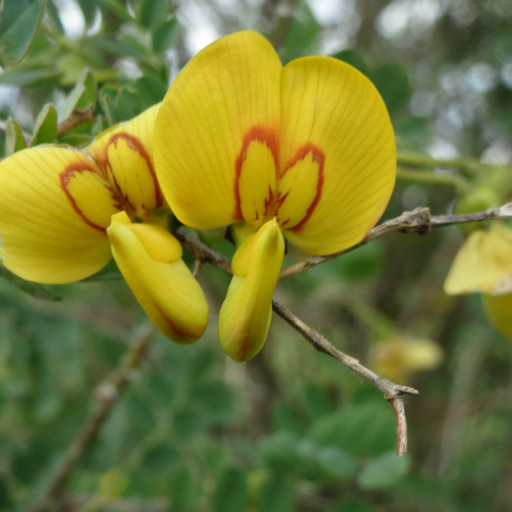
- 🌼 Pea-Like Blooms: During early summer, it produces bright yellow flowers with subtle reddish-brown markings at the base, characteristic of the legume family.
- 🎈 Inflated Pods: Its most distinct feature is the "bladder"—large, papery, translucent seed pods that transition from a pale lime green to a bronzed, parchment-like brown as they dry.
🏡 In Your Garden
- 🌱 Soil Improver: As a member of the pea family, the Bladder Senna is a nitrogen-fixer. It actually works with soil bacteria to pull nitrogen from the air and "fertilize" the ground around it, making it great for poor or rocky soils.
- ☀️ Drought Warrior: This plant is incredibly tough. Once established, it develops a deep taproot that allows it to thrive in hot, dry conditions where other plants might wither. However, this same root makes it very "grumpy" about being moved—pick its forever home carefully!
⚠️ Safety & Toxicity
- 🚫 Mildly Toxic: While the plant looks inviting, the seeds and leaves contain compounds that act as a strong purgative (a powerful laxative).
- 🐾 Keep Away from Pets: If ingested in significant quantities, it can cause digestive upset in dogs, cats, and livestock. It is best placed in a spot where curious toddlers or pets won't be tempted to snack on the "balloons."
✨ Fun Fact
The Bladder Senna is so hardy that it was one of the few plants found growing on the slopes of Mount Vesuvius in Italy, thriving in the harsh, volcanic ash long before other species could take root!

Detailed Care Instructions
| Humidity | Normal |
| Lighting | Part Sun |
| Toxicity | Poisonous |
| Difficulty | Medium |
| Hibernation | Cold Period |
| Hardiness Zones | 4 - 8 |
Here are the steps to grow Colutea Arborescens plant:
- Choose a suitable location: Colutea Arborescens prefers full sunlight to partial shade. Find a spot in your garden that receives at least 6 hours of direct sunlight each day.
- Prepare the soil: The plant prefers well-draining soil, so make sure the soil is loose and fertile. If your soil has poor drainage, consider adding organic matter like compost to improve it.
- Planting: Dig a hole that is slightly larger than the root ball of the plant. Place the plant in the hole and backfill it with soil, gently firming it around the base of the plant. Make sure the crown is level with or slightly above the soil surface.
- Watering: After planting, thoroughly water the plant to help settle the soil around the roots. Water the plant regularly, especially during dry spells or in the initial stages of growth.
- Mulching: Apply a layer of organic mulch around the base of the plant to help retain moisture, suppress weed growth, and protect the roots during extreme temperatures.
- Pruning: Colutea Arborescens blooms on new wood, so it can be pruned in late winter or early spring before new growth begins. Trim back any dead or damaged branches, as well as any overgrown or crowded areas.
- Fertilizing: Feed the plant with a balanced, slow-release fertilizer in the spring to provide essential nutrients for healthy growth.
- Pests and diseases: Colutea Arborescens is generally resistant to pests and diseases. However, occasional infestations of aphids or spider mites can occur. Monitor the plant regularly and treat any problems with organic or chemical pest control methods if necessary.
- Propagation: The plant can be propagated from seeds or by taking softwood cuttings in early summer. Seeds need to be scarified (mechanically scratched) or soaked in water overnight before sowing to improve germination rates.
- Winter care: Colutea Arborescens is hardy and can tolerate cold temperatures. However, if you live in an area with harsh winters, you can protect the plant by mulching the base with straw or leaves for added insulation.
Remember to research the specific needs and growing recommendations for Colutea Arborescens in your region, as environmental conditions and care requirements can vary.

Place in a bright room that is sun drenched almost all day. Or directly in a south-facing window.

1. Watering frequency: Colutea Arborescens plant needs adequate watering to grow healthily. It is important to keep the soil slightly moist but not waterlogged. The frequency of watering depends on various factors such as the location, season, temperature, and humidity.
2. Soil type: The soil where Colutea Arborescens plant is growing should be well-draining. The plant prefers sandy loam soil that is rich in organic matter. Water should be able to penetrate the soil and drain away quickly.
3. Water amount: The amount of water required by Colutea Arborescens plant depends on the size of the container or the area where it is planted. It is better to water slowly and deeply, ensuring that the entire root system gets water.
4. Watering techniques: To water Colutea Arborescens plant, use a watering can or a hose with a soft spray nozzle. Avoid using a sprinkler system as the water may evaporate before it reaches the roots.
5. Timing: Water Colutea Arborescens plant early in the morning or late in the evening when the sun is not too strong. This will allow the water to soak into the soil and not evaporate quickly. Avoid watering during the heat of the day as this can cause water to evaporate before it reaches the roots.
6. Drought tolerance: Colutea Arborescens plant is drought-tolerant once it is established. However, in the first year of planting, the plant needs regular watering to help establish a strong root system.
7. Drainage: Ensuring proper drainage is crucial while watering Colutea Arborescens plant. It is important to water the plant in a way that excess water drains away from the soil to prevent the roots from sitting in water and developing root rot.
To fertilize this plant, apply a slow-release granular fertilizer with balanced nutrients in early spring. Use a low-nitrogen fertilizer to avoid excessive growth. Water the plant after fertilizing to help it absorb the nutrients. Avoid over-fertilizing as it can cause damage to the plant.
When planting the Colutea arborescens plant, it is recommended to provide it with well-draining soil that is nutrient-rich and slightly acidic. A soil pH range of 5.5 to 7.5 is ideal. The type of soil that is best suited for this plant is a loamy soil that contains a mix of sand, silt, and clay. Additionally, it is recommended to mix in organic matter, such as compost or aged manure, into the soil to help improve its texture and fertility. The Colutea arborescens plant prefers a soil that is consistently moist but not waterlogged, so it is important to ensure proper drainage. If the soil tends to be heavy and retain water, it may be necessary to amend it with sand or perlite to improve drainage. Overall, providing the Colutea arborescens plant with nutrient-rich, well-draining soil will help ensure its best growth and health.
To propagate this plant, begin by collecting mature seeds in the fall. Place the seeds in a container of water and allow them to soak overnight. The next day, spread the seeds on a flat surface and allow them to dry for a few days.
Fill a small pot with a well-draining soil mixture. Place the seeds on top of the soil and lightly cover with a thin layer of soil. Water the seeds gently to avoid washing them away.
Place the pot in a warm and bright location, but out of direct sunlight. Keep the soil moist but not waterlogged.
After a few weeks, the seeds will begin to germinate. Once the seedlings are a few inches tall, they can be transplanted into larger pots or directly into the garden.
To propagate from cuttings, take a 6-inch stem cutting from the plant in the late spring or early summer. Remove the bottom leaves and dip the cut end in rooting hormone.
Plant the cutting in a well-draining soil mixture and water lightly. Cover the cutting with a plastic bag or clear plastic container to retain humidity and promote rooting.
Place the container in a bright but indirect light location, and keep the soil moist. After a few weeks, the cutting should begin to show roots. Once the cutting has rooted, it can be transplanted into a larger pot or directly into the garden.








