Plant Overview
Often found weaving through the dense canopies of Southeast Asian jungles, Combretum acuminatum is a vigorous woody climber known for its elegantly tapered leaves. While it may begin its life as a modest, sprawling shrub, it quickly reveals its true nature as a "liana," using its strong, reaching stems to chase sunlight high into the trees. In various tropical regions, it is appreciated both for its lush green backdrop and its subtle, brush-like blooms.
🔍 How to Identify
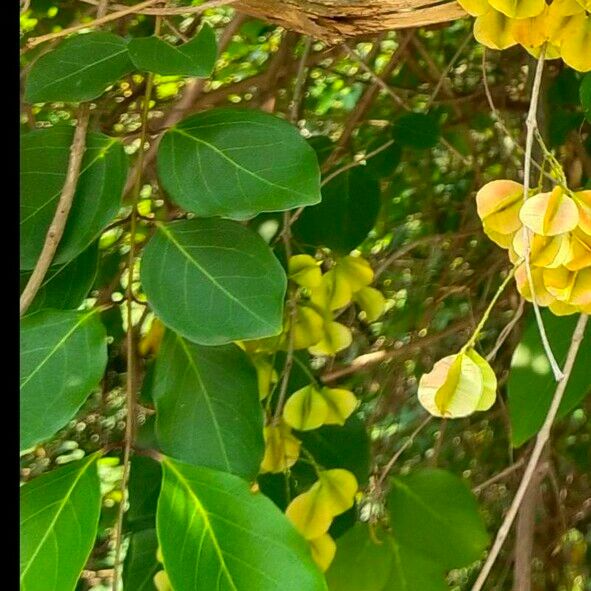
- 🍃 Tapered Foliage: The leaves are large, glossy, and "acuminate," meaning they narrow into a long, sharp point at the tip—a classic "drip-tip" adaptation to shed heavy tropical rain.
- 🌼 Bottle-Brush Blooms: It produces dense spikes of tiny, creamy-white or yellowish flowers that look like miniature bottle brushes due to their long, protruding stamens.
- 🦋 Four-Winged Fruit: One of its most distinct features is the fruit; it develops small, dry, four-winged capsules that are designed to spin through the air like tiny propellers when they fall.
🏡 In Your Garden
- 🧗 Need for Support: Because of its climbing habit, this plant requires a sturdy trellis, fence, or a large "host" tree to reach its full potential. Without a structure to climb, it will become a tangled, ground-covering thicket.
- 💧 Drainage and Humidity: It thrives in environments that mimic the forest edge—plenty of humidity and soil that stays moist but never soggy. It is particularly sensitive to root rot if the soil becomes compacted or waterlogged.
⚠️ Safety & Toxicity
- 🛡️ General Safety: Combretum acuminatum is generally considered low-risk for humans, though it is not an edible species.
- 🐾 Pet Caution: While not famously toxic, the winged fruits and seeds can be a choking hazard or cause mild gastrointestinal upset if ingested by curious dogs or cats. It is always best to discourage pets from chewing on the woody vines.
✨ Fun Fact
In its native habitats, this plant acts as a "natural highway" for arboreal wildlife; its strong, rope-like vines provide essential bridges for small mammals and reptiles to travel between forest canopies without ever having to descend to the dangerous forest floor!

Detailed Care Instructions








