Plant Overview
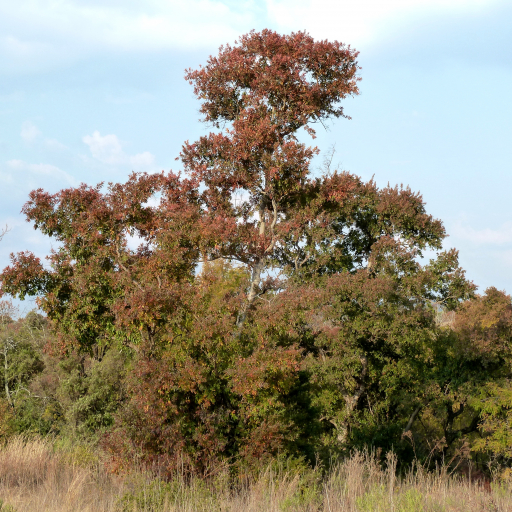
Known affectionately as the River Bushwillow or "Vaderlandswilg," this Southern African native is a true shapeshifter of the seasons. Its scientific name, erythrophyllum, literally translates to "red leaf," a nod to the spectacular crimson and gold display it puts on before shedding its leaves in autumn. Often found hugging the banks of rivers, it is a favorite for gardeners looking to create a cooling, leafy canopy that sings with the sound of visiting birds.
🔍 How to Identify
- 🍃 Autumn Foliage: The most striking feature is the leaf color change; the elliptic, light-green leaves turn a deep, vibrant red or burgundy as the weather cools.
- 🪵 Mottled Bark: The trunk is a work of art, featuring smooth, pale-gray bark that flakes off in patches to reveal creamy-tan textures underneath, giving it a "leopard-print" appearance.
- 🌬️ Winged Fruit: It produces small, four-winged nuts (samaras) that are brownish-green, turning honey-brown as they dry; these "propellers" help the seeds travel on the wind.
🏡 In Your Garden
- 💧 Thirsty Roots: Because its natural habitat is near water, this tree loves deep, regular watering. It is the perfect choice for damp spots in the yard or near a pond, though it is surprisingly drought-tolerant once its root system is fully established.
- 🦋 A Wildlife Magnet: This tree acts as a bustling "nature hotel." The dense, spreading crown provides nesting sites for birds like the Crested Barbet, while the flowers attract a massive array of butterflies and bees.
- 🌳 Fast-Growing Shade: If you need shade quickly, this is your tree. It grows rapidly, but be mindful of its root system—keep it at least 5 meters away from swimming pools or foundations to avoid any structural "tug-of-war."
⚠️ Safety & Toxicity
- ✅ General Safety: The leaves and wood are generally non-toxic and safe to handle for most gardeners and pets.
- 🤢 The Seed Warning: While the tree is safe, the four-winged seeds are known to be poisonous to humans. If ingested, they can cause severe hiccups, nausea, or vomiting. Ensure young children are taught not to snack on the "propellers" found on the ground.
✨ Fun Fact
The River Bushwillow has a unique relationship with the animal kingdom; while the seeds are toxic to humans, they are a favorite snack for Chacma Baboons, who eat them without any ill effects!

Detailed Care Instructions
To grow Combretum Erythrophyllum (also known as the River Bushwillow), you can follow these steps:
- Climate and Soil: Make sure you are in a suitable climate for this plant. The Combretum Erythrophyllum thrives in regions with a mild climate and is tolerant of both drought and frost. The soil should be well-draining and rich in organic matter.
- Planting location: Choose a sunny spot in your garden with enough space for the plant to grow to its full potential. Ensure that there is enough space for the roots to spread.
- Propagation: There are various methods of propagating Combretum Erythrophyllum, including seed propagation or by rooting cuttings. Seeds can be sown directly into the ground or started in a seed tray. Cuttings should be taken from mature, healthy plants and placed in a well-draining rooting medium.
- Planting: If you are using seeds, plant them at the appropriate depth according to the seed packet instructions. If using cuttings, ensure that they have a few sets of leaves and insert them into the prepared rooting medium. Water well after planting to settle the soil and provide moisture.
- Watering: Initially, water the plant regularly until it establishes itself. Thereafter, water it deeply once a week, especially during dry periods. Avoid overwatering, as it can lead to root rot.
- Fertilizing: Apply a balanced, slow-release fertilizer in spring to promote healthy growth. Follow the manufacturer's instructions for the appropriate dosage.
- Pruning: Regular pruning helps maintain the shape and size of the plant. It is best to prune during the dormant season, typically early spring. Remove any dead or diseased branches while maintaining an overall balanced shape.
- Mulching: Apply a layer of organic mulch around the base of the plant to retain moisture, suppress weed growth, and regulate soil temperature.
- Pests and Diseases: Keep an eye out for common pests like aphids or mealybugs. Treat infestations promptly using appropriate organic or chemical control methods. Ensure good air circulation around the plant to prevent fungal diseases.
- Patience: Finally, be patient. Combretum Erythrophyllum can take a few years to reach its full potential, so continue to provide proper care and maintenance over time.
Remember to always consult local gardening experts or references in your area for specific tips and techniques tailored to your region.

Place in a bright room that is sun drenched almost all day. Or directly in a south-facing window.

To water this particular plant, you should follow a few guidelines. Firstly, only water when the soil has become slightly dry. Don't overwater as the plant can be susceptible to root rot.
When you do water, be sure to water thoroughly, allowing the water to soak deeply into the soil. This will encourage the plant to grow strong roots.
It is also recommended to avoid getting water on the foliage, as this can lead to fungal diseases. Instead, direct the water to the base of the plant.
During the hotter months, the plant may require more frequent watering, but in cooler weather, be sure to reduce the frequency.
Overall, providing adequate moisture without overwatering is key to helping this plant thrive.
To fertilize this plant, first choose a balanced fertilizer with an N-P-K ratio of around 10-10-10. Mix the fertilizer with water according to the package instructions. Water the plant thoroughly before applying the fertilizer to avoid burning the roots. Apply the fertilizer at the base of the plant, spreading it evenly around the root zone. Use care not to spill the fertilizer on the foliage or stem of the plant. Finally, water the plant again after fertilizing to ensure the nutrients are absorbed by the roots.
Combretum Erythrophyllum grows best in soil that is well-draining, loamy, and nutrient-rich. The pH of the soil should fall within the neutral to slightly acidic range. Avoid using heavy or clayey soils that can retain too much water, leading to root rot and other problems. It is recommended to mix the soil with some organic matter such as compost, peat moss, or aged manure to improve soil structure and fertility. The plant prefers to grow in full sun, but it can tolerate some shade. Adequate watering is essential, and it is recommended to water deeply once or twice a week during the growing season. Avoid overwatering or letting the soil dry out completely, as this can stress the plant.
One way to propagate this plant is through stem cuttings. First, choose a healthy stem and make a clean cut just below a node (the point where a leaf or branch attaches to the stem). Remove any leaves from the bottom one-third of the stem, leaving at least 3-4 leaves at the top.
Next, dip the cut end into rooting hormone powder and then plant the stem into a pot filled with moist soil or vermiculite. Water thoroughly, and cover the pot with a plastic bag to create a humid environment. Place it in a warm and bright area, but out of direct sunlight. After a few weeks, new roots should start to emerge from the cut end of the stem.
Once the roots are well established, the plant can be transplanted into a larger pot or planted outside in a suitable location.








