Plant Overview
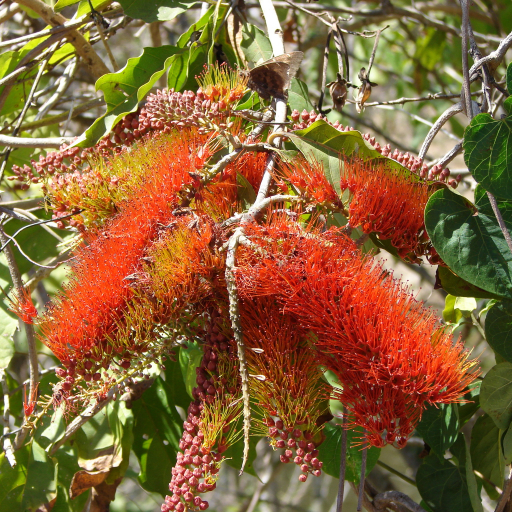
Often called the "Mealy Combretum" or "Manteca," this spectacular tropical climber looks like nature’s own neon paintbrush. Native to the dry forests of Central and South America, it is a favorite for those wanting to turn a fence or trellis into a buzzing hummingbird highway. Its dramatic, one-sided flower spikes give it a wild, architectural flair that is truly one of a kind.
🔍 How to Identify
- 🪮 The "Comb" Inflorescence: The most striking feature is the flower spike, where all the individual blossoms point in one direction. This creates a vibrant orange, red, or yellow "comb" or brush shape.
- 🍃 Mealy Leaves: The leaves are broad and oval, often featuring a subtle, silvery-white or "floury" coating on the underside (hence the name farinosum, meaning "mealy").
- 🪵 Woody Vine: It grows as a liana, meaning it develops thick, woody stems that scramble and twist over surrounding structures to reach the sunlight.
🏡 In Your Garden
- 🏗️ Support is Essential: As a vigorous woody climber, this plant requires a very sturdy trellis, pergola, or a strong fence. Avoid flimsy plastic supports, as the mature weight of the vine can easily collapse them.
- ☀️ Sun and Stress: It thrives in full sun, which is necessary for heavy blooming. In its native habitat, it experiences a dry season; mimicking this by reducing water slightly in late winter can actually help trigger a more dramatic flowering display in the spring.
- 🦜 Hummingbird Paradise: Because the flowers are "secund" (pointing one way), they create a perfect landing platform for birds. It is one of the best plants for attracting nectar-seeking wildlife to a tropical garden.
⚠️ Safety & Toxicity
- 🌿 General Assessment: Combretum farinosum is generally considered non-toxic and safe for home gardens. It does not possess the "deadly" reputation of some other tropical vines.
- 🐾 Sensitive Skin: While not poisonous, the sap of many Combretum species can cause mild skin irritation or dermatitis in people with sensitive skin. It is always wise to wear gloves when pruning or training the vines.
✨ Fun Fact
The specific name farinosum comes from the Latin word for "flour," referring to the dusty, powdery appearance of the plant's leaves and young stems!

Detailed Care Instructions

Some plants require more regular watering than others, which should be done every few days. It's critical to maintain the soil moist all of the time. The water requirements of the same plant placed in pots with varying sizes will differ. Because the water in the smaller pot evaporates faster than the water in the larger pot, it will require more watering. Regardless of pot size, the surface should constantly be maintained moist.








