Plant Overview
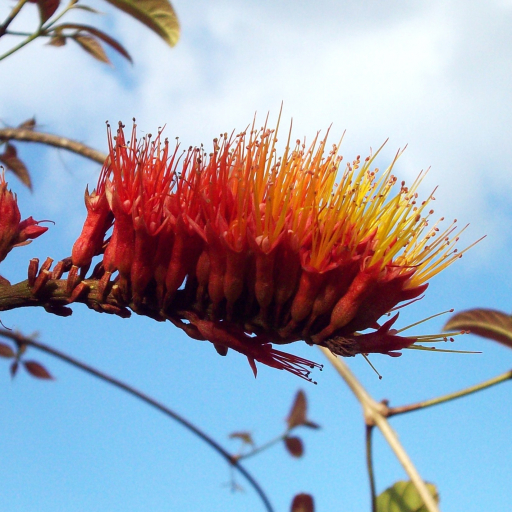
Imagine a botanical firework exploding in slow motion across a tropical canopy. Known famously as the Monkey's Brush Vine, this exotic South American native is a showstopper that looks like it belongs in a fantasy film. Its horizontal, brush-like flowers transition through a vivid sunset of colors, making it a prized specimen for gardeners who want a true "conversation piece" that defies the look of traditional garden flowers.
🔍 How to Identify
- 🖌️ The "Brush" Inflorescence: The most striking feature is the horizontal flower spikes. They are densely packed with long, protruding stamens that give the appearance of a colorful hairbrush or a bottle brush laid on its side.
- 🍃 Rounded Foliage: As the Latin name rotundifolium suggests, the leaves are generally oval to round. They are deep green, leathery, and provide a lush backdrop that makes the fiery flowers pop.
- 🧗 Woody Scrambler: This is a vigorous woody vine (liana). While it can be pruned into a large shrub-like shape, its natural instinct is to climb and sprawl over any available support.
🏡 In Your Garden
- 💧 Tropical Soul: Originating from the Amazon basin, this plant craves high humidity and consistent warmth. It is not frost-tolerant and will struggle if the air becomes too dry, making it a challenge (but a rewarding one) for greenhouse growers in cooler climates.
- 🪵 Structural Support: Because it is a heavy, woody climber, a flimsy trellis won’t suffice. It needs a sturdy fence, pergola, or a strong tree to lean on. It blooms best when allowed to spread its branches horizontally.
- 🦋 Pollinator Magnet: The unique shape of the flowers isn't just for show; it is perfectly designed for hummingbirds and butterflies to land on and feed. In a garden setting, it acts as a vibrant hub for local wildlife.
⚠️ Safety & Toxicity
- 🌿 Generally Safe: There are no widely recorded instances of severe toxicity associated with the Monkey's Brush. It is generally considered safe to have around the home.
- 🧴 Sap Sensitivity: Like many tropical vines, the sap can occasionally cause mild skin irritation in sensitive individuals. It is a good practice to wear gloves when performing heavy pruning.
✨ Fun Fact
The flowers of the Monkey's Brush are "color-coded" for pollinators! They typically begin as a bright yellow or lime green and deepen into a fiery orange and blood-red as they age. This transition helps birds identify which flowers have the highest nectar content.

Detailed Care Instructions
To grow Combretum Rotundifolium, also known as the bushwillow, follow these steps:
- Climate and soil requirements: This plant thrives in tropical to subtropical climates. It prefers well-draining soil with a slightly acidic to neutral pH. Ensure that the soil is fertile and rich in organic matter.
- Choose the right location: Find a spot in your garden that receives full sun to partial shade. The plant needs at least six hours of direct sunlight daily for optimal growth.
- Planting: Dig a hole in the prepared soil, making it twice as wide and deep as the root ball of the plant. Place the plant in the hole, ensuring that the top of the root ball is level with or slightly above the soil surface. Fill the hole with soil and gently firm it around the base of the plant.
- Watering: Provide sufficient water to the newly planted bushwillow to help it establish its roots. Water deeply, ensuring that the soil is moist but not waterlogged. After the initial establishment period, the plant is relatively drought-tolerant. Water it during periods of extended dryness.
- Mulching: Apply a layer of mulch around the base of the plant, but ensure it doesn't touch the stem. Mulching helps retain moisture, suppresses weed growth, and keeps the soil temperature more stable.
- Pruning: Prune the plant during the late winter or early spring to remove any dead or damaged branches and to maintain a desired shape. Be careful not to over-prune, as this can impact flowering and fruiting.
- Fertilizing: Apply a balanced slow-release fertilizer in early spring to promote healthy growth. Follow the product instructions for the appropriate dosage and frequency.
- Propagation: Combretum Rotundifolium can be propagated from seeds or stem cuttings. Collect seeds from mature plants or take stem cuttings from healthy, established plants. Follow specific propagation techniques for each method to increase your chances of success.
- Pest and disease control: Monitor your plant regularly for any signs of pests or diseases, such as aphids, scale insects, or fungal infections. Use appropriate insecticides or fungicides if necessary, following the instructions carefully.
Remember, plants may have specific care requirements based on their local environment, so it's always a good idea to consult with local gardening resources or experts for more region-specific guidance.

Place in a bright room that is sun drenched almost all day. Or directly in a south-facing window.

To properly water Combretum Rotundifolium plants, it is important to consider the following steps:
1. Assess the soil moisture: Before watering, check the soil moisture level. Insert your finger into the soil up to your second knuckle to determine its moisture content. If the top 1-2 inches of soil feels dry, it's an indication that watering is needed.
2. Choose the watering method: There are various ways to water Combretum Rotundifolium plants, such as using a watering can, a garden hose with a spray attachment, or an automated drip irrigation system. Select the method that works best for your specific situation and convenience.
3. Water deeply: When watering, it is crucial to ensure that water reaches the plant's root zone. It is recommended to provide a deep watering session, allowing the water to penetrate at least 6-8 inches into the soil. This encourages the roots to grow deeper and helps the plant establish a stronger foundation.
4. Slow and steady watering: Avoid watering too quickly or forcefully, as this may result in water runoff. Instead, maintain a slow and steady flow of water, allowing it to soak into the soil gradually. This method ensures that the plant receives adequate hydration without wasting water.
5. Watering frequency: Watering frequency largely depends on the surrounding environmental conditions, such as temperature, humidity, and rainfall. Generally, it is advisable to water Combretum Rotundifolium plants deeply once every 7-10 days during the growing season. However, adjust the frequency based on factors like weather and soil moisture levels.
6. Consider the water source: It is beneficial to use room temperature water when watering Combretum Rotundifolium plants. Cold water can potentially shock the roots, while hot water may cause damage. Therefore, allow tap water to sit for a while to reach a comfortable temperature before using it for watering.
7. Avoid overwatering: While regular watering is crucial, overwatering can be harmful to the plant. When waterlogged, the roots may suffocate, leading to root rot or other diseases. Always ensure that the soil has adequate drainage, and avoid leaving the plant in standing water.
Remember to monitor your Combretum Rotundifolium plant regularly to ensure it is thriving. Adjust your watering routine as needed, depending on the plant's response and the prevailing weather conditions.
- Choose a suitable fertilizer: Select a balanced, slow-release fertilizer that is appropriate for woody plants or flowering shrubs. Look for one with a ratio such as 10-10-10 or 14-14-14.
- Timing: Fertilize the Combretum Rotundifolium plant in early spring, just before the growing season begins. Avoid fertilizing during drought or extremely hot periods.
- Dilute the fertilizer: Follow the package instructions for diluting the fertilizer in water. Most fertilizers need to be diluted in a certain ratio, such as 1 tablespoon per gallon of water.
- Apply the fertilizer: Pour the diluted fertilizer around the base of the plant, making sure to spread it evenly. Avoid getting the fertilizer directly on the foliage or flowers, as this could cause fertilizer burn.
- Depth and distance: Apply the fertilizer about 6 to 12 inches away from the stem of the plant. Do not apply it too close to the base to prevent burning the roots.
- Water thoroughly: After applying the fertilizer, water the plant deeply to ensure the nutrients penetrate the soil and reach the root system. This helps prevent fertilizer runoff and encourages absorption.
- Repeat as necessary: Depending on the specific fertilizer you choose, you may need to repeat the application every 4-6 weeks during the growing season. Follow the package instructions for the recommended frequency.
- Monitor plant health: Keep an eye on the plant's overall health and response to fertilization. If the plant shows signs of over-fertilization, such as yellowing or wilting leaves, reduce the frequency or amount of fertilizer applied. Conversely, if the plant appears nutrient-deficient, consider increasing the fertilizer application slightly, but be cautious not to over-fertilize.
- Consider soil conditions: Understanding the specific soil conditions in which the Combretum Rotundifolium plant thrives can help tailor the fertilization process. Conduct a soil test to determine any deficiencies and adjust the fertilizer accordingly, following professional recommendations if available.
Remember to always follow the instructions on the fertilizer packaging and seek expert advice if needed.
Combretum rotundifolium is a type of plant that requires a specific type of soil for optimal growth. The ideal soil for this plant is well-draining and loamy in texture. It should be rich in organic matter and have a slightly acidic to neutral pH level.
The soil should have good drainage capabilities to prevent waterlogging, as Combretum rotundifolium does not tolerate soggy or waterlogged conditions. This ensures that the plant's roots receive adequate oxygen, preventing root rot and other diseases.
A loamy soil texture, characterized by a balanced combination of sand, silt, and clay particles, provides good moisture retention while allowing excess water to drain away. This helps maintain a consistent level of hydration for the plant's roots without causing water stagnation.
Adding organic matter to the soil helps improve its fertility and moisture-holding capacity. Compost, well-rotted manure, or leaf mold can be mixed into the soil before planting to ensure a nutrient-rich medium for the plant to grow in.
The pH level of the soil should ideally be slightly acidic to neutral, with a range of 6.0 to 7.0. This pH range supports the proper uptake of essential nutrients by the plant roots. If required, the soil's pH can be adjusted by adding organic amendments like peat moss or sulfur to lower the pH, or by adding lime to raise it.
Overall, providing Combretum rotundifolium with a well-draining, loamy soil enriched with organic matter and maintaining the appropriate pH level will create an optimal growth environment for this plant.
To propagate Combretum rotundifolium plants, follow these steps:
- Obtaining seeds: Depending on the growth cycle of the plant, you can collect seeds from the parents or purchase them from a reputable seed supplier.
- Preparing the soil: Combretum rotundifolium plants prefer well-draining soil. Prepare a potting mix using equal parts of sand, perlite, and peat moss to ensure proper aeration and moisture retention.
- Seed treatment: Before sowing, you can perform a few treatments to enhance germination. Scarification, which involves scratching or filing the seed coat gently, can help with germination. You can also soak the seeds in warm water for 24 hours or in a weak solution of rooting hormone to stimulate rooting.
- Sowing the seeds: Fill small seed trays or pots with the prepared soil mixture. Place the seeds evenly on the soil surface and slightly press them down. Avoid burying the seeds too deep as they require light for germination.
- Germination conditions: The seeds of Combretum rotundifolium need warmth and moisture for successful germination. Place the trays or pots in a warm and bright location, preferably at a temperature range of 70-80°F (21-27°C). Ensure the soil remains consistently moist throughout the germination process.
- Transplanting: Once the seedlings have developed two to four true leaves, they can be transplanted into larger pots or directly into the ground if the weather conditions are suitable. Acclimatize the seedlings gradually to outdoor conditions to prevent shock.
- Care and maintenance: Provide the young plants with ample sunlight, ideally in a location that receives 6-8 hours of direct sunlight each day. Water the plants regularly, allowing the soil to dry between watering sessions to avoid waterlogging. Fertilize the plants with a balanced, slow-release fertilizer every few months to promote healthy growth.
It's important to note that Combretum rotundifolium is a tropical plant that thrives in warm climates. If you live in a cooler region, you may need to provide additional protection or grow it indoors in a greenhouse.








