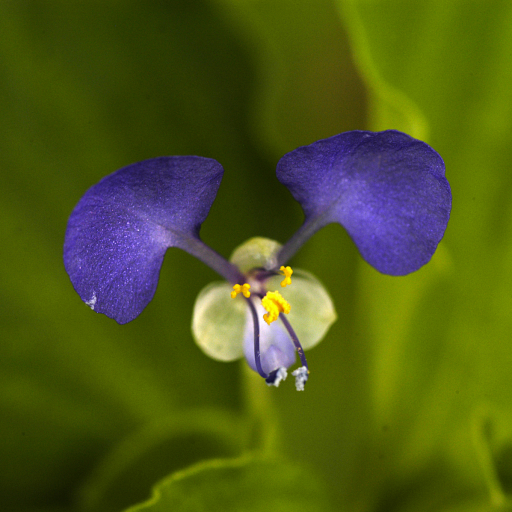
Plant Overview
Known as the Benghal Dayflower or "Tropical Spiderwort," this resilient crawler is famous for its striking electric-blue blossoms that last only a single day. While it is often treated as a persistent garden weed due to its incredible survival skills, its unique "hidden" biology makes it one of the most clever plants in the garden. It is a master of adaptation, found everywhere from the edges of tropical forests to cracks in suburban sidewalks.
🔍 How to Identify
- 🌸 Asymmetric Blooms: The flowers feature three petals—two larger, vibrant blue ones on top and one smaller, paler (almost white) petal at the bottom.
- 🍃 Hairy Leaf Sheaths: The oval-shaped, fleshy leaves are held by a "sheath" that wraps around the stem, often covered in tiny, stiff hairs that can feel slightly rough to the touch.
- 🌀 Creeping Habit: It grows low to the ground, with stems that "walk" across the soil, rooting at every joint (node) to create a thick, carpet-like mat.
🏡 In Your Garden
- 💧 Moisture Indicator: This plant is a signal of high moisture. It thrives in damp, nitrogen-rich soils and will quickly take over areas where the hose leaks or the drainage is poor.
- ✂️ The "Zombie" Effect: If you try to pull it out, be careful! Any tiny segment of the succulent stem left behind can regenerate into a full new plant, making it very difficult to eradicate once it takes hold.
⚠️ Safety & Toxicity
- 🐾 Mild Irritant: While not considered deadly, the sap can cause mild skin irritation (dermatitis) for people with sensitive skin.
- 🐕 Pet Caution: If ingested in large amounts by curious pets, it can cause minor digestive upset, so it’s best to keep it away from grazing areas.
- 🚫 Invasive Status: In many parts of the world, it is classified as a noxious weed because it can outcompete native plants and choke out garden crops.
✨ Fun Fact
The Benghal Dayflower is a "double-bloomer." Beyond the blue flowers you see, it also produces secret, colorless flowers underground. These hidden flowers never open but self-pollinate, ensuring the plant can still produce seeds even if the top half is destroyed by fire, frost, or hungry animals!

Detailed Care Instructions
| Humidity | Normal |
| Lighting | Shade |
| Toxicity | Poisonous |
| Difficulty | Medium |
| Temperature | 21°C - 38°C |
| Hardiness Zones | 8 - 11 |
To grow Commelina benghalensis, follow these steps:
- Obtain seeds or plants: You can purchase Commelina benghalensis seeds online, or you can acquire plants from a nursery or garden center.
- Select a suitable location: Commelina benghalensis thrives in full sun to partial shade, so choose a spot in your garden that receives a good amount of sunlight. Ensure the soil is well-draining.
- Prepare the soil: Before planting, prepare the soil by removing any weeds or rocks. Loosen the soil to allow for better root penetration.
- Planting seeds: If using seeds, sow them directly into the soil at a depth of about ¼ inch (0.6 cm). Space the seeds about 6 inches (15 cm) apart.
- Planting seedlings: If you have purchased young plants, dig holes that are slightly wider and deeper than the root ball. Place the seedlings in the holes and cover the roots with soil, making sure to not bury the stems too deep.
- Watering: Keep the soil slightly moist but not waterlogged. Water the plants regularly, especially during dry spells or in hot weather. Commelina benghalensis prefers moist conditions.
- Mulching: Apply a layer of organic mulch around the plants, such as straw or wood chips. This helps retain moisture, suppresses weeds, and keeps the soil temperature consistent.
- Fertilization: Feed the plants with a balanced, slow-release fertilizer according to the packaging instructions. This will promote healthy growth and flowering.
- Pruning: As Commelina benghalensis grows, you may need to prune back any overgrown or damaged stems to encourage bushier growth. Prune off spent flowers to promote continuous blooming.
- Pests and diseases: Monitor your plants for any signs of pests, such as aphids or spider mites, and treat them accordingly. However, Commelina benghalensis is generally less susceptible to pests and diseases.
- Harvesting: Commelina benghalensis produces small blue flowers throughout the growing season. Enjoy the beauty of the flowers or cut them for floral arrangements.
Remember to check your local regulations as Commelina benghalensis can be considered an invasive plant in some regions. Take necessary precautions to prevent it from spreading beyond your garden.

Place in a bright room that is sun drenched almost all day. Or directly in a south-facing window.

When watering the plant in question, it is important to avoid over-watering as this can cause root rot. Wait until the top layer of soil is dry to the touch before watering, and avoid getting water on the leaves or stem as this can lead to fungal growth. Additionally, ensure that the plant is placed in well-draining soil to prevent water from sitting in the soil for too long. When watering, use a watering can or gently pour water onto the soil around the base of the plant, making sure to saturate the soil without creating puddles. Finally, avoid watering the plant during periods of dormancy or low growth as it requires less water during these times.
To fertilize the plant, prepare a balanced fertilizer that contains equal amounts of nitrogen, phosphorus, and potassium. During the growing season, fertilize every 2-3 weeks with diluted fertilizer mixed with water. Be sure to avoid over-fertilizing, as it can lead to leaf burn and damage to the plant's roots. Apply the fertilizer carefully to the base of the plant, avoiding contact with the foliage. Water the plant after fertilizing to help the nutrients reach the roots.
The best soil to use with this plant should be well-draining. It should have a neutral pH level of around 7.0. The soil texture should be a loamy or sandy loam type that is rich in organic matter. It is recommended to add compost or organic fertilizer to the soil before planting. Also, the soil should be moist, but not saturated, and should be watered regularly to ensure proper growth and development of the plant. Avoid using heavy clay soil, which can cause poor drainage and restrict root growth.
To propagate this plant, you will need to locate the runners that come out from the main plant stem. Once located, gently cut the runners from the main stem with a pair of scissors or a knife. Then, carefully remove any excess leaves or stems from the bottom of the runner where the roots will form. Place the runner in a jar or glass of water, making sure that the bottom of the runner is submerged in the water. After a few days, you should start to see roots forming at the bottom of the runner. Once the roots are several inches long and well established, you can plant the runner into a pot or directly into soil in your garden. Be sure to water the new plant regularly while it gets established.
Common pests of the benghal dayflower include Spider mites, aphids, thrips. Make a habit of checking your benghal dayflower frequently for pests so that any infestations can be caught and managed early.








