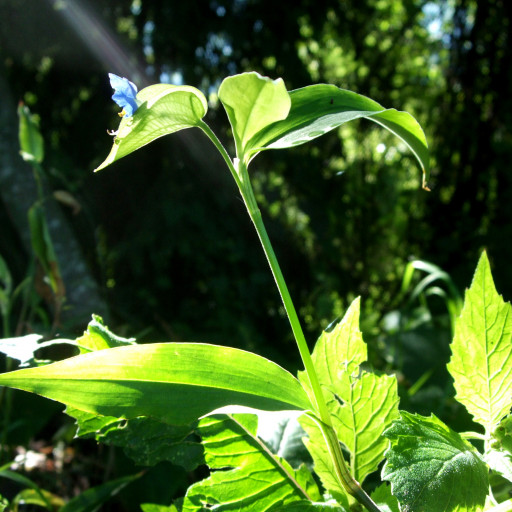
Plant Overview
Often called the Common Dayflower or "Asiatic Dayflower," this delicate wanderer is famous for its bright blue blossoms that open for only a single day. Though some gardeners consider it a persistent weed due to its resilient nature, its unique three-petaled flowers offer a splash of rare cobalt blue to shaded garden corners. It is a hardy traveler that originally hailed from East Asia before naturalizing across much of North America and Europe.
🔍 How to Identify
- 💙 The "Two-Tone" Petals: Look for three petals—two larger, brilliant blue ones on top and one tiny, almost invisible white or translucent petal at the bottom.
- 🍃 Clasping Leaves: The lance-shaped leaves are smooth and bright green, wrapping tightly around the succulent, jointed stems at the nodes.
- 🐚 The Spathe: Flowers emerge from a unique, boat-shaped leaf structure called a "spathe," which protects the delicate buds before they unfurl for their brief appearance.
🏡 In Your Garden
- 💧 Moisture Seeker: This plant thrives in moist, disturbed soil. If you find it popping up spontaneously, it usually indicates a spot where water collects or the soil remains consistently damp.
- 🏃 A Spreading Habit: It grows via "creeping" stems. Wherever a stem node touches the ground, it can sprout new roots. This makes it a challenge to remove manually, as any small fragment left in the soil can potentially regenerate into a new plant.
⚠️ Safety & Toxicity
- 🟢 Generally Safe: Commelina communis is not considered toxic to humans and is even used as a cooked vegetable in some traditional Asian cuisines.
- 🐕 Pet Watch: It is generally non-toxic to cats and dogs. However, as with any wild plant, keep an eye on curious pets to ensure they don't consume large quantities, which could cause minor stomach upset.
✨ Fun Fact
🎨 The Fugitive Blue: The intense blue pigment from the dayflower’s petals was once used in Japan to create a dye known as aobana. It was historically used to sketch designs on silk for kimonos because the color is water-soluble; the blue lines disappear completely when washed, leaving no trace on the final masterpiece!

Detailed Care Instructions
| Humidity | Normal |
| Lighting | Shade |
| Difficulty | Easy |
| Hibernation | Cold Period |
| Temperature | 17°C - 27°C |
| Hardiness Zones | 6 - 9 |
To grow a Commelina Communis plant, you can follow these steps:
- Obtain seeds or young plants: You can either purchase seeds from a local nursery or online, or you can collect seeds from existing plants. You can also find young plants at nurseries or through plant exchanges.
- Choose the right location: Commelina Communis plants prefer full sun to partial shade. Select a location in your garden that receives at least 6 hours of direct sunlight each day. The soil should be well-draining and rich in organic matter.
- Prepare the soil: Before planting, prepare the soil by removing any weeds or rocks. Loosen the soil by using a garden fork or tiller. Adding compost or well-rotted manure can improve the soil fertility and drainage.
- Sow the seeds or transplant young plants: If you're starting from seeds, sow them directly into the prepared soil, following the packet instructions on spacing and depth. If using young plants, dig a hole slightly larger than the root ball and place the plant into the hole, covering the roots with soil.
- Water regularly: Keep the soil consistently moist, especially during the germination period. Once established, Commelina Communis plants are quite drought-tolerant and only require occasional watering during prolonged dry periods.
- Mulch: Apply a layer of organic mulch, such as straw or wood chips, around the plants to help retain moisture, suppress weeds, and maintain an even soil temperature.
- Fertilize: Although Commelina Communis plants are generally low-maintenance, you can apply a balanced, slow-release fertilizer once or twice a year to provide necessary nutrients. Follow the fertilizer packaging instructions for application rates and timing.
- Prune as needed: Commelina Communis plants can become invasive if not controlled. To prevent spreading, trim back any overgrown or encroaching stems. Regular pruning will promote a bushier, more compact growth habit.
- Monitor for pests and diseases: Watch out for common garden pests like aphids, spider mites, or slugs. Use organic pest control methods or insecticidal soaps as needed. Commelina Communis plants are generally resistant to diseases, but it's still essential to monitor for any signs of infection or rot.
- Enjoy the blooms: Commelina Communis plants typically bloom throughout the summer months, displaying beautiful blue or purple flowers. Enjoy the vibrant colors and the attractive foliage of this plant in your garden.
Remember to check with your local gardening regulations, as Commelina Communis may be invasive in some regions.

Place in a bright room that is sun drenched almost all day. Or directly in a south-facing window.

Commelina Communis plant requires regular watering to keep the soil moist but not waterlogged. It is important to avoid overwatering as this can cause root rot and other damage. One way to ensure that the plant is getting enough water is to check the soil moisture regularly by sticking your finger about an inch or two into the soil. If it feels dry, it is time to water the plant. When watering, pour water slowly and evenly around the base of the plant, making sure to avoid getting water on the leaves. Water the plant early in the morning or late in the evening to reduce evaporation and avoid sunscald on the leaves. It is also important to use a well-draining potting mix and a pot with drainage holes to ensure that excess water can drain away.
To fertilize this plant, you should use a balanced, water-soluble fertilizer that is rich in nutrients and minerals. Dilute the fertilizer according to the manufacturer's instructions and apply it to the soil around the base of the plant. Be sure to water the plant thoroughly after fertilizing to help the nutrients soak into the soil. Fertilize once every two weeks during active growing seasons, and reduce fertilization during the dormant season. Avoid over-fertilizing as it can damage the plant and its roots.
The best soil to use for this particular plant is a well-draining soil that is slightly acidic and rich in organic matter. It should contain a mix of soil, sand, and compost to provide the plant with the necessary nutrients and support for healthy growth. Avoid heavy clay soils or soils that are too compacted as they can restrict root growth and reduce overall plant health. Adding perlite or vermiculite to the soil mix can also improve drainage and air circulation around the roots.
Commelina Communis plant can be propagated through both stem cuttings and seeds. For stem cuttings, you will need to select a healthy and young stem from the parent plant and cut it at a 45-degree angle using a sharp and sterilized blade. Remove the leaves from the bottom 1/3 of the stem and dip the cut end in rooting hormone. Then, plant the cutting in a well-draining and nutrient-rich soil mix, keeping it moist and in a warm and bright location. It usually takes a few weeks for the cutting to develop roots and establish.
Alternatively, you can also propagate Commelina Communis from seeds. Collect ripe seeds from the parent plant and sow them in a well-prepared soil surface, tamping them gently and covering them with a light layer of soil. Water the seeds gently and keep the soil moist until germination, which usually takes 1-2 weeks. Once the seedlings have developed a few true leaves, you can transplant them into individual pots or a larger container, depending on your preference. Always ensure that the soil remains moist and provide adequate light and warmth for optimal growth.
Common pests of the dayflower include Spider mites, aphids, thrips. Make a habit of checking your dayflower frequently for pests so that any infestations can be caught and managed early.








