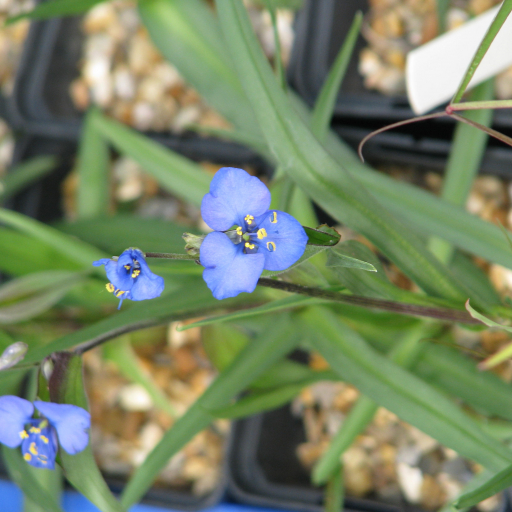
Plant Overview
Often called the Birdbill Dayflower, this Southwestern native is a rare treasure for those who crave "true blue" in their garden. Its name comes from the unique, beak-like shape of its flower buds, which look like a tiny bird’s bill waiting to open. Though each delicate bloom lasts only a single day, the plant produces a constant succession of flowers that capture the light like spilled sapphires among the grass.
🔍 How to Identify
- 💙 The "True Blue" Petals: It features three petals; the top two are large, rounded, and a vibrant electric blue, while the bottom petal is significantly smaller and often pale or white.
- 🦜 Bird-Like Spathes: The flower buds emerge from a folded, leaf-like bract (spathe) that looks remarkably like a green bird's beak or "bill."
- 🌿 Narrow Foliage: Unlike many other dayflowers with wide leaves, Dianthifolia has long, slender, lance-shaped leaves that resemble those of a Dianthus or a thick blade of grass.
🏡 In Your Garden
- 🥔 Tuberous Resilience: This plant grows from fleshy, tuber-like roots. This allows it to "sleep" through harsh conditions and store moisture, making it much more drought-tolerant than its tropical relatives once established.
- 🌤️ The Morning Show: Because the petals are thin and sensitive to heat, they usually curl up by mid-afternoon. To get the best view, plant it in a spot where you’ll see it during your morning routine.
- 🏔️ Rock Garden Star: It thrives in well-drained, gritty soil. It is particularly happy tucked between stones or in a native meadow setting where it can peek through taller grasses.
⚠️ Safety & Toxicity
- 🐾 Non-Toxic Status: The Birdbill Dayflower is generally considered safe and non-toxic for cats, dogs, and horses.
- 👄 Mild Irritation: While not poisonous, the stems contain a sap that can occasionally cause very mild skin or mouth irritation in sensitive individuals or curious toddlers if chewed in large quantities.
✨ Fun Fact
The genus Commelina was named by the famous botanist Carl Linnaeus after the three Commelijn brothers. Two were successful botanists (represented by the two large, flashy blue petals), while the third brother was not a botanist and died young—represented by the tiny, often "incomplete" third petal at the bottom of the flower!

Detailed Care Instructions

Place in a bright room that is sun drenched almost all day. Or directly in a south-facing window.

Some plants require more regular watering than others, which should be done every few days. It's critical to maintain the soil moist all of the time. The water requirements of the same plant placed in pots with varying sizes will differ. Because the water in the smaller pot evaporates faster than the water in the larger pot, it will require more watering. Regardless of pot size, the surface should constantly be maintained moist.








