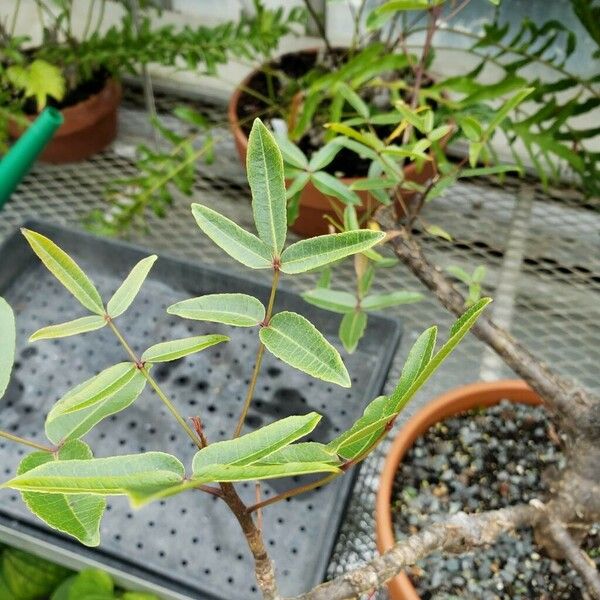
Plant Overview
Commonly known as a rare treasure from the limestone forests of Madagascar, Commiphora lamii is a member of the legendary Myrrh family. While its famous cousins were once traded as gold for their aromatic resins, this species is a "living sculpture" prized by succulent enthusiasts. Its swollen, papery trunk tells a story of survival in some of the harshest dry forests on Earth.
🔍 How to Identify
- 📜 Peeling Bark: The most striking feature is its "exfoliating" bark, which peels away in translucent, papery flakes to reveal a green, photosynthetic layer underneath.
- 🪴 Caudiciform Trunk: It develops a thickened, bulbous base (pachycaul habit) that acts as a natural water reservoir, giving it a bonsai-like appearance even at a young age.
- 🍃 Delicate Foliage: During the growing season, it sprouts small, bright green, pinnate leaves (leaflets arranged in pairs) that are often slightly fuzzy to the touch.
🏡 In Your Garden
- 🏜️ Mimicking the Dry Season: This plant thrives on a "feast or famine" cycle. It requires a strict dry dormancy in winter; if you water it when the leaves have dropped, the roots are highly prone to rot as the plant is essentially "sleeping."
- 🪨 Rocky Substrates: In the wild, it grows among tsingy (limestone) formations. In a pot, it demands a very gritty, inorganic soil mix—think more pumice and lava rock than potting soil—to ensure the roots never sit in dampness.
⚠️ Safety & Toxicity
- 🧴 Mild Irritant: While not considered deadly, the resinous sap (typical of the Burseraceae family) can cause contact dermatitis or skin irritation in sensitive individuals.
- 🐾 Pet Safety: It is generally not listed as highly toxic to pets, but due to the lack of research on this specific rare species, it is best kept out of reach of curious chewers to avoid stomach upset.
✨ Fun Fact
- Commiphora lamii is part of the "Incense Tree" family. If you accidentally bruise a branch, you might notice a faint, spicy, or pine-like aroma—this is the same type of resin used to make ancient Frankincense and Myrrh!

Detailed Care Instructions







