Plant Overview
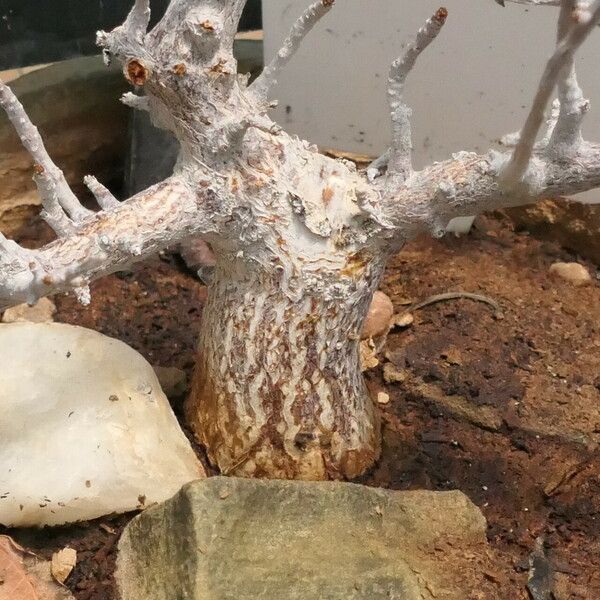
Known as a rare relative of the ancient Myrrh, Commiphora oblanceolata is a desert gem originating from the arid scrublands of the Horn of Africa. Often nicknamed the "Papery-Bark Myrrh," this plant is highly prized by succulent collectors for its rugged, "bonsai-by-nature" appearance. It tells a story of survival, having evolved to store water in its swollen trunk to withstand the harshest droughts of Ethiopia and Somalia.
🔍 How to Identify
- 📜 The Peeling Bark: Its most striking feature is the silvery-tan bark that peels away in translucent, papery flakes, revealing a hidden layer of green, photosynthetic tissue underneath.
- 🍃 Oblanceolate Leaves: As its name suggests, the leaves are "oblanceolate"—shaped like a teardrop but attached at the narrow end. They are typically a soft matte green and grow in small clusters.
- 🌳 Gnarled Growth: Even young specimens have a weathered, ancient look, with thick, succulent stems and a stout trunk (caudex) that gives it a miniature tree-like silhouette.
🏡 In Your Garden
- 🏜️ The Art of Neglect: This plant thrives on "tough love." It requires extremely gritty, well-draining soil (think volcanic rock and pumice). Because it is adapted to desert life, overwatering is its greatest enemy and can cause the roots to fail quickly.
- ☀️ Light & Dormancy: It is a true sun-worshiper. In lower light, it loses its compact shape and becomes "leggy." Be prepared for it to drop its leaves entirely during the winter—it isn't dying, but simply entering a natural dormancy to rest.
⚠️ Safety & Toxicity
- 🛡️ Safe Status: Commiphora oblanceolata is generally considered non-toxic to humans and common household pets like cats and dogs.
- 💧 Resin Sensitivity: While not poisonous, the plant produces a fragrant resin when pruned or nicked. Some people with sensitive skin may experience mild irritation (contact dermatitis) if the sap is handled frequently, so gloves are recommended for heavy pruning.
✨ Fun Fact
The resin of Commiphora species has been traded for over 5,000 years! While C. myrrha is the primary source of commercial Myrrh, C. oblanceolata produces its own unique, spicy-balsamic scent that you can smell if you gently bruise one of its leaves.

Detailed Care Instructions








