Plant Overview
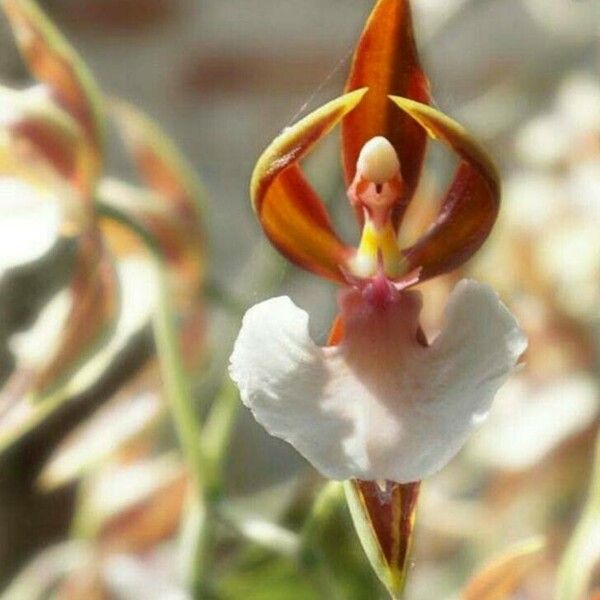
Often called the "Fiery Comparettia," this miniature Colombian orchid is a true showstopper for specialized collectors. Despite its tiny frame, it produces blossoms so intensely orange they look like flickering sparks against the dark green of the jungle canopy. It is a prized choice for terrarium enthusiasts who want a massive punch of color without sacrificing much shelf space.
🔍 How to Identify
- 🌸 The Bloom: Glowing neon-orange to reddish-vermilion flowers featuring a massive, flat lip that appears much larger than the rest of the plant.
- 🍃 Foliage: Small, leathery, dark green leaves—usually only one per growth—emerging from tiny, slightly flattened pseudobulbs.
- 🦒 The Spur: A distinctive, long "tail" or spur at the back of the flower, which acts as a nectar reservoir for pollinators.
🏡 In Your Garden
- 🌬️ Twig Epiphyte Nature: In the wild, this plant lives on thin, mossy branches. In a home setting, it performs best when mounted on cork or tree fern fiber rather than sitting in a heavy pot, as its roots need to "breathe" constantly.
- 💧 The Humidity Balance: It thrives in high humidity but is prone to rot if the air is stagnant. It prefers a "quick dry" cycle—daily misting is great, provided there is enough air movement to dry the leaves by nightfall.
⚠️ Safety & Toxicity
- 🐾 Pet Friendly: Like the vast majority of the orchid family, Comparettia ignea is considered non-toxic to cats and dogs.
- 👶 Child Safe: This plant is perfectly safe for humans. However, it is physically quite fragile; its delicate spikes can snap easily, so it is best kept on a high shelf or inside a glass enclosure.
✨ Fun Fact
The name ignea is derived from the Latin word for "fire," and for good reason—in its native Colombian cloud forests, the bright orange flowers are specifically evolved to catch the eye of hummingbirds, who are the plant's primary pollinators!

Detailed Care Instructions
Comparettia ignea is an orchid species that is native to Central and South America. Here are some tips on how to grow and care for Comparettia ignea plants:
- Light: Provide bright, indirect sunlight for Comparettia ignea plants. Avoid direct sunlight as it can cause leaf burns.
- Temperature: Keep the plant in a warm and humid environment. Ideal temperatures for Comparettia ignea are between 65-85°F (18-29°C).
- Watering: Water the plant regularly, keeping the potting mix slightly moist at all times. Allow the top layer of the soil to dry out between waterings to prevent root rot.
- Humidity: Comparettia ignea plants prefer high humidity levels. You can increase humidity by placing a humidifier near the plant or by placing a tray of water and pebbles underneath the pot.
- Potting mix: Use a well-draining orchid potting mix that is specifically designed for epiphytic orchids. You can also mix bark, perlite, and sphagnum moss to create a suitable potting mix.
- Fertilizing: Fertilize Comparettia ignea plants with a balanced orchid fertilizer diluted to half strength every 2-4 weeks during the growing season.
- Repotting: Repot Comparettia ignea plants every 1-2 years in fresh potting mix to provide them with fresh nutrients.
- Pest control: Keep an eye out for common orchid pests such as spider mites, scale insects, and aphids. Treat any infestations promptly with insecticidal soap or neem oil.
By following these tips, you can help your Comparettia ignea plant thrive and grow successfully.
Comparettia Ignea is an orchid species that requires careful attention to watering in order to thrive. To water this plant properly, it is important to thoroughly soak the roots and the growing medium when watering, but allow the excess water to drain away.
One way to water Comparettia Ignea is to place the pot in a sink or basin filled with water, and allow the plant to soak up water from the bottom for about 10-15 minutes. This helps to ensure that the roots are properly hydrated without the danger of overwatering.
It is important to let the growing medium dry out slightly between waterings, as this plant is sensitive to soggy conditions that can lead to root rot. Monitoring the moisture level of the growing medium by sticking a finger into the soil can help to determine when the plant needs to be watered.
During periods of active growth, such as in the spring and summer months, Comparettia Ignea may require more frequent watering. However, in the winter months when the plant is dormant, waterings should be reduced to avoid waterlogged conditions.
Overall, proper watering technique is crucial for the health and longevity of Comparettia Ignea, as maintaining the right balance of moisture will help to prevent issues such as root rot and dehydration.
Fertilize the Comparettia Ignea plant with a balanced water-soluble fertilizer diluted to half strength every two weeks during the growing season. Avoid over-fertilizing as this can cause damage to the plant. In the winter months, reduce fertilization to once a month or stop altogether to allow the plant to rest. Always water the plant thoroughly before and after fertilizing to prevent root burn.
Comparettia Ignea plants thrive best in a well-draining mix that is specifically designed for epiphytic orchids. A recommended soil mix for this plant would typically consist of a combination of small bark chips, sphagnum moss, perlite, and charcoal. This mix provides the appropriate level of aeration and moisture retention that is essential for the healthy growth of Comparettia Ignea plants. Additionally, it is important to avoid using heavy or compacted soils, as they can lead to root rot and other issues. Regularly repotting the plant every 1-2 years can also help prevent the soil from becoming too compacted and allow for proper root growth.
To propagate Comparettia Ignea plant, you can use division or stem cuttings.
For division, carefully remove the plant from its pot and separate the individual plant parts. Make sure each division has enough roots attached. Replant the divisions in fresh potting mix and water them well.
For stem cuttings, select a healthy, non-flowering stem and cut it at a diagonal angle. Remove any leaves from the lower half of the cutting. Dip the cut end in rooting hormone and plant it in a small pot with moist potting mix. Keep the cutting in a warm, humid environment and mist it regularly until roots develop.
Both methods should result in new plants that are genetically identical to the parent plant. Make sure to provide proper care and maintenance to help the new plants thrive.








