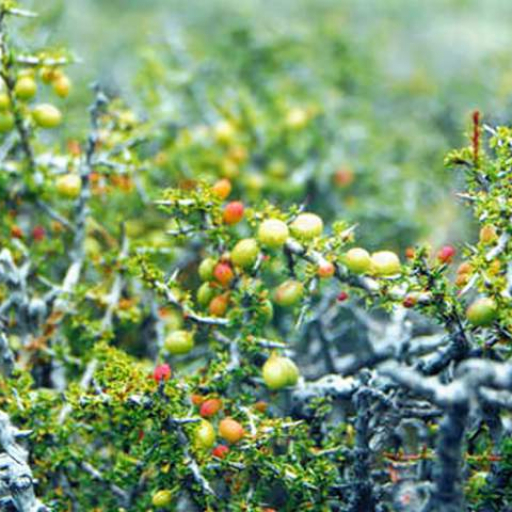
Plant Overview
Known affectionately as the "Piquillín," Condalia microphylla is the rugged soul of the South American scrublands. This hardy, thorny shrub is celebrated in regional folklore and traditional songs for its ability to produce sweet, jewel-like berries even in the harshest droughts. It is a master of survival, thriving where other plants wither, and serving as a vital sanctuary for desert wildlife.
🔍 How to Identify
- 🍃 Small but Mighty Leaves: The name microphylla means "small leaf." You will notice tiny, spatula-shaped leaves that are thick and leathery to prevent water loss.
- ⚔️ Intricate Thorns: The branches are stiff and zig-zagging, with many stems ending in sharp, rigid spines that create a dense, protective thicket.
- 🍒 Jeweled Berries: In late spring and summer, it produces small, round fleshy fruits. These drupes are visually striking, appearing in various shades of red, orange, and deep purple-black on the same bush.
🏡 In Your Garden
- 🏜️ The Ultimate Survivor: This plant thrives in poor, rocky, or sandy soils and is exceptionally drought-tolerant. Because it develops a deep, aggressive taproot to find water, it hates being moved; always choose its permanent "forever home" before planting.
- 🐦 A Wildlife Sanctuary: If you want to attract birds, this is the plant for you. The dense, thorny structure provides a "fortress" for small birds to nest safely away from predators, while the berries offer a sugary feast for local fauna.
⚠️ Safety & Toxicity
- 🌵 Mechanical Hazard: The primary danger of the Piquillín is physical rather than chemical. Its thorns are incredibly sharp and can cause deep punctures. Wear heavy-duty gloves when pruning or handling.
- 🐾 Pet & Child Safety: While the fruit is traditionally used for human consumption (jams and syrups), the seeds should not be chewed or swallowed in large quantities. Keep it away from high-traffic areas where children or pets might run into the thorns.
✨ Fun Fact
🍯 The Desert Syrup: In rural Argentina, the berries are simmered for hours to create "Arrope de Piquillín," a thick, dark, honey-like syrup. This traditional treat is considered a delicacy and has been a staple of mountain and desert communities for centuries.

Detailed Care Instructions
To grow Condalia microphylla, also known as the desert sumac, you can follow these steps:
- Choose a suitable location: Condalia microphylla thrives in a well-draining soil and prefers a sunny to partially shaded location. Ensure the soil is not overly compacted or too heavy.
- Propagation: You can propagate Condalia microphylla from seeds or cuttings. If using seeds, scarify them by nicking the outer shell lightly to enhance germination. Soak the seeds overnight before planting to help break dormancy. If using cuttings, take 4-6 inch stem cuttings from a healthy plant and dip the cut ends in a rooting hormone.
- Planting: Whether using seeds or cuttings, prepare the soil by loosening it and removing any weeds or rocks. Plant the seeds or cuttings in the prepared soil, ensuring they are appropriately spaced. The ideal time for planting is in spring when the temperatures are warm.
- Watering: Water the newly planted Condalia microphylla regularly, especially during the first year to establish a strong root system. Once established, the plant is fairly drought-tolerant and may only need occasional watering during extended dry periods.
- Mulching: Apply a layer of organic mulch around the base of the plant to help retain moisture, regulate soil temperature, and suppress weed growth. Be careful not to pile the mulch against the trunk or stem of the plant as this can lead to rot or disease.
- Pruning: Prune Condalia microphylla as necessary to maintain its shape and promote a bushier growth habit. The plant responds well to selective pruning to enhance its form and density.
- Fertilizing: Condalia microphylla does not typically require frequent fertilizing. However, you can apply a balanced, slow-release fertilizer in early spring or use compost as a natural source of nutrients.
- Maintenance: Regularly monitor the plant for any signs of pests or diseases. Treat any issues promptly using appropriate methods or seek advice from a local garden center or extension office.
Remember that growing plants successfully also depends on your specific climate and soil conditions. It is always helpful to consult local gardening resources or experts for tailored advice.
To water this plant, you should ensure that the soil is thoroughly wet, but not waterlogged. It is best to water deeply and infrequently rather than lightly and frequently. The plant should be watered immediately after planting, and then regularly for the first growing season to help establish its root system. After that, you should only water as necessary, which may be once or twice a month, depending on the climate. Check the soil moisture level by inserting your finger into the soil about an inch deep. If it feels dry, it is time to water. Avoid getting water on the leaves, as this can promote disease. Water at the base of the plant, taking care not to over-water, as this can cause root rot. In times of extreme heat or drought, additional watering may be necessary.
For the Condalia Microphylla plant, use a balanced fertilizer with equal parts nitrogen, phosphorus, and potassium. Apply the fertilizer in early spring and midsummer, taking care not to over-fertilize as this can damage the plant. Water the plant well before and after fertilizing to help distribute the nutrients evenly throughout the soil. Be sure to follow the instructions on the fertilizer package for specific application rates.
When planting Condalia Microphylla, it is important to use well-draining soil that is rich in nutrients. The soil should have a slightly acidic pH level, ranging from 5.5 to 6.5. It is recommended to mix the soil with organic matter, such as compost or peat moss, to ensure adequate moisture retention and nutrient availability. The plant prefers soil that is sandy or loamy, as clay soils tend to be too dense and can retain too much moisture. Additionally, it is important to avoid soil that is contaminated with herbicides or pesticides, as this can lead to damage or death of the plant. Overall, the ideal soil for Condalia Microphylla is one that is well-draining, nutrient-rich, slightly acidic, and free of contaminants.
The propagation of this plant can be done using seeds or cuttings. For seed propagation, one should collect mature seeds in the fall and scarify them to break the hard seed coat. This can be done by rubbing the seeds lightly with sandpaper or nicking them with a small blade. After scarification, the seeds should be soaked in water overnight before planting in well-draining soil. The seeds should be planted shallowly and kept moist until germination.
For cutting propagation, select a healthy and mature stem of the plant. A cutting 6-8 inches long should be taken from the stem, making the cut just below a node. Remove any leaves from the bottom of the cutting and dip the end in rooting hormone. Plant the cutting in well-draining soil and water it thoroughly. Keep the soil moist and in a warm, bright area, but out of direct sunlight. The cutting should be rooted within a few weeks and can be transplanted into a larger pot or outside in the garden once it has developed a strong root system.








