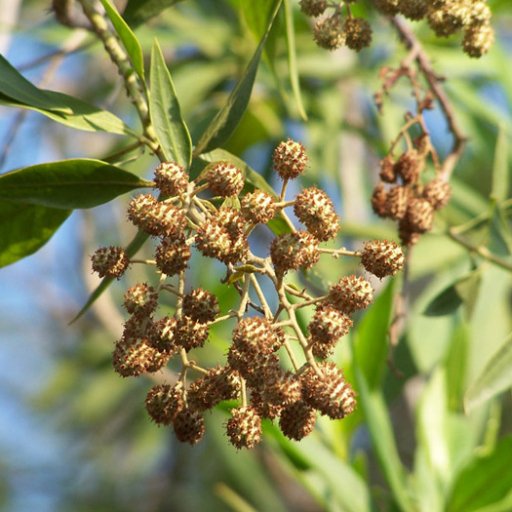
Plant Overview
Often referred to as the Damas Tree or the Silver Buttonwood, Conocarpus lancifolius is a resilient "desert warrior" originating from the coastal regions of the Horn of Africa. It has earned a reputation as a landscaping champion in arid climates due to its incredible ability to withstand heat, salt spray, and drought while maintaining a lush, shimmering canopy. In many Middle Eastern cities, it is the go-to choice for creating "green walls" that shield gardens from harsh desert winds and prying eyes.
🔍 How to Identify
- 🌿 The Foliage: Look for narrow, lance-shaped leaves (which is where the name lancifolius comes from) that possess a distinct silvery-green or metallic sheen.
- 🪵 The Bark: The trunk is typically sturdy and covered in rough, dark grey-brown bark that becomes increasingly fissured and textured as the tree matures.
- 🔘 The "Buttons": It produces small, inconspicuous greenish flowers that develop into round, cone-like seed heads that resemble old-fashioned buttons.
🏡 In Your Garden
- 🏗️ Infrastructure Warning: While beautiful, the Damas tree is famous for its "thirsty" and aggressive root system. It should never be planted near underground pipes, septic tanks, or swimming pools, as the roots can easily penetrate and crack structures in search of moisture.
- ✂️ Pruning Potential: This plant is a favorite for topiary and formal hedging. Because it grows rapidly, it can be sculpted into dense rectangular walls or spheres, but it requires regular shearing to keep its shape and prevent it from becoming a massive tree.
- ☀️ Climate Resilience: It is one of the few plants that truly thrives in "brutal" conditions. It loves full, direct sun and is highly tolerant of saline soil, making it perfect for coastal properties where other plants might wither.
⚠️ Safety & Toxicity
- 🟢 General Status: Conocarpus lancifolius is considered non-toxic to humans and common household pets like dogs and cats.
- 🧤 Skin Sensitivity: While not poisonous, the sap can occasionally cause mild skin irritation for people with sensitive skin during heavy pruning. It is always a good idea to wear gloves when shaping a large hedge.
✨ Fun Fact
In its native Somalia and Djibouti, the Damas tree is a vital "pioneer species." It is one of the few trees that can grow in high-salinity soils where nothing else survives, helping to stabilize the earth and create a micro-habitat for other smaller plants to eventually take root.

Detailed Care Instructions
To grow Conocarpus lancifolius, also known as green buttonwood, follow these steps:
- Climate and location: Green buttonwood thrives in warm and tropical climates, such as USDA hardiness zones 10-11. Ensure that your location has a temperature range of 70-90°F (21-32°C) and receives full sun to partial shade.
- Soil requirements: The plant prefers well-draining soil. If your soil is heavy or compacted, amend it with organic matter like compost or sand to enhance drainage.
- Planting: Purchase a young Conocarpus lancifolius sapling from a reputable nursery or garden center. Dig a hole in the ground that is slightly wider and deeper than the plant's container. Gently remove the plant from its container and place it in the hole. Make sure the top of the root ball is level with or slightly above the soil surface. Backfill the hole with soil, firming it gently around the roots.
- Watering: Initially, water the plant thoroughly after planting to settle the soil and help the roots establish. Afterward, water deeply every week or so, allowing the soil to dry out between watering sessions. Avoid overwatering, as it can lead to root rot.
- Mulching: Apply a layer of organic mulch, such as wood chips or straw, around the base of the plant. This helps conserve moisture, suppress weeds, and moderate soil temperature.
- Fertilization: Conocarpus lancifolius generally doesn't require frequent fertilization. However, you can use a slow-release balanced fertilizer in spring or early summer to promote healthy growth. Follow the package instructions for proper application.
- Pruning: Pruning is generally not necessary for this plant. However, if you want to shape it or remove dead or damaged branches, do so during the dormant season. Always use sharp, sterile pruning tools.
- Pests and diseases: The green buttonwood is generally resistant to pests and diseases. However, keep an eye out for common issues such as scale insects, fungal infections, or leaf spot. In case of any problems, consult a local nursery or horticulturalist for appropriate treatment options.
- Propagation: Conocarpus lancifolius can be propagated through seeds or stem cuttings. However, growing from seeds might be more challenging. To propagate from cuttings, take a 6-8 inch (15-20 cm) cutting from a healthy plant, remove the lower leaves, and dip the cut end in rooting hormone. Plant the cutting in a well-draining potting mix and keep it in a warm, humid environment until it roots.
Remember to check and follow any local regulations or restrictions regarding the cultivation of Conocarpus lancifolius, as it can sometimes be considered invasive in certain areas.
To water the Conocarpus Lancifolius plant, ensure that you are providing the right amount of water to maintain its health and vitality. Here are some steps to follow:
- Assess the soil moisture: Before watering, it is crucial to check the soil moisture level. Insert your finger into the soil, about an inch or two deep. If it feels dry at this depth, it's an indication that you need to water the plant.
- Watering schedule: Conocarpus Lancifolius plants thrive in moist soil but can also tolerate periods of dryness. It is important to establish a regular watering routine, especially during the plant's growing season. Water deeply, allowing the water to penetrate the roots. However, avoid overwatering, as it could lead to soggy soil and root rot.
- Quantity of water: The amount of water required for Conocarpus Lancifolius may vary depending on factors such as climate, season, and soil conditions. Generally, a deep watering once or twice a week should be sufficient. Focus on delivering enough water to moisten the entire root zone.
- Watering method: To prevent excessive water runoff, consider using a soaker hose, drip irrigation system, or a watering can with a small spout to deliver water directly to the plant's base. This ensures that the water is absorbed by the root system rather than running off the surface.
- Avoid wetting the foliage: When watering Conocarpus Lancifolius, direct the water towards the base of the plant rather than spraying it onto the leaves. Wet foliage can create conditions conducive to fungal diseases and may cause damage to the plant.
- Mulching: Applying a layer of organic mulch around the plant can help retain soil moisture and regulate temperature. This can reduce the frequency of watering required and prevent excessive evaporation.
- Monitor plant's response: After watering, observe the plant's response to ensure it is receiving an adequate amount of water. Signs of under-watering include wilted or drooping leaves, while overwatering may cause yellowing leaves or visible root rot. Adjust your watering routine accordingly.
Remember, the Conocarpus Lancifolius plant's water requirements can vary, so always consider the specific conditions of your plant's location and adjust the watering technique accordingly.
To properly fertilize the Conocarpus Lancifolius plant, follow these instructions:
- Choose a slow-release granular fertilizer specifically formulated for woody plants or shrubs. Check the label for the nutrient ratio (N-P-K) and select a balanced fertilizer.
- Apply the fertilizer during the active growing season, which is typically in spring or early summer. Avoid fertilizing during the dormant period.
- Sprinkle the granular fertilizer evenly around the base of the plant, approximately 6-8 inches away from the trunk or stems.
- Use a garden fork or rake to lightly work the fertilizer into the soil surface, ensuring it is not sitting on top.
- Water the plant thoroughly immediately after fertilizing. This helps to transport the nutrients into the root zone.
- Repeat the fertilization process once or twice a year, depending on the plant's specific nutritional requirements and the recommendations on the fertilizer packaging.
- Be cautious not to over-fertilize, as excessive nutrients can harm the plant. Always follow the manufacturer's guidelines for application rates.
Note: It is essential to identify the specific nutrient requirements and growth characteristics of your Conocarpus Lancifolius plant to provide the best care.
Conocarpus Lancifolius is a plant species that thrives in a variety of soil conditions but prefers a well-draining soil. It requires a soil type that allows water to penetrate easily, preventing waterlogged roots. The plant is adaptable to different pH levels, ranging from slightly acidic to slightly alkaline.
To create an ideal soil environment for Conocarpus Lancifolius, a good choice is a loamy soil mixture. Loam soil contains a balanced ratio of sand, silt, and clay particles, providing excellent drainage while also retaining enough moisture for the plant's roots.
Adding organic matter to the soil, such as compost or well-rotted manure, is beneficial. Organic matter enhances soil fertility, improves moisture retention, and supports the growth of beneficial microorganisms. It also helps with nutrient availability, ensuring that the plant receives the necessary nutrients for healthy growth.
Before planting, it is crucial to prepare the soil by loosening it with a garden fork or tiller. This promotes better root penetration and improves aeration.
To maintain the optimal soil conditions for Conocarpus Lancifolius, regular monitoring and adjustment may be necessary. Checking the soil moisture level and ensuring proper drainage are important to prevent overwatering or waterlogging.
Overall, choosing a well-draining loamy soil enriched with organic matter will provide an excellent foundation for the successful growth of Conocarpus Lancifolius.
Conocarpus Lancifolius is a plant that can be propagated through various methods such as seeds, stem cuttings, and air layering. Here's a detailed explanation of each propagation method:
- Seeds:
- Collect mature seeds from an existing Conocarpus Lancifolius plant.
- Soak the seeds in water for 24 hours before planting to enhance germination.
- Fill a tray or pots with well-draining soil mix that consists of equal parts soil, sand, and peat moss.
- Place the seeds on the soil surface and cover them lightly with a thin layer of soil.
- Mist the soil lightly to moisten it, but avoid overwatering.
- Keep the tray or pots in a warm and bright location, preferably under indirect sunlight.
- Maintain the moisture of the soil by misting whenever required.
- Germination typically takes 2-4 weeks. Once the seeds sprout and develop a couple of true leaves, they can be transplanted into individual containers or outdoor locations.
- Collect mature seeds from an existing Conocarpus Lancifolius plant.
- Stem Cuttings:
- Take stem cuttings from a healthy Conocarpus Lancifolius plant during the active growing season (usually spring or summer).
- Choose a non-flowering shoot that is 4-8 inches long and consider using a sharp, sterilized cutting tool to ensure a clean cut.
- Remove the lower leaves, leaving only a few at the tip.
- Dip the cut end of the stem into a rooting hormone powder or gel to encourage root development (optional).
- Prepare a pot with a well-draining potting mix or a mixture of sand and peat moss.
- Make a hole in the potting mix and insert the lower end of the cutting.
- Gently firm the soil around the cutting, ensuring it stands upright.
- Water the cutting thoroughly and place it in a warm and bright location, but avoid direct sunlight.
- Mist the cutting regularly to maintain humidity.
- After a few weeks, roots should begin to form. You can test the rooting progress by gently tugging the cutting; if you feel resistance, it means roots have developed.
- Once the roots are established, the cutting can be potted up into individual containers or planted directly outdoors.
- Take stem cuttings from a healthy Conocarpus Lancifolius plant during the active growing season (usually spring or summer).
- Air Layering:
- Select a healthy, non-flowering branch on the Conocarpus Lancifolius plant that is about pencil-thick.
- Make an upward cut approximately halfway through the branch, about 6-8 inches from its tip.
- Using a toothpick or a similar object, create a space in the cut area to hold moist sphagnum moss or peat moss.
- Dampen the moss and secure it in place using plastic wrap or a non-toxic plant tie.
- Wrap the moss and covered area with aluminum foil or plastic wrap to retain moisture.
- After 4-6 weeks, roots will likely form within the moss.
- Once roots are well-developed, the rooted section can be carefully cut below the moss.
- Plant the rooted section in a well-draining potting mix or directly into the ground, keeping the roots intact and water the plant thoroughly.
It's important to note that while Conocarpus Lancifolius can be propagated through these methods, success rates may vary. It's always recommended to practice patience and create an optimal environment for the newly propagated plants to establish themselves.
- Select a healthy, non-flowering branch on the Conocarpus Lancifolius plant that is about pencil-thick.








