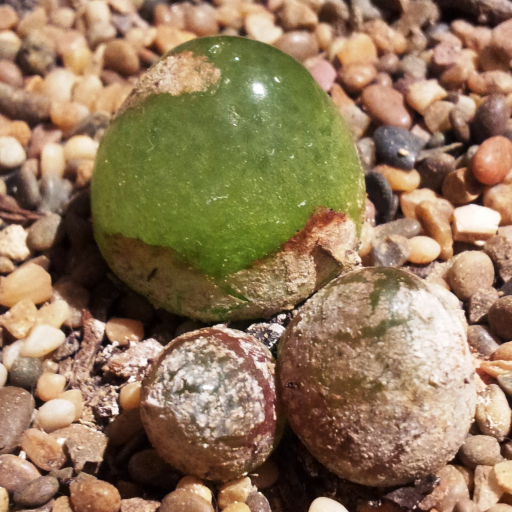
Plant Overview
Often called the "Burger's Onion" or the "Living Jelly Bean," this extraordinary succulent is a botanical gem from the arid regions of South Africa. It looks less like a plant and more like a dropped piece of sea glass or a translucent gumdrop resting on the desert floor. It is highly prized by collectors for its minimalist, jewel-like appearance and its incredible ability to glow when backlit by the sun.
🔍 How to Identify
- 💧 The Body: Unlike most plants, it consists of a single, smooth, cone-shaped succulent body that lacks traditional leaves.
- 💎 Windowed Skin: The epidermis is remarkably translucent, acting as a "fenestra" (window) that allows sunlight to penetrate deep into the internal tissues for photosynthesis.
- 🎨 Color Shifting: While it is naturally a soft, pale green, the plant "blushes" into a brilliant ruby red or deep purple when exposed to intense light or cold temperatures.
- 🌸 Autumn Bloom: In late fall, a delicate, honey-scented flower (usually pink or purple) emerges from a tiny slit at the very top of the cone.
🏡 In Your Garden
- 💤 The Summer Sleep: This plant follows a strict seasonal clock. During the hot summer months, it goes into a deep dormancy, shrinking slightly and forming a dry, papery white sheath over its body to protect itself from the sun.
- 🚿 Precision Watering: Because it is adapted to extreme drought, it is "hydrophobic" during its summer nap. Watering it at the wrong time can cause the translucent skin to literally burst, leading to permanent scarring or rot.
- ☀️ Light Nuance: It craves bright, filtered light. In the wild, it grows tucked among white quartz pebbles which reflect heat; in a home setting, it needs a "Goldilocks" spot—too much sun burns the windows, too little causes it to stretch and lose its iconic shape.
⚠️ Safety & Toxicity
- ✅ Safe for All: Conophytum burgeri is considered non-toxic to humans, cats, and dogs.
- 🛡️ Handle with Care: While it isn't poisonous, it is incredibly fragile. The "skin" is paper-thin, and even a light fingernail scratch can leave a lifelong scar on the plant’s surface.
✨ Fun Fact
In its native habitat in Bushmanland, South Africa, this plant is found almost exclusively in "quartz patches." The white stones reflect the harsh sun, keeping the soil cool and helping this tiny "onion" stay hidden from thirsty animals by mimicking the surrounding pebbles!

Detailed Care Instructions
Conophytum burgeri is a small succulent plant that is native to South Africa. Here are some tips on how to grow and care for Conophytum burgeri:
- Light: Conophytum burgeri prefers bright, indirect light. Place it in a sunny spot such as a south-facing window.
- Soil: Use a well-draining cactus or succulent mix for planting Conophytum burgeri. Make sure the soil is not too compacted to allow for proper drainage.
- Watering: Water sparingly, allowing the soil to dry out between watering. Overwatering can cause the roots to rot. During the growing season (spring and summer), water the plant once every two weeks. In the winter, water sparingly.
- Temperature: Conophytum burgeri prefers temperatures between 50-80°F (10-27°C). Protect the plant from extreme cold temperatures.
- Fertilizer: Feed Conophytum burgeri with a diluted cactus or succulent fertilizer once a month during the growing season.
- Repotting: Repot Conophytum burgeri every 2-3 years to refresh the soil and provide additional space for growth.
- Propagation: Conophytum burgeri can be propagated by seeds or division. Seeds are usually sown in the spring, and division can be done during repotting.
- Pests and diseases: Watch out for pests such as mealybugs and spider mites. Treat any infestations promptly with insecticidal soap or neem oil.
By following these tips, you can successfully grow and care for Conophytum burgeri plant in your home.

Place in a window with dappled sun or a spot in the middle of a room. Or directly in a window facing west or east.

Conophytum Burgeri plants should be watered sparingly, as they are naturally accustomed to arid conditions in their native habitat. It is important to avoid overwatering, as this can lead to root rot and damage the plant.
To water Conophytum Burgeri, it is recommended to wait until the soil is completely dry before watering again. This can typically range from every 2-4 weeks, depending on the specific growing conditions and environment the plant is in.
When watering, it is best to use a small amount of water and allow it to soak into the soil slowly. Avoid getting water on the leaves or body of the plant, as this can lead to rot. It is also advisable to use a well-draining soil mix to ensure excess water can easily escape.
During the winter months, when the plant is dormant, it is important to reduce the frequency of watering even further to prevent any potential issues from arising.
Overall, it is important to observe the plant's specific needs and adjust watering accordingly to ensure the health and longevity of the Conophytum Burgeri plant.
To fertilize Conophytum burgeri plants, apply a balanced, water-soluble fertilizer diluted to half the recommended strength once a month during the growing season (spring and summer). Avoid fertilizing during the plant's dormant period in fall and winter. Water the plant thoroughly after fertilizing to help distribute the nutrients evenly. Be careful not to over-fertilize, as this can lead to nutrient toxicity and damage the plant.
Conophytum Burgeri plant thrives best in well-draining soil with a slightly acidic to neutral pH level. A mix of sandy soil, perlite, and coarse gravel or pumice is ideal for this plant's growth and development. This type of soil allows for proper aeration and drainage, preventing waterlogged conditions that can lead to root rot. Additionally, adding a small amount of organic matter, such as coconut coir or peat moss, can help improve moisture retention while still allowing excess water to drain away. It is important to avoid using heavy, clay-based soils as they can retain too much water and lead to root rot in Conophytum Burgeri plants.
Conophytum Burgeri plants can be propagated by dividing the plant into smaller sections. To do this, carefully remove the plant from its pot and gently tease apart the individual sections. Make sure each section has roots attached.
Plant the divided sections into separate pots with well-draining soil mix. Water lightly and place in a sunny location with indirect sunlight. Keep the soil slightly moist but not soggy.
Another method of propagation is by collecting the seeds from the flower pods of mature plants. Once collected, sow the seeds in a sandy, well-draining soil mix. Keep the soil moist and place the pot in a warm, sunny location. Germination can take several weeks to months.
Propagation by division and seed collection are effective methods for propagating Conophytum Burgeri plants and can help expand your collection of these unique succulents.








