Plant Overview
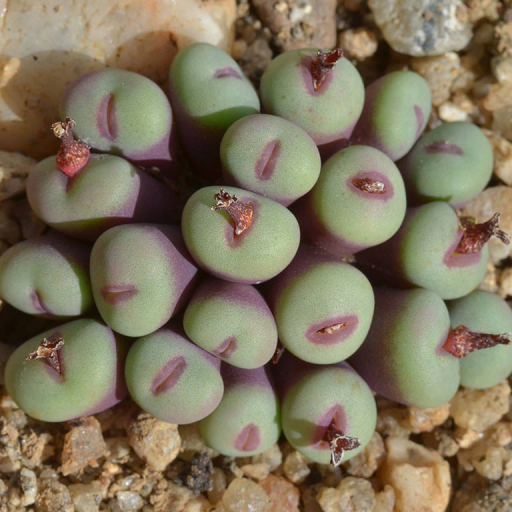
Often called the "Lesser Button Plant" or the "Lips Succulent," Conophytum pageae looks like a tiny work of abstract art rather than a living organism. Native to the arid landscapes of South Africa and Namibia, these miniature succulents have mastered the art of camouflage, blending in perfectly with quartz pebbles to hide from hungry desert animals.
🔍 How to Identify
- 👄 The Mouth: The most striking feature is the tiny, slit-like fissure at the top of the body. In many specimens, the edges of this slit turn a vivid red or deep purple, giving the plant its famous "puckered lips" appearance.
- 🪨 Body Shape: It grows as a small, fleshy dome or cylinder, rarely exceeding an inch in height. These "buttons" often grow in tight clusters, eventually forming a dense, rounded mat.
- 🎨 Coloring: The skin is smooth, waxy, and glabrous (hairless). Its color ranges from a pale apple green to a powdery silvery-blue, often blushing with pink tones under intense sun.
🏡 In Your Garden
- 💤 The Summer Nap: This plant follows a unique "winter-growing" cycle. During the hot summer months, it goes into deep dormancy, shriveling up and forming a dry, papery brown sheath that looks like a dead leaf. Resist the urge to peel this off; it acts as a natural sunblock for the new leaves forming inside.
- 🌬️ Air & Drainage: Because they are adapted to rocky crevices, they require extremely gritty soil—think 80% pumice or perlite. They also need excellent air circulation; stagnant, humid air is the fastest way to cause these little buttons to rot.
- 🍂 Autumn Awakening: As the weather cools in autumn, the plant "bursts" out of its dry husk, often accompanied by small, nocturnal yellow or orange flowers that smell faintly of honey.
⚠️ Safety & Toxicity
- ✅ Status: Non-toxic and safe.
- 🐾 Details: This succulent is generally considered safe for households with cats, dogs, and children. However, due to its small size and pebble-like appearance, it can be a choking hazard for curious toddlers or pets who might mistake it for a toy.
✨ Fun Fact
The genus name Conophytum comes from the Greek words "konos" (cone) and "phyton" (plant). Despite their tiny size, some colonies in the wild are estimated to be decades old, growing only a few millimeters each year!

Detailed Care Instructions
To grow Conophytum pageae successfully, you will need to provide the optimal growing conditions and follow these steps:
- Location: Choose a well-lit spot for your Conophytum pageae plant. It prefers bright but indirect sunlight. A South-facing windowsill or a location with partial shade is ideal.
- Soil: Use a well-draining soil mix specifically formulated for succulents. Alternatively, you can create your own mix by combining regular potting soil with sand or perlite to improve drainage.
- Watering: Conophytum pageae is a winter-growing succulent that goes dormant during the summer months. During its active growth period, provide enough water to keep the soil slightly moist but never soggy. In contrast, during the dormant period, reduce watering significantly, allowing the soil to dry out between waterings.
- Temperature and Humidity: Conophytum pageae prefers moderate temperatures, ranging from 60°F to 75°F (15°C to 24°C) during the active growth phase. It can tolerate higher temperatures but may require additional shade. Normal room humidity is usually sufficient for this plant.
- Propagation: Conophytum pageae can be propagated through seeds or by division. To propagate by seeds, sow them in a well-draining soil mix and keep them warm and lightly moist until they sprout. To propagate by division, gently remove the offsets from the parent plant, allow the cut edges to dry for a few days, and then plant them in a separate pot or area of the garden.
- Fertilizer: During the active growth phase, you can fertilize Conophytum pageae lightly with a balanced, water-soluble fertilizer diluted to half strength. Avoid fertilizing during the dormant period.
- Pests and Diseases: Monitor the plant regularly for signs of pests such as mealybugs or spider mites. If detected, treat them with an appropriate insecticide or wipe them off with a cotton swab dipped in rubbing alcohol.
Remember to handle Conophytums with care as their leaves are delicate and can easily break or fall off. With proper care, your Conophytum pageae plant will gradually grow and produce beautiful flowers.

Place in a window with dappled sun or a spot in the middle of a room. Or directly in a window facing west or east.
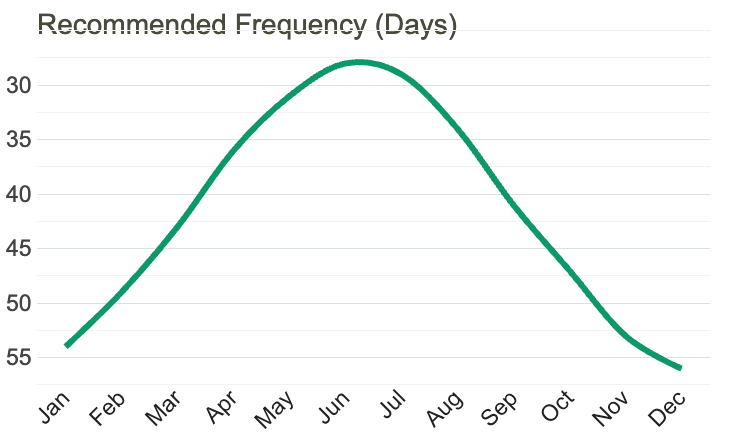
To water this plant, you should first assess the soil moisture by sticking your finger about an inch deep into the soil to feel if it is dry or moist. If the soil is dry, then it is time to water the plant. Use a watering can or a spray bottle with a fine mist to water the soil around the plant. Be careful not to get the water on the leaves or around the base of the plant. Water the plant until the soil is evenly moist, but not waterlogged. Avoid allowing the soil to completely dry out between waterings, but also be cautious not to overwater the plant, as this can cause root rot. In general, it is better to underwater than overwater these plants. Finally, make sure the plant has good drainage to ensure excess water can escape.
- Choose a well-draining soil mix that is formulated for succulent plants.
- Water the plant sparingly, allowing the soil to dry out between watering sessions.
- Fertilize the plant once a month during the growing season (spring and summer).
- Use a balanced liquid fertilizer diluted to half strength.
- Apply the fertilizer to the soil, taking care not to get any on the plant's leaves.
- Repeat the fertilizing process every month until the end of the growing season.
- Stop fertilizing the plant during the fall and winter months.
- Resume fertilizing the plant in the spring, at the start of the growing season.
Conophytum Pageae is a plant that belongs to the family Aizoaceae and is native to Namibia. In order to ensure optimal growth and development of this plant, it is important to choose the right type of soil.
The soil for Conophytum Pageae should be a well-draining type of soil that is composed of a mixture of sand, perlite, and peat moss. The soil should be slightly acidic with a pH level between 5.5 and 6.5.
It is important to note that Conophytum Pageae is a small plant and does not require a large amount of soil. Therefore, it is recommended to plant it in a small pot with a diameter of 3 to 4 inches, and the pot should have a drainage hole at the bottom.
When planting Conophytum Pageae, it is also recommended to add a layer of gravel at the bottom of the pot to further improve drainage. In addition, it is important to water the plant sparingly and to avoid getting water on the leaves as this can cause damage.
Overall, Conophytum Pageae requires a well-draining, slightly acidic soil that is composed of sand, perlite, and peat moss. By providing these optimal conditions, you can ensure the healthy growth and development of this plant.
To propagate this plant, begin by collecting the seeds from the parent plant once the seed pods have dried and cracked open. Next, prepare a well-draining soil mix and fill a small container such as a seed tray with the soil. Sprinkle the seeds on top of the soil and gently push them into the soil with your fingers. Keep the soil moist but not overly wet and place the container in a warm and well-lit location. The seeds should germinate within a few weeks. Once the seedlings have grown to a size where they can be handled, gently transplant them into individual pots with well-draining soil mix. Continue to care for the young plants until they mature into full-grown plants.








