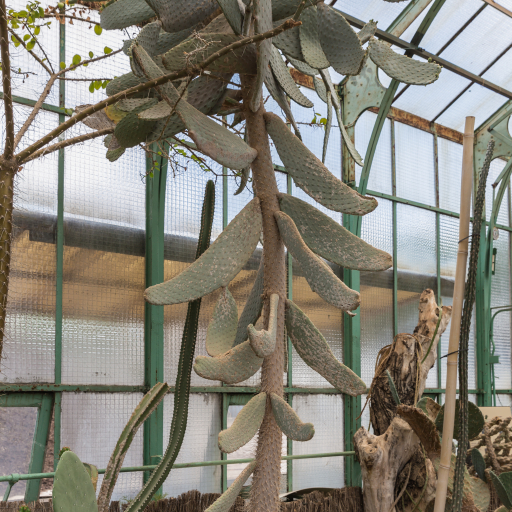
Plant Overview
Known affectionately as the "Necklace Prickly Pear," Consolea moniliformis looks like nature’s own piece of abstract art. This Caribbean native is a "tree cactus," evolving to stand tall with a sturdy, wood-like trunk that supports chains of succulent, flattened pads. It is a striking choice for those who want the ruggedness of a cactus with the architectural height of a small tree.
🔍 How to Identify
- 📿 The Pad Shape: Distinctive oval or teardrop-shaped pads that are flattened and often slightly wavy. They stack vertically, resembling a string of green beads or a heavy necklace.
- 🌳 The Trunk: Mature specimens develop a dark, cylindrical, and corky trunk. As the plant ages, the base loses its green color and takes on the appearance of real bark.
- 🌼 The Blooms: Small but vibrant flowers emerge from the edges of the pads. They typically transition from a bright, sunny yellow to a deep, burnt orange as they age.
🏡 In Your Garden
- ☀️ Sun Worshiper: This cactus thrives in intense, direct sunlight. If grown indoors, it requires the brightest window possible; otherwise, the new pads will grow thin and weak (etiolated) as they "reach" for light.
- 🏜️ Drainage is Vital: In its native habitat, it grows in rocky, coastal soil. It hates "wet feet," so it is essential to use a gritty, mineral-heavy cactus mix and a pot with large drainage holes to prevent root rot.
- 🌬️ Coastal Toughness: Unlike many succulents, this species is quite tolerant of salt spray, making it an excellent structural plant for seaside gardens in tropical climates.
⚠️ Safety & Toxicity
- 🛡️ Physical Hazard: While not chemically toxic to humans or pets, it is armed with "glochids"—tiny, barbed bristles. These are often more annoying than large spines because they detach easily and lodge in the skin.
- 🧤 Handling Care: Always wear thick leather gloves when repotting. Keep it away from high-traffic areas where children or curious pets might brush against the pads, as the bristles can cause significant skin irritation.
✨ Fun Fact
In its native Caribbean islands, the Consolea genus evolved its tall, tree-like trunk as a defense mechanism against giant tortoises. By growing its succulent pads high off the ground, the plant ensured its survival against hungry herbivores that couldn't reach the top!

Detailed Care Instructions
Consolea Moniliformis, also known as the pencil cactus or pencil tree, is a succulent plant native to the Caribbean. Here are some tips to help you grow and care for Consolea Moniliformis:
- Light: Place your Consolea Moniliformis in bright, indirect sunlight. It prefers at least six hours of sunlight a day, so a south or west-facing window is ideal. However, it can also tolerate partial shade.
- Temperature: Consolea Moniliformis prefers warm temperatures between 65°F and 85°F (18°C and 29°C). Protect it from cold drafts and keep it away from air conditioning or heating vents.
- Watering: Allow the soil to dry out partially between waterings. Water the plant thoroughly, and then let the excess water drain out. Avoid overwatering, as it can lead to root rot.
- Soil: Use a well-draining cactus or succulent mix for your Consolea Moniliformis. It needs soil that allows water to flow through and doesn't retain moisture for too long.
- Fertilizer: Feed your Consolea Moniliformis with a balanced liquid fertilizer diluted to half strength during the growth season (spring and summer). Reduce or stop fertilizing during the winter when the plant is dormant.
- Pruning: If your Consolea Moniliformis starts to become leggy or unruly, you can prune it to maintain its shape. Use clean, sharp pruning shears to remove unwanted growth.
- Propagation: Consolea Moniliformis can be propagated from stem cuttings. Take a cutting of about 4-6 inches long and allow the cut end to dry for a day or two. Plant the cutting in a well-draining soil mix, keep it slightly moist, and wait for roots to develop.
- Pests and diseases: Monitor your Consolea Moniliformis for signs of pests like mealybugs or scale insects. If you notice any, treat the plant with insecticidal soap or neem oil.
Remember that Consolea Moniliformis is toxic if ingested, so keep it away from children and pets. With proper care and attention to its needs, your Consolea Moniliformis plant should thrive and grow.
The watering requirements of this plant depend on the amount of sunlight and humidity it receives. Water this plant when the soil is completely dry to the touch. To water, slowly pour water into the soil around the base of the plant. Avoid getting water on the leaves or stem, as this can lead to rot. Use lukewarm tap water or rainwater, as cold water can shock the plant's roots. Water sparingly in winter when the plant is dormant. Overwatering can cause the plant to rot, so be careful not to water too much.
To properly fertilize this plant, you'll want to first ensure that it's in a well-draining soil mix with appropriate sun exposure. You can then apply a balanced fertilizer once a month during the growing season (spring to fall). Dilute the fertilizer to half strength and water the plant thoroughly before and after application. Be careful not to over-fertilize, as this can lead to burnt foliage and other issues.
Consolea Moniliformis plant prefers well-draining soil with enough water retention capacity. The soil should be rich in nutrients, with a slightly acidic to neutral pH level. The ideal soil type for this plant is a sandy-loamy mix that allows for aeration and drainage. It's recommended to add peat moss, compost, and perlite to the soil to improve its moisture retention, and drainage capacity. Furthermore, it's good practice to amend or change the soil every two years to prevent soil-borne diseases, to keep the soil fresh and fertile for optimal plant growth.
To propagate this plant, you will need to take stem cuttings. Select a healthy stem with several leaves and make a clean cut using a sharp, sterile knife or scissors. The cutting should be approximately 4-6 inches long.
Remove the lower leaves from the stem, leaving only a few at the top. Dip the cut end into rooting hormone powder to encourage root growth.
Fill a small container with moist potting soil and create a hole in the soil using a pencil or your finger. Insert the stem cutting into the hole and gently press the soil around it.
Place the container in a warm, bright location, but not in direct sunlight. Mist the cutting regularly to keep the humidity high and prevent drying out.
Check for signs of root growth after a few weeks by gently tugging on the stem. If there is resistance, roots have likely formed.
Once the cutting has established roots, it can be transplanted into a larger pot or planted in the ground. Water regularly and provide bright, indirect sunlight.








