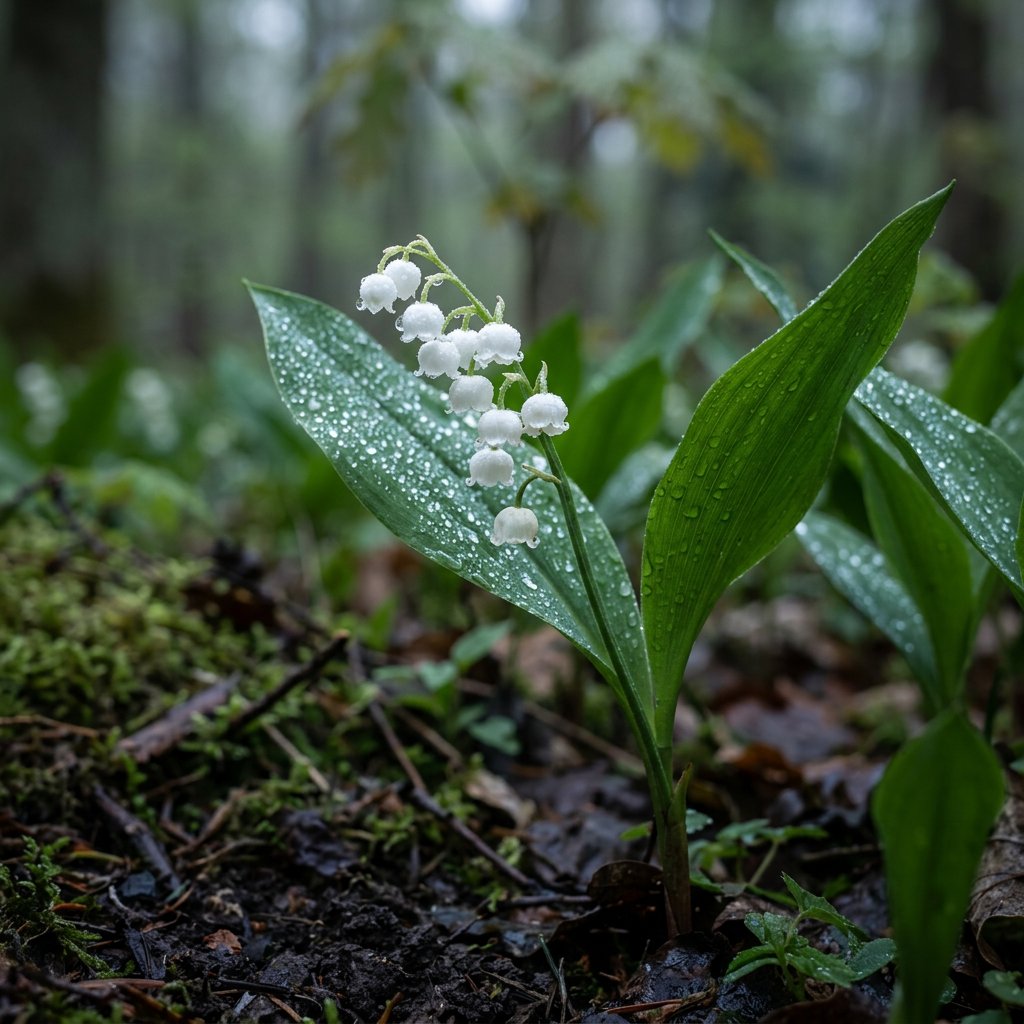
Plant Overview
Often called "May Bells" or "Our Lady’s Tears," Convallaria majalis is a woodland favorite beloved for its intoxicating, sweet perfume. Despite its delicate, nodding appearance, this plant is a hardy survivor that carpets forest floors with elegant greenery and waxy blooms. It has long been a symbol of luck and humility, famously appearing in royal bridal bouquets as a traditional sign of a "return to happiness."
🔍 How to Identify
- 🍃 The Leaves: Usually two or three large, lance-shaped leaves that wrap around each other at the base, standing upright in a rich, matte green.
- 🔔 The Flowers: Dainty, waxy, white (or occasionally pale pink) bells that hang gracefully from a single, slightly curved stem.
- 🔴 The Fruit: In late summer, the flowers fade to reveal small, round berries that turn a bright, glossy orange-red as they ripen.
🏡 In Your Garden
- 🌳 Master of Shade: This plant is the ultimate solution for "trouble spots" under large trees or along north-facing walls, as it thrives in cool, moist, and shady environments where grass often fails.
- 🚶 Spreading Habit: It grows via "pips" (underground rhizomes). While this makes it an excellent groundcover, it can be aggressive; plant it in contained areas or spots where you don't mind it forming a lush, thick carpet over time.
⚠️ Safety & Toxicity
- 🚫 Highly Poisonous: While beautiful, Convallaria majalis is extremely toxic if ingested. It contains over 30 different cardiac glycosides which can affect the heart.
- 🐾 Pets and Children: All parts of the plant—including the berries and even the water in a vase holding the flowers—are dangerous to humans, dogs, and cats. It can cause blurred vision, vomiting, and heart arrhythmia. Always wash your hands after handling.
✨ Fun Fact
According to Christian legend, the plant first sprouted from the spots where the Virgin Mary’s tears fell at the cross. On a more secular note, it is the national flower of Finland and remains the traditional gift in France on May 1st (La Fête du Muguet) to wish loved ones good luck.

Detailed Care Instructions
| Color | White |
| Soil Ph | Slightly Acidic To Neutral |
| Humidity | Normal |
| Lighting | Part Sun |
| Toxicity | Poisonous |
| Soil Type | Rich And Moist |
| Bloom Time | Spring To Early Summer |
| Difficulty | Medium |
| Plant Type | Herbaceous Perennial |
| Mature Size | 4 To 8 Inches High And 3 To 5 Inches Wide |
| Native Area | Northern Hemisphere Of Asia And Europe |
| Temperature | 12°C - 30°C |
| Sun Exposure | Partial Shade |
| Hardiness Zones | 2-9 |
To grow Convallaria Majalis plants, also known as Lily of the Valley, follow these steps:
- Choose a suitable planting location: The plants prefer partial shade to full shade, and they thrive in moist, well-draining soil with a slightly acidic pH.
- Prepare the soil: Loosen the soil and remove any weeds or large rocks. Incorporate organic matter, such as compost or well-rotted manure, to improve soil fertility and drainage.
- Planting the pips: Lily of the Valley is typically propagated by division of the rhizomes or planting pips (bulblets). Plant the pips in early spring or early fall, spacing them around 6 to 8 inches apart and planting them about 1 to 2 inches deep. Ensure the roots are spread out and covered with soil.
- Watering: Water the newly planted pips thoroughly, allowing the soil to remain consistently moist but not waterlogged. Add a layer of mulch around the plants to help retain moisture and suppress weeds.
- Fertilizing: Apply a balanced, slow-release fertilizer in early spring to provide essential nutrients for growth and blooming. Follow the package instructions for proper application and dosage.
- Maintenance: Keep the soil consistently moist throughout the growing season, especially during dry periods. Regularly check for pests or diseases, and promptly address any issues you may find. Removing spent flowers can help encourage more blooms and prevent seed formation.
- Division: After a few years, Convallaria Majalis plants may become overcrowded. Divide the clumps in early spring or early fall by carefully lifting them from the ground and separating them into smaller sections. Replant the divisions in suitable areas or share them with other gardeners.
With proper care and maintenance, your Convallaria Majalis plants should grow and eventually produce their fragrant, bell-shaped flowers in spring.

Place in a window with dappled sun or a spot in the middle of a room. Or directly in a window facing west or east.

To water this plant, it is important to first identify the type of soil it is planted in. This will determine how often and how much water it will require. It is generally recommended to keep the soil moist but not waterlogged. This can be achieved by watering deeply once a week or more frequently if the soil is sandy or the plant is planted in a container. It is important to avoid getting the leaves wet, as this can promote fungal growth. Instead, water the soil directly at the base of the plant. During hot and dry periods, it may be necessary to water more frequently to prevent the plant from wilting. As the plant goes into dormancy during the winter months, it may require less frequent watering.
Convallaria Majalis plants prefer rich organic soils with good drainage. A balanced fertilizer, with equal parts of nitrogen, phosphorus, and potassium, should be applied every 4-6 weeks during the growing season. In the spring, apply a slow-release fertilizer to the soil around the plant. Water the soil thoroughly after fertilizing to help the plant absorb the nutrients. Avoid fertilizing the plant during the winter months or when it is dormant.
Convallaria Majalis belongs to a group of flowering plants that require specific soil conditions in order to thrive. The ideal soil for this plant is a well-draining, loamy soil with a slightly acidic pH. The soil should be rich in organic matter, as this will provide the plant with the necessary nutrients and moisture retention for healthy growth. It is important to avoid soils that are heavy in clay or too sandy, as both of these conditions can lead to poor drainage and nutrient deficiencies. Additionally, soils that are too alkaline can hinder the growth of Convallaria Majalis, so it is important to monitor the pH levels of the soil periodically. Overall, selecting the right soil for this plant is crucial for its success and can help ensure a healthy and vibrant appearance.
There are multiple ways to propagate this plant. One way is to divide the plant's rhizomes (underground stems) in early spring or fall when the plant is dormant. Carefully dig up the plant and separate the rhizomes into sections, ensuring that each section has several healthy shoots and roots. Replant the sections in a suitable location and water thoroughly.
Another way to propagate the plant is through seeds, which are produced in small bright red berries. Collect the berries in late summer or early fall and remove the fleshy outer layer to expose the seeds. Plant the seeds in a well-draining soil mix and keep them moist but not excessively wet. The seeds usually take several months to germinate.
Lastly, this plant can also be propagated through stem cuttings. Choose a healthy stem with several nodes and remove the leaves from the lower portion of the stem. Dip the cut end of the stem in rooting hormone and plant it in a moist soil mix. Keep the soil moist and provide indirect sunlight until the cutting develops roots and new growth.








