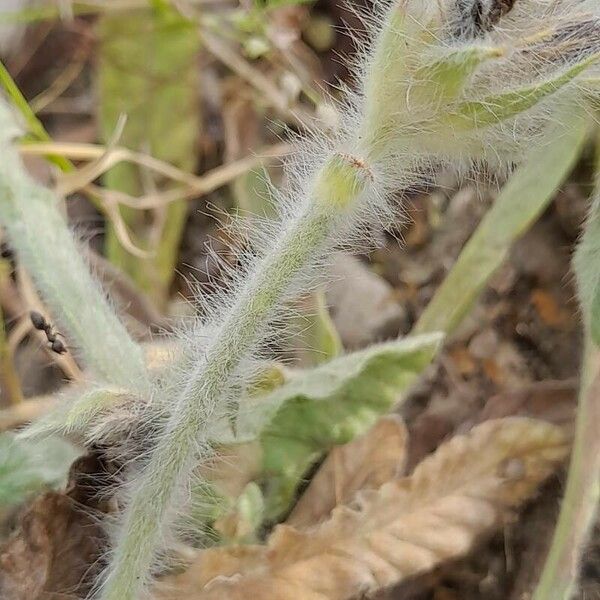
Plant Overview
Known as the "Head-flowered Bindweed," Convolvulus cephalopodus is a resilient gem of the arid world. This silver-leaved perennial thrives in harsh, rocky landscapes where most plants struggle to survive. Its soft, velvet-like appearance masks a tough-as-nails nature, making it a fascinating example of botanical endurance in desert-like conditions.
🔍 How to Identify
- 🌸 The Flowers: Produces delicate, funnel-shaped blossoms that are typically white or pale pink, uniquely clustered in tight, "head-like" bundles at the ends of the stems.
- 🥈 Silky Foliage: The leaves are lance-shaped and coated in a dense layer of fine, silvery hairs, giving the entire plant a shimmering, metallic sheen.
- 🌿 Growth Habit: It typically grows as a low, semi-shrubby cushion or a spreading carpet, hugging the ground to stay out of the wind and retain heat.
🏡 In Your Garden
- ☀️ The Silver Shield: Those beautiful silver hairs act as a natural sunscreen. In a garden, this plant needs the brightest spot available; without intense light, it loses its compact shape and silvery luster.
- 🪨 Drainage is Vital: Because it naturally evolves in limestone crevices and sandy slopes, it "breathes" through its roots. It will quickly decline in heavy clay or potting mixes that stay soggy, so a gravelly, lean soil is a must.
⚠️ Safety & Toxicity
- 🐾 Status: Generally non-toxic, but handle with care.
- 🪴 Details: While not considered a deadly plant, many members of the Convolvulus family contain alkaloids that can cause mild digestive upset if consumed in large quantities by pets or curious children. It is best enjoyed as an ornamental rather than a forage plant.
✨ Fun Fact
The specific name cephalopodus literally translates to "head-footed." This refers to the way the flower clusters (the "heads") sit directly atop the stalks, looking like little floral pom-poms perched on the ends of the branches.

Detailed Care Instructions








