Plant Overview
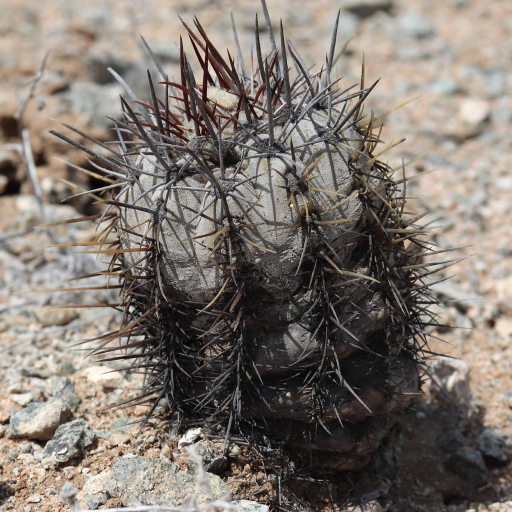
Known as a resilient survivor of the world’s driest desert, Copiapoa atacamensis is a slow-growing gem of the Chilean coastline. Often nicknamed the "Desert Cinder," this cactus has evolved a specialized way to "drink" the fog that rolls off the Pacific Ocean. Its stoic, rounded form and armor of dark spines make it a prized specimen for collectors who appreciate the beauty of extreme endurance.
🔍 How to Identify
- 🌵 Body Form: It typically grows as a solitary, globe-shaped stem that can become slightly cylindrical as it ages, often covered in a waxy, grey-green skin that helps prevent moisture loss.
- ☁️ Woolly Crown: The very top of the plant (the apex) is usually covered in a dense, cream-colored woolly felt, which acts as a natural sunscreen for the new growth.
- 🗡️ Spine Structure: It features stout, straight spines that emerge from woolly patches called areoles; these usually start out dark brown or black and fade to a weathered grey as the plant matures.
🏡 In Your Garden
- 🏜️ The Mist Drinker: In its native Atacama home, this plant survives on "Camanchaca" (thick coastal fog) rather than rain. In a pot, it demands extremely gritty, mineral-heavy soil—think more rocks and sand than peat—to prevent its sensitive roots from rotting.
- ☀️ Sun and Air: This cactus craves high-intensity light and excellent air circulation. If kept in a dark corner, it will lose its compact shape and stretch toward the light, a process that can permanently weaken the plant's structure.
⚠️ Safety & Toxicity
- 🛡️ Non-Toxic Status: Copiapoa atacamensis is not known to be poisonous to humans, cats, or dogs if accidentally nibbled.
- 🌵 Mechanical Defense: While not chemically dangerous, its spines are incredibly stiff and sharp. It should be placed in a low-traffic area to avoid accidental stabs to curious pets or toddlers, and it should always be handled with thick gardening gloves or specialized tongs.
✨ Fun Fact
🕰️ Ancient Spirits: Because they grow so incredibly slowly—sometimes only a few millimeters a year—larger specimens found in the wild can be over a hundred years old. These "living stones" have survived a century in one of the harshest climates on Earth, often going years without a single drop of actual rainfall.

Detailed Care Instructions








