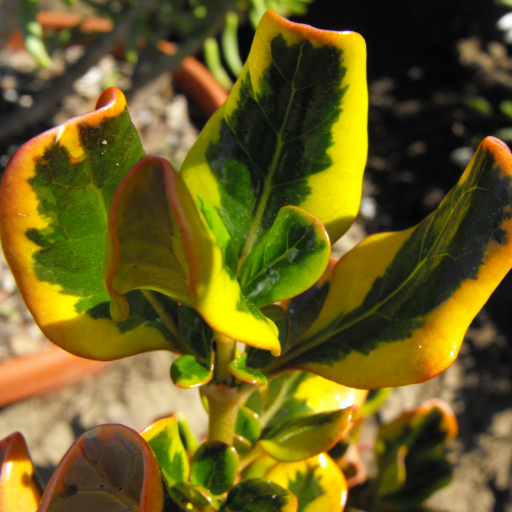
Plant Overview
Known as the "Mirror Bush" or "Looking Glass Plant," Coprosma baueri (often grouped with C. repens) is a coastal superstar from New Zealand. It is famous for foliage so incredibly glossy that it looks like it has been hand-polished with wax or carved from green glass. This plant is a true survivor, often found clinging to rocky cliffs where it braves the salty spray of the Pacific Ocean.
🔍 How to Identify
- 🌿 The Shine: The most defining feature is the extreme "lacquered" finish on the leaves. They are highly reflective, bouncing light even on cloudy days.
- 🍃 Leaf Shape: Thick, leathery, and broadly oval or round. They usually grow in opposite pairs along the stems.
- 🎨 Color Palette: While the wild species is a deep, rich emerald, many garden varieties feature striking variegation with creamy yellow or lime-green borders.
- 🟠 The Berries: In late summer, female plants produce small, fleshy orange-red fruits that look like tiny glowing beads tucked among the leaves.
🏡 In Your Garden
- 🌊 Salt Specialist: This is one of the best choices for seaside gardens. It actually prefers the salt spray, which keeps its leaves clean and helps it outcompete less hardy plants.
- ✂️ Shape Shifter: It is incredibly versatile. You can prune it into a tight, formal hedge, grow it as a windbreak, or even train it into a small, gnarled decorative tree.
- 🌱 Drainage is Key: While it is tough, it hates "wet feet." It requires sandy or well-draining soil. If planted in heavy clay, its roots may suffocate, leading to a dulling of that signature leaf shine.
⚠️ Safety & Toxicity
- ✅ Status: Generally non-toxic.
- 🐾 Details: Coprosma baueri is considered safe for humans and is not listed as a major threat to cats or dogs. However, as with any ornamental plant, consuming large quantities of the berries may cause mild stomach upset in curious pets or toddlers.
✨ Fun Fact
The genus name Coprosma literally translates from Greek to "smelling like dung." This refers to the unpleasant odor released by the crushed leaves of a few specific species in the family—thankfully, the Mirror Bush is much more famous for its beauty than its scent!

Detailed Care Instructions
Coprosma Baueri, also known as the Mirror Plant, is a beautiful evergreen shrub that is native to New Zealand. Here are some tips on how to grow and care for Coprosma Baueri:
- Light: Coprosma Baueri prefers full sun to part shade. It can tolerate some shade, but the colors of its leaves will be more vibrant in full sun.
- Soil: This plant prefers well-draining soil that is slightly acidic to neutral. Make sure to amend heavy clay soil with plenty of organic matter to improve drainage.
- Watering: Coprosma Baueri does not like to sit in soggy soil, so be sure to water it only when the top inch of the soil is dry. Water deeply but infrequently to encourage deep root growth.
- Fertilizing: Feed your Coprosma Baueri with a balanced fertilizer in the spring and summer months to encourage healthy growth and vibrant foliage.
- Pruning: You can prune your Coprosma Baueri to maintain its shape and size. Prune back any dead or damaged branches in the spring before new growth appears.
- Propagation: Coprosma Baueri can be propagated by taking cuttings in the spring or early summer. Dip the cut end of the cutting in rooting hormone and place it in a pot with well-draining soil. Keep the cutting in a warm, bright location and mist regularly to encourage root growth.
- Pests and diseases: Coprosma Baueri is generally resistant to pests and diseases, but you should still keep an eye out for common issues like scale insects and fungal diseases. Treat any infestations promptly to prevent damage to the plant.
By following these tips, you can grow a healthy and vibrant Coprosma Baueri plant in your garden.

Place in a window with dappled sun or a spot in the middle of a room. Or directly in a window facing west or east.

Coprosma Baueri plants should be watered regularly, especially during warm weather or when the soil feels dry to the touch. Water deeply, making sure the water reaches the roots, but be careful not to overwater as this can lead to root rot. It is best to water at the base of the plant to avoid wetting the foliage, which can lead to disease. Using a watering can or drip irrigation system can help ensure that the water is distributed evenly and efficiently. During the winter months or cooler weather, reduce the frequency of watering as the plant may not need as much moisture. Checking the soil moisture regularly and adjusting your watering schedule accordingly will help keep your Coprosma Baueri plant healthy and thriving.
To fertilize Coprosma Baueri plant, you should use a balanced fertilizer with an N-P-K ratio of 10-10-10 or similar. Apply the fertilizer in early spring before new growth begins, following the manufacturer's instructions for dilution and application frequency. Avoid over-fertilizing, as this can damage the plant's roots. Water the plant thoroughly after fertilizing to help the nutrients penetrate the soil and reach the roots.
Coprosma Baueri plant prefers well-draining soil that is slightly acidic to neutral in pH. A mix of peat moss, perlite, and sand would be an ideal combination for this plant, as it will allow for proper drainage while still retaining some moisture. Additionally, adding some organic matter, such as compost, can help provide nutrients to the plant as it grows. Make sure the soil is not too compacted, as this can restrict root growth and lead to poor growth of the plant. Water the plant consistently, but allow the soil to dry out slightly between waterings to prevent root rot.
Coprosma baueri can be propagated by taking stem cuttings during the active growing season, which is typically in the spring or early summer.
First, select a healthy, vigorous stem from the parent plant that does not have any signs of disease or damage. Cut a 4-6 inch section of the stem using clean, sharp scissors or pruning shears.
Remove any leaves from the lower half of the cutting, leaving at least 2-3 leaves at the top for photosynthesis.
Dip the cut end of the stem into a rooting hormone powder to encourage root development. Plant the cutting into a small pot filled with a well-draining potting mix, such as a mix of peat moss and perlite.
Water the cutting thoroughly and place it in a warm, bright location with indirect sunlight. Keep the soil consistently moist, but not waterlogged.
After a few weeks, roots should begin to develop on the cutting. You can gently tug on the cutting to see if it has rooted. Once roots have formed, you can transplant the cutting into a larger pot or directly into the garden.
Continue to care for the newly propagated plant by providing adequate water, sunlight, and fertilizer as needed. With proper care, your Coprosma baueri cutting should grow into a healthy, mature plant.








