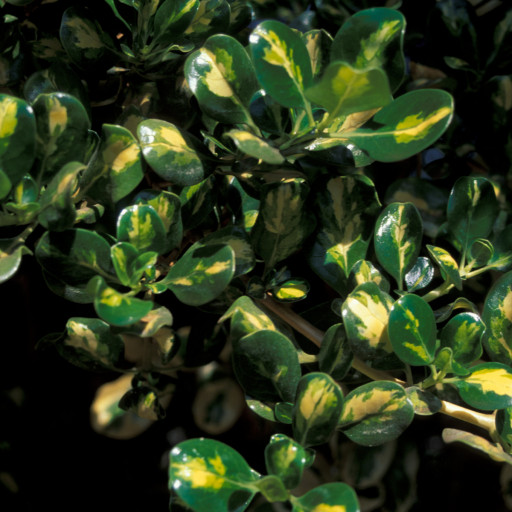
Plant Overview
Often called the Mirror Bush or Looking Glass Plant, Coprosma repens is a coastal superstar hailing from New Zealand. It is most famous for its almost unnaturally glossy foliage that reflects light as if the leaves have been freshly varnished. Whether it is clinging to a seaside cliff or manicured into a garden hedge, this plant brings a vibrant, "wet-look" sparkle to any landscape.
🔍 How to Identify
- 🍃 Mirror-Like Foliage: The leaves are thick, rounded, and possess an incredible high-gloss finish. They are typically deep green, but many garden varieties feature marbled edges of cream, lime, or gold.
- 🟠 Fleshy Berries: In late summer, female plants produce clusters of small, bead-like fruits that transition from green to a bright, translucent orange-red.
- 🌳 Adaptable Habit: Depending on its environment, it can grow as a prostrate, sprawling groundcover or a sturdy, multi-stemmed shrub reaching up to 10 feet tall.
🏡 In Your Garden
- 🌊 Salt Tolerance: This is one of the best plants for "front-line" coastal gardening. It thrives in salty sea breezes and harsh winds that would cause most other plants to wither or brown.
- ✂️ Shape-Shifter: Because it handles heavy pruning so well, it is a favorite for "topiary" or formal hedging. It grows quickly, so regular trimming is necessary if you want to maintain a specific geometric shape.
- ☀️ Sun for Shine: While it can grow in partial shade, the signature "mirror" shine and variegation colors are most intense when the plant receives full sun.
⚠️ Safety & Toxicity
- ✅ Safe for Pets: Coprosma repens is generally considered non-toxic to dogs, cats, and horses, making it an excellent choice for pet-friendly backyards.
- 👶 Child Safety: The bright berries are non-poisonous but are not considered "edible" for humans. If a large amount is ingested, it might cause a mild stomach ache, so it’s best to discourage children from snacking on them.
✨ Fun Fact
The name Coprosma actually means "smelling like dung." This is a bit of a misnomer for this specific plant; while some of its New Zealand cousins release a foul odor when their leaves are crushed to deter herbivores, the Mirror Bush is much more polite and lacks the stinky reputation!

Detailed Care Instructions
| Lighting | Full Sun |
| Hardiness Zones | 9A - 11 |
To grow a Coprosma Repens plant, also known as mirror plant or looking-glass plant, follow these steps:
- Choose a Suitable Location: Coprosma Repens can be grown both indoors and outdoors. If growing indoors, select a spot near a window that receives bright, indirect sunlight. For outdoor cultivation, choose a spot with partial shade or full sun exposure.
- Proper Soil: Ensure that the soil is well-draining and fertile. The pH level of the soil should be slightly acidic to neutral.
- Propagation: Coprosma Repens can be propagated from seeds or stem cuttings. If using seeds, sow them in a seed-starting tray filled with moist seed-starting mix. Keep the tray in a well-lit area with a constant temperature of around 70-75°F (21-24°C) until the seeds germinate. If using stem cuttings, take a 4-6 inch cutting from a healthy, mature plant and dip it in a rooting hormone. Plant the cutting in a pot with well-draining soil and keep it in a warm and humid environment until it takes root.
- Planting: Once the seedlings have grown or the cuttings have taken root, transfer them to pots or directly into the ground. If planting outdoors, make sure to space the plants 1-3 feet apart, depending on the desired density of the coprosma hedge or shrub.
- Watering: Keep the soil consistently moist but never waterlogged. Water the plants deeply whenever the top inch of the soil feels dry. Reduce watering during winter as the growth slows down.
- Fertilizing: Apply a balanced, slow-release fertilizer during the growing season to promote healthy growth. Follow the manufacturer's instructions for the correct dosage.
- Pruning: Regular pruning can help maintain the desired shape and size of the Coprosma Repens plant. Prune in early spring or late winter to remove any dead or damaged branches.
- Protection from Frost: If growing Coprosma Repens in a region with cold winters, provide protection from frost. Cover the plants or move them indoors when freezing temperatures are forecasted.
- Pest and Disease Control: Coprosma Repens is generally resistant to pests and diseases. However, regularly inspect the plants for any signs of aphids, mealybugs, or leaf spot diseases. Treat any infestations or diseases promptly to prevent damage.
- Enjoying the Plant: Coprosma Repens is appreciated for its attractive foliage and colorful berries, which can be harvested and used for propagation or landscaping purposes.
By following these guidelines, you should be able to successfully grow and care for a Coprosma Repens plant.

Place in a window with dappled sun or a spot in the middle of a room. Or directly in a window facing west or east.

Coprosma Repens plants should be watered thoroughly and deeply, allowing the soil to dry out slightly between watering sessions. It is important to avoid over-watering and ensure that the soil is well-draining to prevent root rot. During the summer months, the plant may require more frequent watering due to higher temperatures and increased evaporation. It is also important to avoid getting water on the leaves as this can lead to fungal diseases. To prevent this, water the plant at the base of the stem.
To fertilize this plant, you should use a balanced fertilizer with macro-nutrients such as nitrogen, phosphorus, and potassium. Fertilize the plant in the spring and early summer when it is actively growing. Follow the instructions on the fertilizer package for application rates and frequency, as over-fertilization can damage the plant. Additionally, you may consider using organic fertilizers and supplements, such as compost or fish emulsion, to promote healthy growth and increase soil fertility. Always water the plant thoroughly after fertilizing.
The ideal soil for Coprosma Repens plant is slightly acidic, well-draining, and rich in organic matter. It should be loose and loamy in texture, allowing oxygen and water to circulate around the plant's roots. The pH level of the soil should be between 5.5 to 6.5. It is recommended to mix compost, peat moss, perlite or vermiculite into the soil to improve its drainage and moisture retention. It is also important to avoid using soil that is too heavy or compacted, as this can restrict the plant's root growth and lead to waterlogging. Additionally, it is important to ensure that the soil is not contaminated with any pathogens or diseases that could harm the plant.
There are several ways to propagate this particular plant. One method is to take stem cuttings from a mature plant during the growing season (usually in spring or summer). Select a stem that is healthy and has several leaves on it. Using a sharp, clean pair of scissors or pruning shears, cut a 4-6 inch section of the stem just below a leaf node (where the leaf attaches to the stem). Remove any leaves from the lower half of the cutting and dip the end in rooting hormone powder. Plant the cutting in a pot filled with well-draining, moist soil and cover with plastic wrap to create a humid environment. Keep the pot in a warm, bright location and mist the cutting regularly to keep it moist. After several weeks, roots should begin to form and the cutting can be transplanted into a larger pot or into the ground. Another method of propagation is by seed, which can be sown in the spring in a well-prepared seed bed. The seeds should be covered with a thin layer of soil and kept moist until they germinate. Once the seedlings are large enough to handle, they can be transplanted into individual pots or into the ground.








