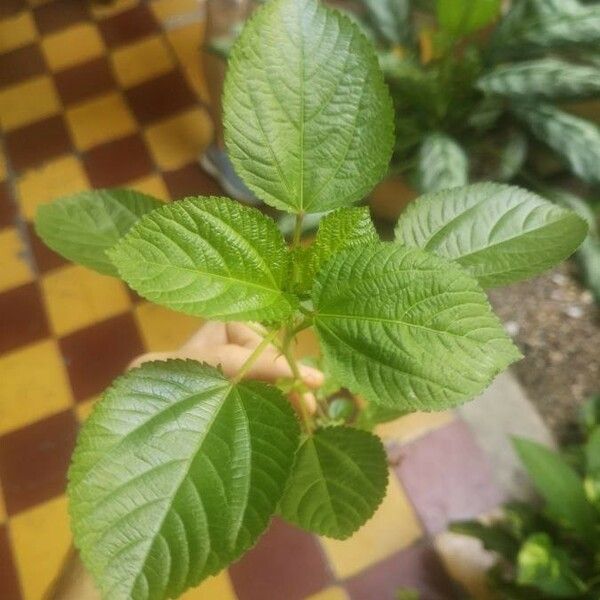
Plant Overview
Known colloquially as the East Indian Mallow or Creeping Jute, Corchorus aestuans is a resilient little traveler that has made its way across tropical regions worldwide. While often dismissed as a common weed in lawns and roadsides, it belongs to the prestigious Jute family, famous for providing the world with sturdy burlap fibers and textiles.
🔍 How to Identify
- 🌼 The Flowers: Look for tiny, cheerful yellow blossoms with five petals. They usually appear in small clusters and are quite fleeting, opening mostly in the morning sun.
- 🍃 The Leaf Base: A key identifier is the leaf shape—ovate with serrated (toothed) edges. If you look closely at the base of the leaf where it meets the stem, you will often see two hair-like "bristles" or tails extending outward.
- 🎋 The Stems: The plant often sports reddish or purplish stems that trail along the ground before curving upward, giving it a somewhat messy but hardy appearance.
- 📦 The Seed Pods: Unlike some cousins with long pods, this species produces short, cylindrical capsules that are distinctly ridged or "winged," looking a bit like tiny architectural columns.
🏡 In Your Garden
- 🌱 A Tough Survivor: This plant isn't picky. It thrives in disturbed soils, cracks in pavement, or neglected corners of the garden. It has a deep taproot that allows it to withstand dry spells that would wither more delicate ornamentals.
- ☀️ Sun Seeker: It is a tropical native at heart. If you find it popping up in your yard, it’s likely in the sunniest spot available, as it requires high light levels to trigger its daily blooming cycle.
- 🪴 Potential "Weed" Status: Because it produces a high volume of seeds in those ridged pods, it can spread quickly. Gardeners usually treat it as a wild herb or remove it to prevent it from outcompeting smaller groundcovers.
⚠️ Safety & Toxicity
- 🟢 General Status: Generally considered non-toxic to touch, and some species in this genus are used as "potherbs" (leafy greens) in specific cultures.
- 🐾 Pet & Child Caution: While not famously poisonous, the seeds of many Corchorus species contain digitalis-like compounds (cardiac glycosides) which can be harmful if ingested in large quantities. It is best to keep curious pets or toddlers from snacking on the seed pods.
✨ Fun Fact
The genus name Corchorus comes from the ancient Greek word 'korkhoros,' which referred to a wild plant used to treat skin conditions. Though C. aestuans is a smaller cousin, its relatives are the primary source of Jute, the second most important vegetable fiber in the world after cotton!

Detailed Care Instructions
To grow Corchorus Aestuans, also known as Chinese spinach or Molokhia, follow these steps:
- Climate: Corchorus Aestuans thrives in tropical and subtropical climates, with temperatures between 20-30°C (68-86°F).
- Soil: The plant prefers well-draining soil, rich in organic matter. It can tolerate poor soil conditions but grows best in a fertile loamy soil.
- Sunlight: Choose a location where the plant will receive full sun for at least 6-8 hours a day.
- Planting: Corchorus Aestuans can be directly seeded or grown from seedlings. If starting from seeds, sow them directly into the prepared soil at a depth of 1-2 centimeters (0.4-0.8 inches). Space the seeds about 15-25 centimeters (6-10 inches) apart. If transplanting seedlings, space them about 30-45 centimeters (12-18 inches) apart.
- Watering: Keep the soil consistently moist but not waterlogged. Water the plants regularly, especially during dry spells.
- Fertilizer: Apply a balanced organic fertilizer or compost to the soil before planting. This will provide necessary nutrients to the plants.
- Mulching: Mulch around the plants to retain moisture and suppress weed growth.
- Pruning: Encourage branching and bushier growth by regularly pruning the plant. This will also help improve leaf production.
- Pest control: Monitor the plants for pests such as aphids, caterpillars, or slugs. Remove them by hand or use organic pest control methods if necessary.
- Harvesting: Start harvesting leaves when they reach a size of around 10-15 centimeters (4-6 inches) tall. Cut the leaves just above the growing point to encourage further leaf production.
Remember to regularly check the health of your plants and provide appropriate care to ensure their growth and productivity.

Place in a bright room that is sun drenched almost all day. Or directly in a south-facing window.

To water this particular plant species, it is ideal to wait until the top inch of soil feels dry before watering. When watering, it is recommended to use room temperature water and to ensure that the water spreads evenly throughout the soil. Allow excess water to drain out of the bottom of the pot to prevent waterlogging, as root rot can occur. Additionally, it is important to avoid getting water on the leaves or stems of the plant to prevent fungal diseases.
To fertilize the plant, use a balanced fertilizer with equal amounts of nitrogen, phosphorus, and potassium. Apply the fertilizer in the soil around the plant, avoiding direct contact with the stem or leaves. Water the plant well after fertilizing and repeat the process every 4-6 weeks during the growing season. Avoid over-fertilizing as it can lead to nutrient burn and damage the plant.
Corchorus Aestuans plant prefers to be grown in well-draining soil. The soil should be rich in organic matter and have a slightly acidic to neutral pH of 5.5 to 7.0. It is essential to avoid waterlogged soil and ensure adequate drainage to prevent root rot. A sandy loam soil is ideal for this plant as it provides excellent drainage and aeration. Adding compost, leaf litter, or other organic matter to the soil can help improve its moisture-retaining capacity, thus enhancing the plant's growth and health. The soil should be prepared adequately before planting, ensuring that it is free of weed seeds, pests, and diseases. Choosing the right soil for Corchorus Aestuans plant is crucial for its optimal growth and survival.
Corchorus Aestuans is a plant that can be propagated by using stem cuttings. Here are the steps:
- Choose a healthy Corchorus Aestuans plant and identify a stem that is at least 4-6 inches long.
- Using a clean and sharp pair of scissors or pruning shears, cut the stem from the parent plant just below a leaf node.
- Remove the leaves from the bottom 2-3 inches of the stem.
- Dip the cut end of the stem into rooting hormone powder to promote root growth.
- Prepare a pot with well-draining soil and make a small hole in the center using a dibber or your finger.
- Insert the stem cutting into the hole and gently firm the soil around it.
- Water the soil, making sure not to overwater.
- Cover the pot with a plastic bag or dome to create a humid environment and place in a warm, bright location, but not in direct sunlight.
- Mist the plant regularly to keep the soil and foliage moist.
- After 2-3 weeks, you should see new growth and roots developing. Once the roots have taken hold, you can remove the plastic covering and begin to care for the plant as you would any other Corchorus Aestuans specimen.








