Plant Overview
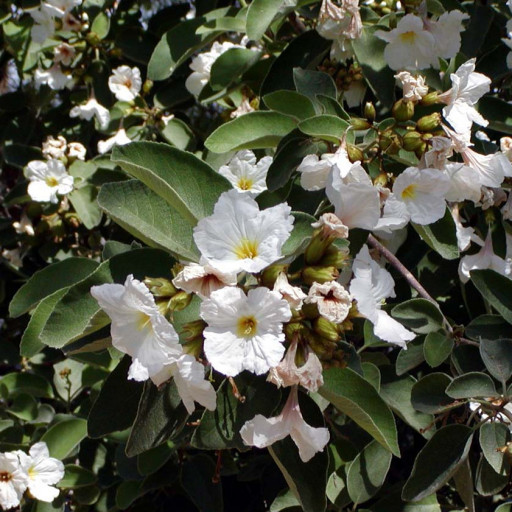
Often called the Anacahuita or Texas Wild Olive, this stunning evergreen isn't actually a true olive tree, but it carries the name due to its olive-like fruit. In the sun-drenched landscapes of South Texas and Northern Mexico, it is a legendary survivor, prized for its ability to produce snowy white "tissue paper" blossoms even in the most intense heat.
🔍 How to Identify
- 🌼 The Flowers: Trumpet-shaped, brilliant white blooms with a "fried egg" yellow center. They appear in heavy clusters and can bloom year-round in warmer climates.
- 🍃 Velvety Foliage: The leaves are large, oval, and feel like soft sandpaper or velvet due to fine, fuzzy hairs. They have a distinctive dusty, grey-green hue.
- ⚪ The Fruit: It produces small, egg-shaped white fruits that are fleshy on the outside with a large, hard stone inside.
🏡 In Your Garden
- ☀️ Heat & Drought Specialist: The Anacahuita is a "plant it and forget it" species once established. It thrives in limestone-rich, well-draining soil and actually prefers a bit of neglect over being overwatered.
- 🦋 A Pollinator Magnet: This tree is a hub of activity. It is a vital nectar source for butterflies and hummingbirds, while the dense canopy provides excellent nesting sites for songbirds.
- 🧤 Cold Sensitivity: Because it is a subtropical native, it can be a bit of a "drama queen" when frost hits. If temperatures drop below 20°F, it may die back to the ground, though it usually regrows from the roots in spring.
⚠️ Safety & Toxicity
- 🐾 Pet & Human Caution: While the fruit is a favorite snack for deer, wild cattle, and birds, it is considered mildly toxic to humans and domestic pets.
- 🤢 The Symptoms: Ingesting the fruit in large quantities can cause "dizziness" or digestive upset. It is best to admire the "olives" visually rather than including them in your diet.
✨ Fun Fact
In traditional Mexican folk medicine, a syrup made from the fruit and leaves of the Cordia boissieri was a common remedy for stubborn coughs and bronchial congestion, giving it a permanent spot in the history of regional herbalism.

Detailed Care Instructions
| Humidity | Normal |
| Lighting | Full Sun |
| Difficulty | Easy |
| Hibernation | Cold Period |
| Hardiness Zones | 9 - 11 |
To grow a Cordia Boissieri plant, you can follow these steps:
- Choose a suitable location: Cordia Boissieri plants thrive in full sun to partial shade. Select an area in your garden that receives 6-8 hours of direct sunlight per day. Also, ensure that the soil is well-draining.
- Prepare the soil: Cordia Boissieri prefers sandy, loamy soil. If your soil is heavy or clayey, amend it by mixing in some sand or organic matter to improve drainage.
- Sow seeds or transplant seedlings: You can start Cordia Boissieri plants from seeds or purchase young seedlings from a nursery. If starting from seeds, sow them in a pot or seed tray filled with moist seed-starting mix. Cover the seeds lightly with soil and keep them warm and moist until germination. Transplant seedlings into the ground or larger pots once they have developed a few sets of true leaves.
- Watering: While Cordia Boissieri is drought-tolerant, it still requires regular watering until it becomes established. Water the plant deeply, allowing the soil to dry out slightly between waterings. Avoid overwatering, as this can lead to root rot.
- Fertilization: Cordia Boissieri plants are not heavy feeders. Apply a balanced, slow-release fertilizer in spring or use a diluted liquid fertilizer every month during the growing season.
- Pruning: Regular pruning helps maintain the shape and size of the plant. You can prune dead or diseased branches, as well as shape the plant to maintain its desired form.
- Mulching: Apply a layer of organic mulch around the base of the plant to conserve moisture, suppress weeds, and provide some insulation to the roots.
- Pest and disease control: Cordia Boissieri is relatively resistant to pests and diseases but may occasionally be affected by aphids or powdery mildew. Use organic insecticides or fungicides if necessary, following the instructions on the packaging.
- Propagation: If you want to propagate Cordia Boissieri, you can take stem cuttings in spring or summer. Dip the cuttings in a rooting hormone and plant them in a well-draining potting mix. Keep the cuttings moist and in a warm location until they develop roots.
With proper care and attention, your Cordia Boissieri plant should thrive and grow into a beautiful addition to your garden.

Place in a bright room that is sun drenched almost all day. Or directly in a south-facing window.

Cordia Boissieri plant should be watered twice a week in the peak summer months and once a week during the winter months. Ensure that the soil is fully saturated at each watering, but avoid overwatering as this can lead to root rot. Test the soil with your finger to determine the moisture level before watering. Additionally, it is recommended to water this plant in the early morning or late afternoon when the sun is not as strong to prevent evaporation. Use a watering can or watering hose with a gentle flow to avoid damaging the plant.
To fertilize this plant, use a balanced fertilizer with equal amounts of nitrogen, phosphorus, and potassium. Feed the plant during the active growing season, which is usually in spring and summer. Apply the fertilizer every four to six weeks, following the manufacturer's instructions for the amount to use. Water the plant thoroughly before and after fertilizing to prevent root burn. Avoid fertilizing during the dormant season, which is usually in fall and winter.
Cordia Boissieri is a plant that prefers well-draining soil with a slightly acidic pH. It grows best in soil that is rich in organic matter, such as compost and peat moss. The ideal soil mix for this plant should contain a mixture of topsoil, sand, perlite, and vermiculite. It is important to avoid using heavy clay soils, as these can cause drainage issues and lead to root rot. The soil should also be kept moist but not waterlogged, as the plant does not tolerate soggy soil. Before planting, it is recommended to amend the soil with fertilizer to provide the plant with the necessary nutrients for healthy growth.
To propagate this particular plant, you will need to take a cutting from a mature, healthy plant. This can be done by using a sharp, clean pair of gardening shears to cut a stem from the plant. Make sure the cutting is at least four inches long and has several leaves.
Next, remove the lower leaves from the cutting, leaving only two or three at the top. Dip the cut end of the stem in rooting hormone powder to increase the chances of successful propagation. Place the stem into a container filled with moist, well-draining soil.
Cover the container with a clear plastic bag to create a humid environment and encourage root growth. Keep the container out of direct sunlight, and mist the cutting every few days to keep the soil moist.
After a few weeks, the cutting should start to develop roots. Once you see new growth on the stem, you can remove the plastic bag and continue to care for the new plant as you would with any other Cordia Boissieri plant.
Common pests of the mexican olive include Spider mites, thrips. Make a habit of checking your mexican olive frequently for pests so that any infestations can be caught and managed early.








