Plant Overview
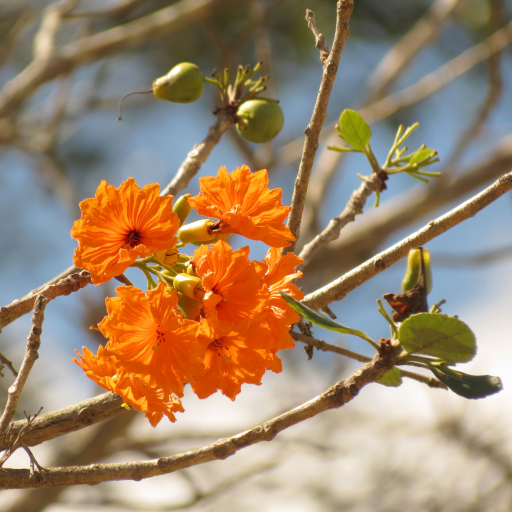
Known as the Siricote, this stunning tropical tree is a jewel of the Yucatán Peninsula and Central America. It is famous for its fiery, trumpet-shaped blossoms and its incredibly prized, dark-marbled wood that looks like a landscape painting. In its native lands, it is often celebrated in folklore as a symbol of the sun due to its radiant orange canopy.
🔍 How to Identify
- 🧡 The Flowers: Brilliant, funnel-shaped flowers in shades of vivid orange or vermillion that grow in dense clusters, attracting hummingbirds from miles away.
- 🍃 The Foliage: Large, elliptic leaves that have a very distinct, rough texture—often compared to sandpaper or a cat’s tongue.
- 🍈 The Fruit: Ovoid, yellowish-green fruits that are about the size of a walnut; they are edible but typically enjoyed only when preserved in heavy syrup.
🏡 In Your Garden
- ☀️ Sun & Soil: The Siricote is a lover of limestone. It thrives in well-draining, alkaline soils and craves full sun to produce its iconic floral display.
- 💧 Water Resilience: This tree is remarkably drought-tolerant once established. It’s an ideal choice for xeriscaping or "low-water" gardens, as it prefers a deep soak followed by a period of drying out rather than constant moisture.
- 🌳 Slow & Steady: Because it grows relatively slowly, it is often used as a focal specimen tree. It won't overwhelm your garden quickly, allowing you to enjoy its architectural gnarled trunk over many years.
⚠️ Safety & Toxicity
- ✅ Safe Status: Cordia dodecandra is generally considered non-toxic to humans, cats, and dogs.
- 👅 Fruit Texture: While the fruit is non-toxic and used in traditional Mexican sweets, it can be very dry and somewhat astringent when raw. It is best left for the birds or prepared by an expert cook.
✨ Fun Fact
The wood of the Siricote is one of the most expensive and sought-after timbers in the world! Known for its "spider-webbing" grain patterns, it is a top choice for master luthiers to create high-end acoustic guitars and luxury car interiors.

Detailed Care Instructions
To grow Cordia Dodecandra plant, follow these steps:
- Choose a suitable location: Cordia Dodecandra prefers full sun to partial shade, so select a spot that receives at least 6-8 hours of direct sunlight per day.
- Select the right soil: This plant thrives in well-draining soil. If your garden soil is heavy or clayey, improve drainage by adding organic matter such as compost or well-rotted manure.
- Sow or plant the seeds: Cordia Dodecandra can be grown from seeds. Sow the seeds directly in the garden bed or start them indoors in small pots. If starting indoors, sow the seeds in seed-starting mix and keep the pots in a warm and well-lit area.
- Watering: Keep the soil consistently moist but not waterlogged. Water the plants regularly, especially during dry spells. However, avoid overwatering as this can lead to root rot.
- Fertilize: Apply a balanced, slow-release fertilizer once every 3-4 months to provide necessary nutrients to the plant. Alternatively, you can use a diluted liquid fertilizer every 4-6 weeks during the growing season.
- Pruning: Cordia Dodecandra benefits from regular pruning to maintain its shape and promote a bushy growth. Prune any dead or damaged branches and remove any suckers that arise from the base of the plant.
- Protect from pests and diseases: Monitor the plant regularly for any signs of pests or diseases. Common issues include aphids, whiteflies, and powdery mildew. If identified, treat with appropriate organic pest control methods or fungicides.
- Mulching: Applying a layer of organic mulch around the base of the plant helps retain moisture, suppresses weeds, and improves soil quality.
- Harvesting: Cordia Dodecandra produces small edible berries. Harvest the ripe berries when they turn from green to yellow or orange. These berries are typically sweet and often used in traditional medicine.
- Winter care: In colder climates, Cordia Dodecandra may require protection during winter. Consider mulching around the base of the plant to insulate the roots, or grow it in a container that can be moved indoors during freezing temperatures.
Remember to research specific care guidelines for your region and consult local gardening experts for tailored advice based on your specific climate and conditions.

Place in a bright room that is sun drenched almost all day. Or directly in a south-facing window.

Cordia Dodecandra is a type of plant that requires moderate watering to thrive. When watering, it is important to ensure that the soil is evenly moist but not waterlogged. This can be achieved by watering the plant deeply once a week during the growing season, and then reducing the amount of water during the dormant season. It is also important to avoid over-watering as this can lead to root rot and other diseases. Additionally, it is advisable to water the plant in the morning or evening to prevent the water from evaporating too quickly. Finally, it is important to monitor the soil moisture level regularly to ensure that the plant is receiving the appropriate amount of water.
To fertilize the Cordia Dodecandra plant, mix a balanced, slow-release fertilizer into the soil around the base of the plant. Apply the fertilizer according to the manufacturer's instructions and water thoroughly after application. During the plant's growing season, fertilize every six to eight weeks to promote healthy growth. Avoid over-fertilizing, as this can lead to nutrient burn and other plant health issues.
Cordia dodecandra plant prefers well-draining soil that is rich in organic matter and has a pH range of 6.0 to 7.5. A sandy loam soil that allows for air movement and moisture retention is ideal. The soil should not be compacted, as this can restrict root growth. It is important to ensure that the soil is not too heavy or waterlogged, as this can cause root rot and other fungal diseases. A regular application of organic fertilizer can help to improve soil quality and provide essential nutrients for plant growth. It is also recommended to add a layer of organic mulch around the base of the plant to help retain moisture and regulate soil temperature.
Cordia dodecandra is a plant that can be propagated through both sexual and asexual methods. To propagate the plant asexually, you will need to take stem cuttings from a healthy parent plant.
- Select a healthy parent plant with sturdy and disease-free stems.
- Prepare a clean, sharp garden snipper/scissors or pruner.
- Take a stem cutting from the parent plant that is about 4-6 inches in length. Make the cut just below a parent node (where a leaf meets the stem).
- Remove any lower leaves from the stem cutting so that only the top few leaves remain.
- Dip the cut end of the stem into a rooting hormone powder, if desired, to increase the chances of rooting.
- Prepare a container with well-draining soil, such as a high-porosity potting mix. Preferably a moist well-drained soil mix.
- Make a hole in the soil with a pencil or small stick and insert the prepared stem cutting, covering it with soil and pressing down lightly.
- Water the newly planted stem cutting gently, ensuring the soil is kept moist but not wet to prevent root rot.
- Cover the top of the container with a clear plastic bag to create a mini greenhouse effect.
- Place the container in a bright, warm location away from direct sunlight and draughts.
- Check the soil moisture level regularly and water as needed to keep the soil moist.
- After a few weeks, check the stem cutting for roots. Gently tug on the stem cutting to see if it resists and feels rooted. Once rooted, remove the plastic bag and gradually acclimate the new plant to normal air conditions.
Propagation of Cordia dodecandra through sexual method is a little bit complex involving developmental steps like pruning, stratification, germination, and so on.








