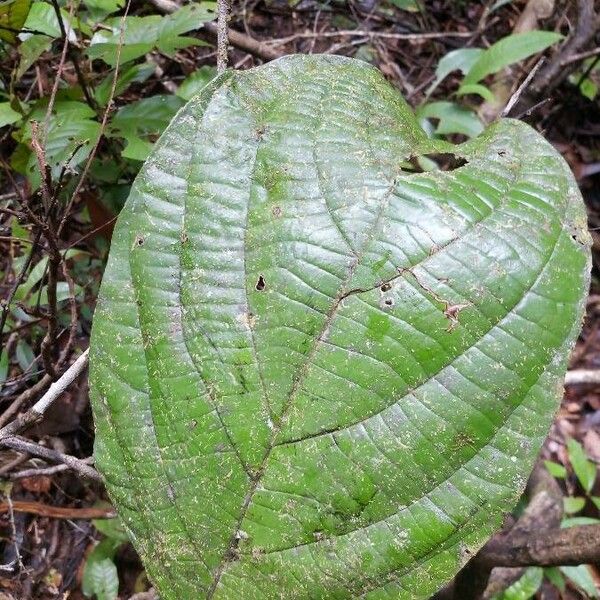
Plant Overview
Named after the legendary Victorian botanist Richard Spruce, who trekked through the Amazon in the 1850s, Cordia sprucei is far more than just a tropical shrub; it is a living "apartment complex." This South American native is famous in the scientific community for its fascinating evolutionary partnerships, often serving as a dedicated host for protective insect colonies.
🔍 How to Identify
- 🍃 Textured Foliage: The leaves are typically broad, elliptical, and covered in fine, stiff hairs that give them a slightly rough or "sandpaper" feel when brushed.
- 🐜 Stem Swellings: One of the most distinct features is the presence of "domatia"—small, hollowed-out swellings located at the junctions of the stems or leaf bases, which serve as natural nesting sites for ants.
- 🌼 Clustered Blooms: It produces delicate clusters of small, white or cream-colored tubular flowers that emerge from the ends of the branches.
🏡 In Your Garden
- ☁️ Humidity is Key: Coming from the humid understory of the Amazon basin, this plant thrives in high-moisture environments. It is best suited for tropical gardens or large, humid conservatories rather than dry living rooms.
- ⛅ Filtered Sunlight: Because it naturally grows beneath the rainforest canopy, it prefers "dappled" light. Harsh, direct afternoon sun can quickly yellow the leaves and stress the plant.
- 🌱 Root Stability: Cordia sprucei dislikes being moved once established. It prefers rich, organic soil that remains consistently moist but never waterlogged, as stagnant water can lead to root rot.
⚠️ Safety & Toxicity
- 🟢 General Safety: This plant is generally considered non-toxic to humans and common household pets. It does not possess the aggressive chemical toxins found in many other tropical species.
- 🧤 Mechanical Irritation: The tiny, stiff hairs on the leaves and stems can cause mild skin irritation or "itchiness" for people with sensitive skin. It is a good idea to wear gloves when pruning or repotting.
✨ Fun Fact
Cordia sprucei is a "myrmecophyte," or "ant-plant." It grows specialized hollow structures specifically to invite Allomerus ants to move in. In exchange for the free housing, the ants act as a private security detail, aggressively attacking any caterpillars or herbivores that try to take a bite out of the plant’s leaves!

Detailed Care Instructions

Some plants require more regular watering than others, which should be done every few days. It's critical to maintain the soil moist all of the time. The water requirements of the same plant placed in pots with varying sizes will differ. Because the water in the smaller pot evaporates faster than the water in the larger pot, it will require more watering. Regardless of pot size, the surface should constantly be maintained moist.








