Plant Overview
The Cordyla africana, widely known as the Wild Mango or Sunbird Tree, is a majestic giant native to the warm river valleys of Southern and Eastern Africa. Despite its name, it isn't a true mango, but it earns the title with its succulent, golden fruit that smells faintly of turpentine when green and turns sweet as it ripens. In its native habitat, it acts as a bustling "wildlife hotel," drawing in monkeys, elephants, and a kaleidoscope of birds to its nectar-rich canopy.
🔍 How to Identify
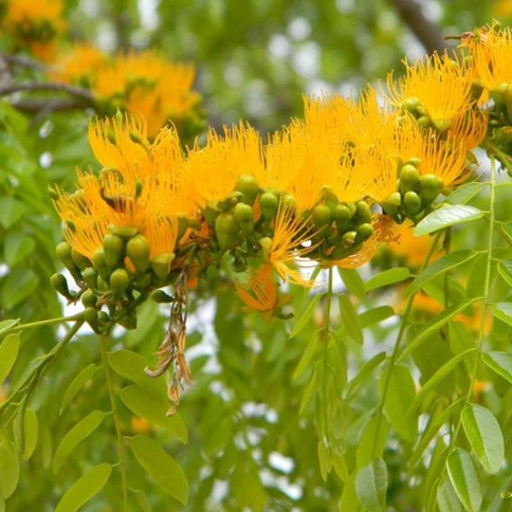
- 🍃 Lush Foliage: It features large, compound leaves made of many small, oval leaflets that create a dense, umbrella-shaped crown, providing deep shade.
- 🌼 Petal-less Blooms: The flowers are architectural wonders; they lack petals entirely and instead look like bright golden-yellow "puffs" made of long, exploding stamens.
- 🥭 The Fruit: It produces thin-skinned, oval fruits that hang in clusters. They turn from green to a bright, waxy yellow when ready to fall.
🏡 In Your Garden
- 🌳 Space is Essential: This is a massive tree that can reach heights of 25 meters. Because of its aggressive, spreading root system, it should never be planted near swimming pools, walls, or underground pipes.
- ☀️ Warmth & Water: It thrives in frost-free, subtropical climates. While it is relatively drought-tolerant once established, it grows fastest when given deep, well-draining soil and a steady supply of moisture, mimicking its natural home along riverbanks.
⚠️ Safety & Toxicity
- ✅ Edible & Nutritious: The fruit is safe for human consumption and is famously high in Vitamin C. It can be eaten raw or used to make a refreshing jelly.
- 🐾 Wildlife Friendly: It is non-toxic to pets and livestock. However, the large seeds inside the fruit should be kept away from small dogs as they could present a choking hazard.
✨ Fun Fact
The wood of the Wild Mango is exceptionally durable and resonant. It is the traditional material used by the Chopi people of Mozambique to craft the timbila, a sophisticated African xylophone that has been recognized by UNESCO as a Masterpiece of the Oral and Intangible Heritage of Humanity.

Detailed Care Instructions
To grow Cordyla Africana plant, also known as the Witgat Tree or Cape Mahogany, follow these steps:
- Choose a suitable location: Cordyla Africana prefers full sun exposure, so select a spot in your garden that receives direct sunlight throughout the day. The plant can tolerate various soil types but prefers well-draining soil.
- Prepare the soil: Cordyla Africana prefers slightly acidic to neutral soil. If your soil is clayey or too compacted, amend it by mixing in organic matter like compost or aged manure to improve drainage and fertility.
- Germinate the seeds: Gather fresh seeds from the Cordyla Africana plant. Soak the seeds in warm water overnight to enhance germination. Sow the seeds in seedling trays or pots filled with a well-draining potting mix. Cover the seeds with a thin layer of soil and keep them moist.
- Maintain the seedlings: Place the seedling trays or pots in a warm, well-lit area, such as near a window. Water the seedlings regularly, keeping the soil consistently moist but not waterlogged. After the seedlings have developed a few true leaves, transplant them into individual pots, allowing them room to grow.
- Harden off the seedlings: When the seedlings are around six to eight weeks old and the weather has warmed up, gradually expose them to outdoor conditions. Start by placing them in a sheltered spot outdoors for a few hours each day, gradually increasing the time over a week or two. This process helps the seedlings adjust to the outdoor environment.
- Planting in the ground: Select a location in your garden where you want to grow the Cordyla Africana plant. Dig a hole that is wider and deeper than the pot the seedling is currently in. Gently remove the seedling from the pot, loosen the roots a bit, and place it in the hole. Backfill the hole with soil, firming it gently around the base of the plant. Water thoroughly after planting.
- Care for the plant: Maintain regular watering throughout the plant's establishment period, ensuring the soil remains moist but not waterlogged. Once the plant is established, it can tolerate some dry periods. Apply a layer of mulch around the base of the plant to retain moisture, suppress weeds, and insulate the root system.
- Pruning and shaping: Cordyla Africana can grow into a large, spreading tree if left unpruned. If you want to maintain a particular shape or size, prune the plant during the dormant season or after flowering. Remove any dead, damaged, or crossing branches and trim back as desired.
- Monitor for pests and diseases: Cordyla Africana is generally not prone to major pest or disease problems. However, keep an eye out for common garden pests like aphids or scale insects. If necessary, treat with an appropriate insecticide or consult a local horticulturist for guidance.
By following these steps, you can successfully grow Cordyla Africana plant in your garden.
Cordyla Africana is a tropical plant that requires consistent, even watering throughout the growing season. When watering Cordyla Africana, it is important to avoid over-watering which can cause root rot. It is recommended to use a well-draining soil mix and a pot with a good drainage hole to allow excess water to drain away.
The frequency of watering Cordyla Africana may vary depending on the temperature and humidity levels of the environment. Typically, it is best to water the plant when the top inch of soil feels dry to the touch. It is important to water the plant deeply, allowing water to soak into the soil and reach the root system.
To water the plant, slowly and evenly pour water onto the soil until it begins to flow out of the drainage hole. Allow the excess water to drain away and avoid letting the plant sit in standing water. During hot and dry weather, the plant may require more frequent watering to prevent the soil from drying out too much.
In summary, when watering Cordyla Africana, it is important to avoid over-watering, use a well-draining soil mix and pot with good drainage, water deeply and evenly, and adjust watering frequency as needed depending on temperature and humidity levels.
To fertilize Cordyla Africana plants, use a balanced fertilizer with equal parts nitrogen, phosphorus, and potassium. Apply the fertilizer in early spring and late summer, following the package instructions for dosage. Water the plant thoroughly before and after applying the fertilizer to prevent burning and to ensure proper absorption. Do not over-fertilize, as this can lead to excessive growth and weaken the plant.
The soil suitable for Cordyla Africana plant should be well-draining and fertile. It should be slightly acidic with a pH of around 6.0 to 7.0. The soil structure should be loose and loamy, with good water-holding capacity. The planting location should have good air circulation and receive sufficient sunlight. Organic matter such as compost or well-rotted manure can be added to the soil to improve its fertility and structure. It is important to avoid using heavy clay or water-logged soils as they can cause root rot in the plant.
Cordyla Africana plant can be propagated through several methods such as stem cuttings, air layering, and seed propagation.
To propagate through stem cuttings, select a healthy stem from the parent plant, with no signs of disease or damage. Cut the stem into 6-8 inch sections, making sure each section has at least two nodes. Remove the leaves from the bottom half of the stem and dip the cut end in rooting hormone powder. Plant the stem cutting in a well-draining potting mixture and water thoroughly. Keep the soil moist and place the pot in a warm and bright spot. In a few weeks, the plant will start developing roots and new growth, indicating successful propagation.
To propagate through air layering, select a healthy stem from the parent plant and make a small cut through the bark, a few inches below a node. Apply rooting hormone powder to the exposed area and wrap it with moist sphagnum moss. Cover the moss with plastic wrap and tie it securely to the stem. In a few weeks, roots will start to develop from the cut area. Once the roots are well developed, carefully cut the stem below the roots and pot the new plant in a well-draining potting mix.
To propagate through seed propagation, gather fresh seeds from a healthy parent plant and soak them overnight in warm water. Sow the seeds in a seed-starting mix and cover lightly with soil. Water the soil and ensure it remains moist during the germination period. Keep the seedlings in a warm and bright spot until they are ready for transplantation.
Overall, Cordyla Africana plant is relatively easy to propagate, and with the proper care and attention, the new plants can grow into strong and healthy specimens.








