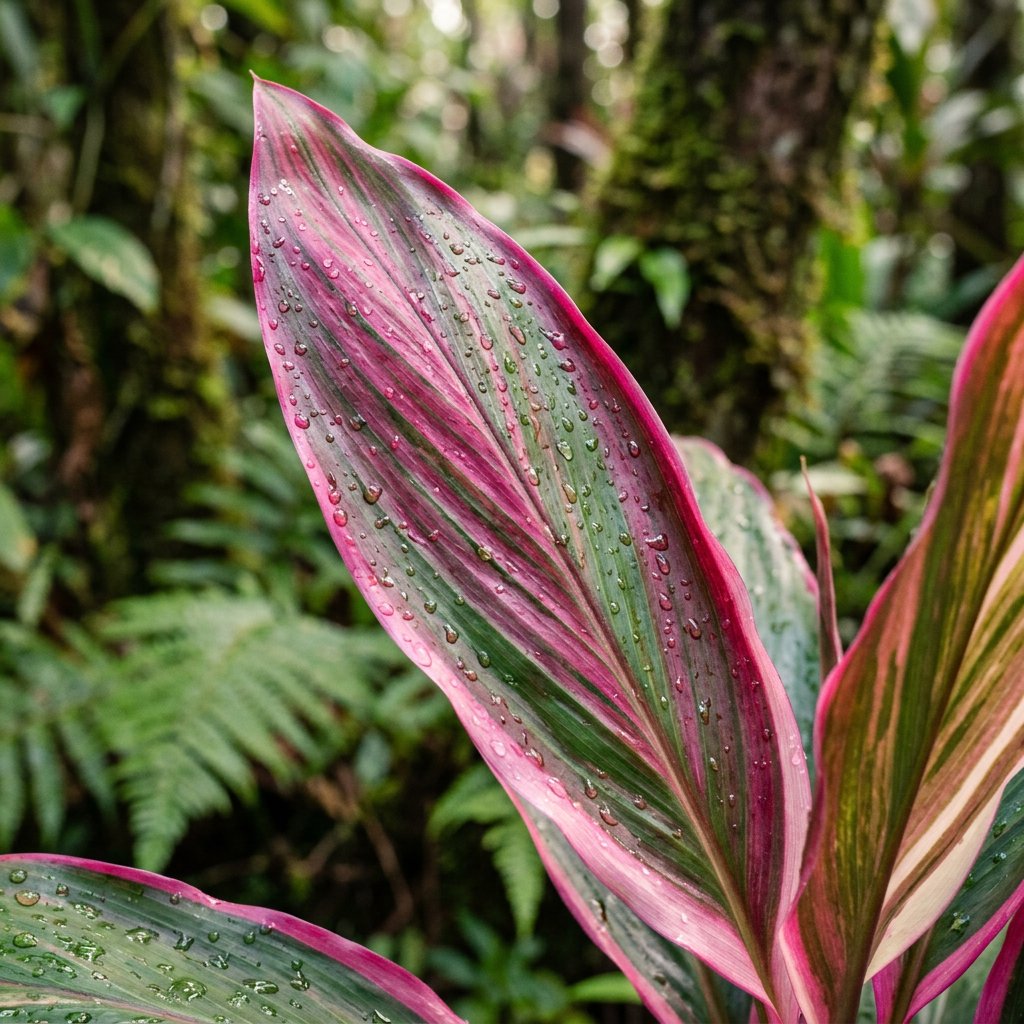
Plant Overview
Often called the "Ti Plant" or "Good Luck Plant," Cordyline fruticosa is a staple of tropical landscapes and a vibrant favorite for indoor collectors. Originating from Southeast Asia and the Pacific Islands, this plant is legendary for its architectural form and foliage that looks like it was painted with neon brushes. In many cultures, it is believed to bring prosperity and protect the home from negative energy.
🔍 How to Identify
- 🌿 Leaf Shape: The leaves are elongated and lance-shaped, growing in a spiral pattern from a central woody stalk.
- 🎨 Vibrant Colors: Depending on the variety, the foliage can range from deep forest green and chocolate burgundy to electric pink, cream, and fiery red.
- 📏 Growth Habit: It typically grows as a single-stemmed upright plant, eventually developing a palm-like appearance as lower leaves drop to reveal a ringed trunk.
🏡 In Your Garden & Home
- 💧 Water Quality Matters: This species is notoriously sensitive to fluoride and chlorine commonly found in tap water. If you notice the tips turning brown, it’s likely "protesting" the minerals; using distilled water or rainwater will keep the leaf edges pristine.
- ☀️ Light for Color: While it can survive in lower light, its iconic pinks and reds will fade to a dull green if it's kept in the dark. To maintain those "neon" vibes, place it in bright, indirect light—but avoid harsh midday sun which can scorch the delicate leaves.
- 🌡️ Tropical Humidity: Being a true islander, it craves high humidity. If your home is dry, especially in winter, the plant may struggle with crispy edges or spider mites. Regular misting or a pebble tray can make a world of difference.
⚠️ Safety & Toxicity
- 🐾 Pet Warning: Cordyline fruticosa contains saponins, which are toxic to dogs and cats. If ingested, it can cause vomiting, drooling, and loss of appetite.
- 👶 Human Safety: While not considered deadly to humans, it can cause stomach upset if leaves are chewed by curious toddlers. It’s best kept on a high shelf or a sturdy plant stand.
✨ Fun Fact
In Hawaii, the Ti plant is deeply sacred. Historically, its leaves were used to make traditional hula skirts, thatched roofs, and even "sliding sleds" for children to ride down grassy hills. It is still common to see these plants tucked into the corners of Hawaiian gardens to act as a spiritual "fence" for the property.

Detailed Care Instructions
| Soil Ph | 6 To 6.5 |
| Humidity | High |
| Lighting | Part Sun |
| Soil Type | Rich, Well-Drained Soil |
| Bloom Time | Seasonal Bloomer |
| Difficulty | Easy |
| Plant Type | Broadleaf Evergreen |
| Mature Size | 200 To 400 Cm |
| Native Area | Eastern Asia |
| Temperature | 18°C - 25°C |
| Sun Exposure | Bright, Indirect Light |
| Hardiness Zones | 10 To 12 |
To grow a Cordyline Fruticosa (also known as Ti plant or Hawaiian Ti plant), follow these steps:
- Select a suitable planting location: Cordyline Fruticosa thrives in bright, indirect light. Choose a spot in your home or garden where the plant will receive sufficient light throughout the day.
- Prepare the soil: Use well-draining soil that retains moisture but doesn't become waterlogged. You can also add organic matter such as compost to improve the soil's fertility and drainage.
- Watering: Keep the soil evenly moist, but avoid overwatering. The plant prefers slightly moist soil, so water it when the top inch of the soil feels dry. Reduce watering during winter when growth slows down.
- Temperature: Cordyline Fruticosa prefers temperatures between 65-85°F (18-29°C) during the day and around 60°F (15°C) at night. Protect it from extreme temperatures and drafts.
- Fertilization: Feed the plant with a balanced liquid fertilizer every 2-3 months during the growing season (spring and summer). Follow the instructions on the fertilizer packaging for the correct dilution and application.
- Pruning: Trim any dead or damaged leaves regularly to maintain the plant's appearance. You can also propagate new plants by taking stem cuttings and rooting them in water or moist soil.
- Pests and diseases: Keep an eye out for pests like scale insects or mealybugs. If any are spotted, treat the plant with appropriate insecticide or use natural remedies like neem oil or insecticidal soap.
- Light requirements: Cordyline Fruticosa thrives in bright, indirect light. If growing indoors, place it near a sunny window or use artificial grow lights to provide adequate illumination.
- Transplantation: Repot the plant in a slightly larger container when its roots have outgrown the current pot. Use fresh potting soil and ensure the new container has drainage holes.
- Patience: Cordyline Fruticosa is a slow-growing plant, so be patient with its growth rate. With proper care and ideal growing conditions, its growth will gradually become apparent over time.
Remember to research the specific care requirements for the particular variety of Cordyline Fruticosa you have, as some cultivars may have slightly different needs.

Place in a window with dappled sun or a spot in the middle of a room. Or directly in a window facing west or east.

To water this plant, make sure the soil is dry to the touch before watering. Use room temperature water and pour it around the base of the plant until the water begins to drain out of the bottom of the pot. Avoid getting water on the leaves as this can cause damage or lead to disease. Allow the soil to dry out slightly before watering again, as overwatering can cause root rot. Water more frequently during warmer months and less frequently during the cooler months. It's a good idea to monitor the plant's growth and adjust watering accordingly.
To fertilize this plant, use a balanced fertilizer with a 10-10-10 NPK ratio. Fertilize at half strength every two weeks during the growing season. Avoid fertilizing in the winter months. Apply the fertilizer to moist soil, and water the plant after fertilizing to ensure the nutrients are absorbed properly. Over-fertilizing can burn the roots and damage the plant, so be cautious not to exceed recommended dosage.
Cordyline Fruticosa plant is a tropical plant that requires well-draining, nutrient-rich soil for optimal growth. The soil should be slightly acidic to neutral with a pH level between 6.0 to 7.0. It should be a mixture of organic matter, such as compost or peat moss, and sand or perlite to provide good drainage and aeration. The soil should also have adequate moisture retention capacity to prevent the plant from drying out too quickly. Avoid using heavy soil or clay soil as they can cause waterlogging and root rot. Additionally, adding a slow-release fertilizer to the soil can help provide nutrients to the plant over an extended period.
To propagate this plant, you first need to find a mature, healthy plant with several stems and leaves. One way to propagate it is through stem cuttings. Cut a section of stem about 6 inches long with a sharp, clean knife or pruning shears. Make sure the cutting has at least a couple of leaves attached to it. Remove the lower leaves from the stem, leaving a few at the top.
Next, dip the cut end of the stem in rooting hormone powder to encourage root growth. Place the cutting in a pot filled with a well-draining potting mix. Water the soil and place the pot in a warm, bright, and humid spot, but out of direct sunlight. Keep the soil moist but not waterlogged.
You can also propagate this plant through division. Carefully dig up the mother plant and separate the stems and roots into several sections. Each section should have a good amount of roots and at least one stem with leaves. Pot each division separately in well-draining soil, and keep them in a warm, bright, and humid spot as they establish.
Both of these propagation methods require patience, as it may take several weeks or even months for the new plants to establish and grow. With proper care, you can successfully propagate Cordyline Fruticosa plant and enjoy its unique beauty in your home.








