Plant Overview
Known widely by its Māori name, Tutu, this iconic New Zealand shrub is a master of contradiction. It is one of the first plants to colonize scarred landscapes, such as landslides or volcanic debris, yet it holds a reputation as one of the most poisonous plants in the Southern Hemisphere. Its lush, drooping clusters of dark fruit have tempted many throughout history, often with dire consequences.
🔍 How to Identify
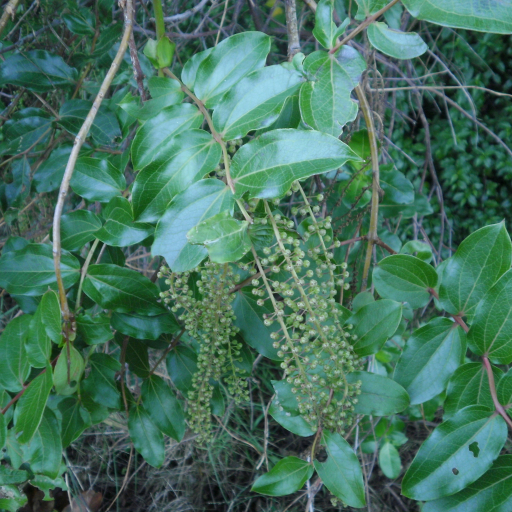
- 🌿 Leaves: Shiny, pointed, and arranged in opposite pairs or four ranks that create a flat, fan-like appearance on the branches.
- 🪵 Stems: Young branches are distinctly square-shaped and green, eventually becoming round and woody as the plant matures into a sprawling, multi-stemmed tree.
- 🍇 The "Berries": The most striking feature—long, hanging strings (racemes) of tiny flowers that transform into fleshy, succulent dark-purple or black segments. Interestingly, these are actually swollen petals rather than true berries.
🏡 In Your Garden & Ecology
- 🌱 The Land Healer: Tutu acts as a "pioneer species." It possesses special root nodules that host nitrogen-fixing bacteria, allowing it to thrive in poor, rocky soils and prepare the ground for the next generation of the forest.
- 💧 Thirsty Habit: While it is incredibly hardy against the wind, it prefers damp spots like riverbanks, road cuttings, or forest margins. It is rarely used in home landscaping today due to its extreme toxicity, but it remains a vital part of New Zealand’s natural erosion control.
⚠️ Safety & Toxicity
- 💀 Extreme Danger: All parts of the Tutu plant—especially the seeds and young shoots—contain a potent neurotoxin called tutin. It is one of the most dangerous plants for livestock and humans.
- 🍯 Toxic Honey: You don't even have to touch the plant to be at risk. Bees that feed on the "honeydew" excreted by insects living on Tutu can produce honey that is highly toxic to humans, leading to strict regulations for New Zealand beekeepers.
- 🐾 Pet Safety: Keep all pets away. Ingestion causes convulsions, breathing difficulties, and can be fatal.
✨ Fun Fact
Despite its lethality, Māori historically prepared a sweet juice from the fleshy petals. They used fine flax fibers to strain the liquid with extreme care, ensuring not a single poisonous seed remained. This juice was then used to sweeten traditional seaweed dishes—a high-stakes culinary practice that required absolute precision!

Detailed Care Instructions
Here is a step-by-step guide on how to grow Coriaria arborea plant:
- Obtain seeds or cuttings: You can obtain Coriaria arborea seeds from a reputable nursery or online suppliers. Alternatively, you can take cuttings from an existing Coriaria arborea plant.
- Prepare the soil: Coriaria arborea grows best in well-draining soil. Prepare the soil by loosening it and removing any weeds or debris. If the soil is heavy clay or tends to retain water, you can add sand or organic matter to improve its drainage.
- Sow the seeds or plant the cuttings: If using seeds, sow them directly in the prepared soil, spacing them about an inch apart and burying them with a shallow layer of soil. If using cuttings, remove any leaves from the bottom half of the cutting and plant it in the soil, making sure it stands upright. Firmly press the soil around the cutting to secure it in place.
- Provide the right conditions: Coriaria arborea prefers full sun to partial shade. Place the seedlings or cuttings in an area that receives adequate sunlight. Ensure that the plants are watered regularly to keep the soil consistently moist but not waterlogged. It is important to avoid over-watering or letting the soil dry out completely.
- Maintain the plants: Remove any weeds that compete for nutrients and water with the Coriaria arborea plants. Mulching can help suppress weeds and retain moisture in the soil. Monitor the plants for any signs of pests or diseases and take appropriate action if necessary.
- Pruning: Coriaria arborea may benefit from occasional pruning to shape the plant or remove dead or damaged branches. Prune in early spring before new growth begins.
- Harvest the fruits: Depending on the variety, Coriaria arborea can produce small, dark purple or black fruit. Once the fruits are ripe, around late summer or early autumn, gently pick them from the plant. The fruits are edible, but it is important to note that they are toxic when raw and must be cooked or processed properly before consumption.
By following these steps, you can successfully grow Coriaria arborea plants in your garden or landscape.
To water this plant, you should first check the soil moisture by feeling the top inch of soil. If it feels dry to the touch, it is time to water. Use a watering can or hose to gently water the soil around the base of the plant. Avoid getting water on the leaves as this can lead to disease and damage. Water deeply, but allow the soil to drain before watering again. Be mindful of the plant's location and environmental conditions, such as humidity and temperature, as this may affect its water needs.
To fertilize this plant, use a low nitrogen fertilizer in the early spring before new growth appears. Apply the fertilizer evenly around the base of the plant, being careful not to get any on the leaves. Water the plant well after fertilizing. Avoid over-fertilizing as it can harm the plant.
The ideal soil for this plant should have good drainage and be well-aerated. It should be slightly acidic to neutral in pH and should have a good balance of organic matter and minerals. The soil should not be too dense or heavy as this can cause waterlogging and lead to root rot. It should also not be too sandy or loose as this can cause the plant to dry out too quickly. A mixture of compost, sand, and peat moss is often recommended for growing this plant. It is important to ensure that the soil is kept moist but not waterlogged and that the plant is not exposed to extreme temperatures or harsh sunlight. Regular fertilization with a balanced fertilizer is also recommended to provide the plant with the nutrients it needs to thrive.
Propagation of the plant can be done by collecting ripe seeds after they have fallen to the ground. The seeds can be sown directly in the desired planting location. They should be sown thinly to avoid overcrowding. It is important to keep the soil moist but not waterlogged. Germination usually takes place in 4 to 6 weeks. Another way to propagate the plant is through hardwood cuttings, which are taken in the fall when the plant is dormant. Cuttings should be about 8 inches long and taken from healthy, disease-free branches. The cuttings should be dipped in rooting hormone and planted in a well-draining soil mixture. They should be kept moist and covered with a plastic bag to maintain humidity. Rooting should take place in 4 to 6 weeks.








