Plant Overview
Commonly known as the Japanese Coriaria or "Doku-utsugi" (poisonous Deutzia), this striking deciduous shrub is native to the volcanic islands of Japan. It is famous for its jewel-like clusters of berries that transition through a spectrum of vibrant colors, looking almost like translucent glass beads. While it possesses a delicate, fern-like elegance, it is historically feared in its homeland as one of the most toxic plants in the region.
🔍 How to Identify
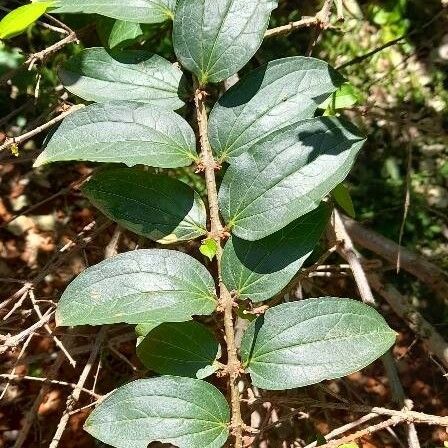
- 🌿 The Foliage: The leaves are arranged in opposite pairs and feature three very distinct longitudinal veins (trinerved), giving the branches a structured, geometric appearance.
- 🌸 The Flowers: In late spring, it produces small, inconspicuous greenish-red flowers that hang in pendulous clusters called racemes.
- 🍒 The "Berries": The most iconic feature. What look like berries are actually fleshy petals that swell and wrap around the seed. They start a pale green, turn a brilliant, tempting red, and eventually ripen into a deep, glossy purple-black.
🏡 In Your Garden
- 🌱 Soil & Symbiosis: This plant is a "pioneer species." It has a unique relationship with Frankia bacteria in its roots, allowing it to fix nitrogen from the air. This means it can thrive in poor, rocky, or volcanic soils where other plants might starve.
- ☀️ Growth Habit: It prefers full sun and well-drained soil. Because of its deep root system, it is quite hardy once established but can be difficult to move. It is rarely sold in commercial nurseries due to its high toxicity, appearing more often in botanical collections or wild mountainous regions.
⚠️ Safety & Toxicity
- 🚫 Status: EXTREMELY TOXIC.
- ☣️ The Danger: Every part of this plant—especially the tempting, sweet-looking berries—contains coriamyrtin, a powerful neurotoxin. Ingestion can lead to seizures, respiratory distress, and can be fatal.
- 🐾 Pets & Children: Because the berries look remarkably like edible currants or raspberries, this plant is considered a significant hazard. It should never be planted in areas where children or pets play.
✨ Fun Fact
Despite its deadly nature, Coriaria japonica is a biological marvel. It is one of the few non-legume plants in the world capable of nitrogen fixation, essentially acting as a natural fertilizer for the wild hillsides of Japan.

Detailed Care Instructions
To grow Coriaria Japonica plant, follow these steps:
- Obtain Seeds or Cuttings: You can purchase Coriaria Japonica seeds online or try to find a nursery that sells them. You can also propagate the plant from cuttings, which is done by taking a stem cutting from a mature plant.
- Prepare the Soil: Coriaria Japonica thrives in well-draining soil that is rich in organic matter. Prepare the soil by loosening it with a garden fork or tiller and mixing in compost or well-rotted manure. The pH level should be slightly acidic to neutral (around 6.0 to 7.5).
- Planting Seeds or Cuttings: If using seeds, sow them in seed trays or small pots filled with the prepared soil. Cover the seeds lightly with soil and keep them moist. If using cuttings, dip the cut end into rooting hormone and plant it in a pot filled with moist soil.
- Provide Optimal Growing Conditions: Coriaria Japonica prefers partial shade to full sun. Ensure that the plants receive at least 4-6 hours of sunlight per day. Water the plants regularly to keep the soil evenly moist but not waterlogged. Avoid overwatering as it can lead to root rot.
- Support and Pruning: Coriaria Japonica can grow as a shrub or a vine. If you want it to grow as a shrub, provide support such as stakes or trellis to help it grow upright. Prune the plant regularly to maintain its shape and remove any dead or damaged branches.
- Pest and Disease Control: Monitor the plant regularly for pests like aphids, caterpillars, or scale insects. If detected, treat them with insecticidal soap or neem oil. Coriaria Japonica is generally not prone to serious diseases.
- Harvesting: Coriaria Japonica produces edible fruits, usually in late summer or early autumn. Harvest the fruits when they are fully mature and have turned dark purple or black. Avoid consuming the fruits in large quantities as they contain toxic compounds.
Remember to research proper usage and potential risks before consuming any plant material.
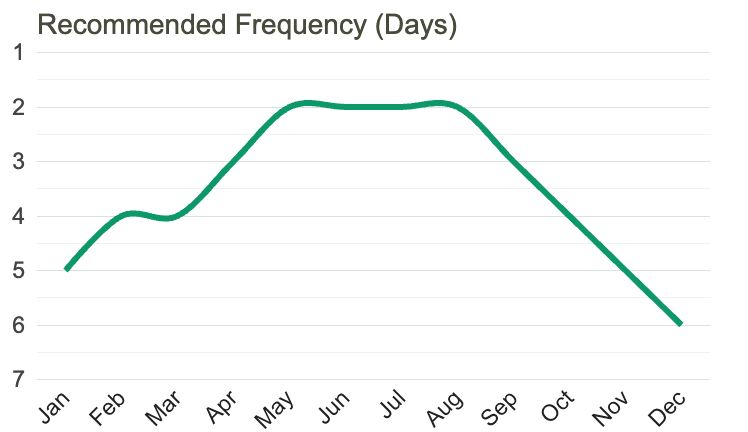
Coriaria Japonica plant requires regular watering to thrive. The plant should be watered once the soil around it is dry, and the frequency of watering will depend on the climate and temperature in the plant's environment. It is important to avoid overwatering the plant, as this can lead to root rot and other issues. When watering, it is best to use room temperature or lukewarm water, and to avoid getting water on the leaves or stem of the plant. The plant should be watered until the soil is moist but not waterlogged, and any excess water should be allowed to drain away. Mulching around the base of the plant can also help to retain moisture in the soil and reduce the frequency of watering required.
- Choose a well-draining soil mix that contains a good balance of nutrients.
- Before planting, mix in organic matter such as compost or well-rotted manure to the soil.
- Apply a slow-release fertilizer formula at the beginning of the growing season.
- Follow the instructions on the fertilizer package and apply at the recommended rates.
- Water the plant deeply after fertilizing to ensure the nutrients reach the plant roots.
- In the following growing seasons, apply a balanced granular fertilizer before new growth appears.
- Water the plant thoroughly after fertilizing.
- Avoid over-fertilization, as this can damage the plant and lead to excessive growth.
- Monitor the plant's growth and adjust fertilizing frequency as needed.
- Regularly remove any dead or damaged foliage to enable the plant to focus its energy on growing new, healthy foliage.
Coriaria Japonica is a woody plant that requires well-draining soil with a neutral to slightly acidic pH range. It prefers soil that is rich in organic matter, as well as porous and loose in texture. Soil that has excess moisture or poor drainage can lead to root rot and other diseases. It is important to avoid soils that are too compact or heavy, as this can impede root growth. A soil mix that includes coarse sand, perlite, and peat moss can provide the ideal growing conditions for Coriaria Japonica. In addition, the plant can benefit from regular fertilization with a balanced fertilizer, as it has high nutrient requirements.
Coriaria Japonica can be propagated through both seeds and cuttings. For seed propagation, mature seeds should be collected from the plant and soaked in water for one day to soften the outer coating. After soaking, the seeds should be planted in a well-draining soil mix and kept moist. Germination typically takes around two to four weeks.
For cutting propagation, select a healthy stem from the plant and remove the leaves from the lower half. Dip the cut end of the stem in rooting hormone and plant in a well-draining soil mix. Keep the soil moist and place the cutting in a warm, bright location but out of direct sunlight. Rooting typically takes around four to six weeks and the new plant can be transplanted once it has established roots.








