Plant Overview
Often called the "Panicled Dogwood" or simply Gray Dogwood, this North American native is a champion of resilience. While it lacks the massive, showy bracts of its cousin, the Flowering Dogwood, it makes up for it with architectural beauty and a relentless ability to thrive where other plants fail. It is the ultimate "utility" shrub for those looking to create a natural, wild look that transforms dramatically from spring white to autumn purple.
🔍 How to Identify
- 🍃 Leaf Veins: The leaves are oval and pointed, featuring "arcuate" veins that curve gracefully toward the leaf tip—a signature trait of the dogwood family.
- 🌫️ Signature Bark: While young stems have a reddish-tan hue, the mature bark is a smooth, distinctive slate-gray that stands out beautifully against winter snow.
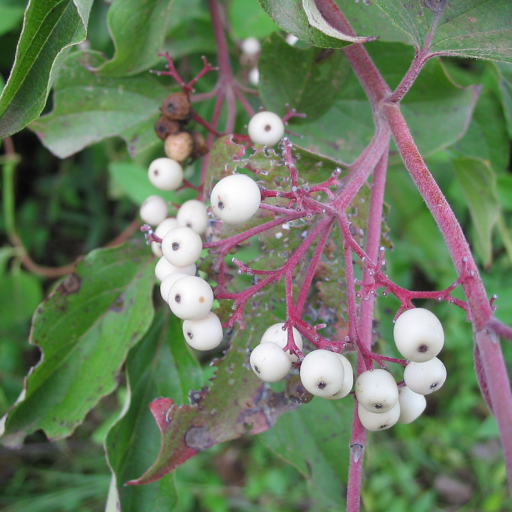
- 🔴 Red Pedicels: In late summer, small white berries (drupes) appear, held up by striking, bright red stalks. Even after birds eat the berries, these vibrant red stems remain, providing a "pop" of color.
🏡 In Your Garden
- 🌳 The Thicket Habit: This plant is a "colonizer." It spreads via underground runners to form dense thickets. This makes it spectacular for privacy screens or stabilizing eroding hillsides, but it may require pruning if you want it to stay in one spot.
- 🌤️ Adaptable Nature: Gray Dogwood is famously tough. It is one of the few shrubs that is equally happy in soggy, wet soil as it is in dry, rocky clay. It also transitions effortlessly from full sun to deep woodland shade.
- 🐦 Wildlife Magnet: If you are a birdwatcher, this shrub is a goldmine. Its high-fat white berries are a critical energy source for over 100 species of birds, including bluebirds and northern flickers.
⚠️ Safety & Toxicity
- 🟢 Generally Safe: Cornus racemosa is not considered toxic to humans, cats, or dogs. It is a very safe choice for family-friendly landscapes.
- 👅 Bitter Taste: While not poisonous, the berries are incredibly bitter and unpalatable to humans. Ingesting large amounts may cause minor stomach upset or nausea, so it's best to leave the snacking to the birds.
✨ Fun Fact
If you gently snap a Gray Dogwood leaf in half and slowly pull the pieces apart, you will see fine, elastic, silk-like threads connecting the two halves. These are the plant's spiral-shaped vessels (xylem), and they look just like tiny, magical spiderwebs!

Detailed Care Instructions
| Color | White |
| Soil Ph | 5 To 8 |
| Soil Type | Sandy, Silt, Clay, Loamy |
| Bloom Time | Late Spring |
| Plant Type | Perennial Shrub |
| Mature Size | 3 To 4,5 Feet Height, 3 To 4,5 Feet Spread |
| Native Area | Eastern North America |
| Sun Exposure | Full Sun To Part Shade |
| Hardiness Zones | 4 To 8 |
To grow Cornus racemosa, also known as gray dogwood, follow these steps:
- Select the appropriate planting location: Cornus racemosa prefers full sun to partial shade. Choose a spot with well-draining soil.
- Prepare the soil: Ensure the soil is fertile and amended with organic matter, such as compost. Remove any weeds or grass from the area.
- Planting: Dig a hole that is twice as wide and deep as the root ball of the Cornus racemosa. Place the plant in the hole, ensuring that the top of the root ball is level with the soil surface. Backfill the hole with soil, lightly firming it around the plant.
- Watering: Young plants require regular watering to establish. Water thoroughly after planting, and continue to water regularly, especially during dry spells or in the absence of rainfall. However, avoid overwatering, as excess moisture can lead to root rot.
- Mulching: Apply a layer of organic mulch, such as wood chips or bark, around the base of the plant. Mulch helps retain moisture, suppress weeds, and insulate the roots.
- Pruning: Prune Cornus racemosa during late winter or early spring. Remove dead or damaged branches and any crossing branches to maintain an open and healthy structure. Avoid pruning excessively, as this can result in reduced flowering.
- Fertilizing: Cornus racemosa generally does not require regular fertilization if planted in fertile soil. However, you can apply a balanced slow-release fertilizer in early spring if the plant appears weak or shows signs of nutrient deficiency.
- Pest and disease control: Cornus racemosa is generally resistant to pests and diseases. However, regularly inspect the plant for any signs of issues, such as aphids or powdery mildew. Treat pest or disease problems promptly using appropriate organic or chemical control methods.
- Propagation: Cornus racemosa can be propagated through seeds or by taking hardwood cuttings. Seeds can be collected from mature fruits in fall and sown in a seed tray. Hardwood cuttings can be taken in late winter or early spring and planted in a suitable growing medium.
By following these steps and providing proper care, you can successfully grow Cornus racemosa plant in your garden.

Place in a bright room that is sun drenched almost all day. Or directly in a south-facing window.

To properly water this plant, it is important to consider its soil moisture levels. This can be done by sticking a finger or a soil moisture meter into the soil to determine if it is dry or moist. It is best to water this plant deeply, ensuring that the water reaches the roots. However, you should avoid overwatering and creating waterlogged soil, as this can harm the plant. This plant may require more frequent watering during hot, dry weather conditions. Overall, regular monitoring of soil moisture levels and adjusting watering frequency accordingly is key to properly maintain this plant's water needs.
To fertilize the Cornus Racemosa plant, apply a balanced, slow-release fertilizer in the early spring before new growth appears. Use a blend with equal amounts of nitrogen, phosphorus, and potassium to promote healthy growth and flowering. Apply the fertilizer evenly around the base of the plant, avoiding contact with the stem or foliage. Water deeply after fertilization to ensure the nutrients penetrate the soil. Repeat fertilization every 6-8 weeks throughout the growing season for optimal results.
The ideal soil for Cornus Racemosa should be well-drained, with a slightly acidic to neutral pH level between 5.5 - 7.5. It should also be rich in organic matter and nutrients, as this type of plant prefers to grow in fertile soil. The soil texture should be loamy or sandy, which allows for good drainage and root development. It's important to avoid heavy clay soil, as this can hinder root growth and cause root rot. Additionally, the soil should have adequate moisture, although the plant can tolerate drought conditions. Finally, it's important to avoid soil that is contaminated with heavy metals or other toxins, as this can negatively impact the plant's health and growth.
To propagate this plant, you will need to take stem cuttings from a mature plant during the plant's active growth phase. The best time to take cuttings is in the spring or early summer. Cuttings should be approximately 4-6 inches in length and taken from healthy branches.
Prepare a rooting hormone solution according to the package instructions. Dip the cut end of each cutting into the rooting hormone and then plant it into a suitable rooting medium. This medium should be kept moist but not too wet.
Place the cuttings in a warm, humid location with indirect light. Cover the cuttings with a plastic bag or a clear plastic cover to help maintain humidity levels.
It will take several weeks for the cuttings to develop roots. Once roots have formed, the new plants can be transplanted into individual pots or directly into the ground.
Be sure to keep the new plants well-watered during the first year of growth and protect them from harsh weather conditions. With proper care, the plants will eventually grow into mature shrubs.








