Plant Overview
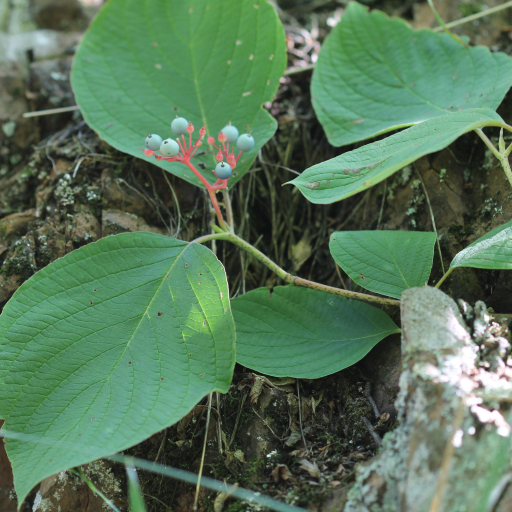
Known as the Round-leaved Dogwood, this shrub is a hidden gem of the northern forests. Unlike its more famous cousins with large, showy bracts, Cornus rugosa wins hearts with its perfectly circular, textured leaves and its charming "spotted" stems, which earned it the older nickname, Spotted Dogwood. It is a cornerstone of woodland ecology, providing high-quality snacks for songbirds and a lush, architectural backdrop for shaded gardens.
🔍 How to Identify
- 🍃 The Circular Leaf: The most distinct feature is the leaf shape—nearly perfectly round with a pointed tip. The surface feels "rugose" (wrinkled or rough) due to deep, curving veins that are characteristic of the dogwood family.
- 🎋 Spotted Stems: Look closely at the younger green stems; they are often splashed with distinctive purple or maroon blotches, making the plant recognizable even when it isn't flowering.
- ☁️ Flat-Topped Blooms: In late spring, it produces clusters of tiny, creamy-white flowers arranged in flat-topped bunches (cymes), which eventually turn into striking light-blue or white berries on reddish stalks.
🏡 In Your Garden
- ⛰️ Slope Specialist: This dogwood is exceptionally good at stabilizing rocky slopes or cool, north-facing banks. Because it has a deep root system, it is much more drought-tolerant once established than the more common Red-osier Dogwood.
- 🐦 Wildlife Magnet: If you are a birdwatcher, this is a must-have. The high-fat content of its blue-tinted fruits provides essential energy for migrating birds in the fall. It also serves as a host plant for the beautiful Spring Azure butterfly.
⚠️ Safety & Toxicity
- 🟢 General Safety: Cornus rugosa is considered non-toxic to humans, dogs, and cats. It is a very "friendly" plant for family backyards.
- 🚫 Berry Caution: While birds find the berries delicious, they are bitter and unpalatable to humans. Ingesting large amounts may cause minor stomach upset, so it’s best to leave the harvest for the feathered visitors.
✨ Fun Fact
Native American tribes, including the Algonquin and Ojibwe, traditionally used the inner bark of the Round-leaved Dogwood in a smoking mixture known as Kinnikinnick. It was often blended with tobacco or other herbs for ceremonial purposes.

Detailed Care Instructions
To grow Cornus rugosa, also known as roundleaf dogwood, follow these steps:
- Select a suitable planting location: Cornus rugosa prefers full sun to partial shade. The soil should be well-draining and rich in organic matter.
- Prepare the soil: Before planting, loosen the soil and remove any weeds or grass. Incorporate organic compost or well-rotted manure into the soil to improve its fertility and drainage.
- Choose healthy plants: Purchase Cornus rugosa plants from a reputable nursery or online supplier. Look for healthy, disease-free plants with well-developed root systems.
- Plant the dogwood: Dig a hole that is twice as wide and slightly deeper than the root ball of the plant. Place the Cornus rugosa in the hole and backfill with soil. Gently firm the soil around the plant and water thoroughly.
- Mulch around the plant: Apply a layer of organic mulch, such as wood chips or bark, around the base of the plant. This will help retain moisture in the soil and suppress weed growth.
- Water regularly: Cornus rugosa prefers consistently moist soil. Water the plant regularly, particularly during dry periods. Ensure the soil is not waterlogged, as excessive moisture can lead to root rot.
- Fertilize as needed: Apply a balanced fertilizer in early spring to promote healthy growth. Follow the instructions on the fertilizer packaging for application rates.
- Prune selectively: Pruning is usually not necessary for Cornus rugosa unless you want to shape or control the size of the plant. If pruning is required, do so in early spring before new growth emerges.
- Monitor for pests and diseases: Cornus rugosa is relatively resistant to most pests and diseases. However, keep an eye out for issues such as leaf spot or powdery mildew. If necessary, treat with appropriate organic or chemical controls.
With proper care and maintenance, your Cornus rugosa plant should thrive and provide attractive foliage and white flowers in the spring, followed by blue-black berries in the summer.

Place in a window with dappled sun or a spot in the middle of a room. Or directly in a window facing west or east.

Cornus Rugosa is best watered with a gentle, steady stream of water at the base of the plant. Avoid watering overhead as it can lead to the spread of disease in the foliage. When watering, ensure that the soil is thoroughly soaked, but avoid over-watering as the roots can rot. It is important to not let the soil dry out completely, but also not to let it become waterlogged. Check the soil regularly and water when the top layer feels dry to the touch. During hot and dry periods, the plant may require more frequent watering. Mulching around the base of the plant can help to retain moisture in the soil and reduce evaporation.
To fertilize this plant, begin by examining the soil and determining its nutrient needs. From there, choose a high-quality fertilizer formulated specifically for woody flowering shrubs. Apply the fertilizer in the early spring or late fall, before growth begins or after the plant has entered dormancy. Be careful not to over-fertilize, as this can result in excessive and unhealthy growth. Always water the plant thoroughly after fertilizing to ensure that the nutrients are properly absorbed by the roots.
The Cornus Rugosa plant prefers acidic, well-draining soil that is rich in organic matter. It is best to use soil that has a pH range of 4.5 to 6.0, as high pH levels can hinder the plant's growth. Sandy loam or loamy soil with good drainage is highly recommended for this plant. The soil should also be moist but not waterlogged as the plant does not tolerate waterlogged soils. Adding peat moss or compost to the soil can improve its organic matter content, which will help improve soil fertility and structure. The soil should be regularly supplemented with fertilizer to ensure optimal growth and health of the plant.
To propagate this plant, select a healthy stem and cut a piece that is approximately 4-6 inches long. Remove any leaves on the bottom half of the stem. Dip the cut end of the stem into rooting hormone and plant it into a pot filled with moist potting soil. Cover the pot with a plastic bag and place it in a warm, bright area, but out of direct sunlight. Keep the soil moist and check for roots after several weeks by gently tugging on the stem. If there is resistance, roots have formed and the new plant can be moved into a larger container or planted in the ground.








