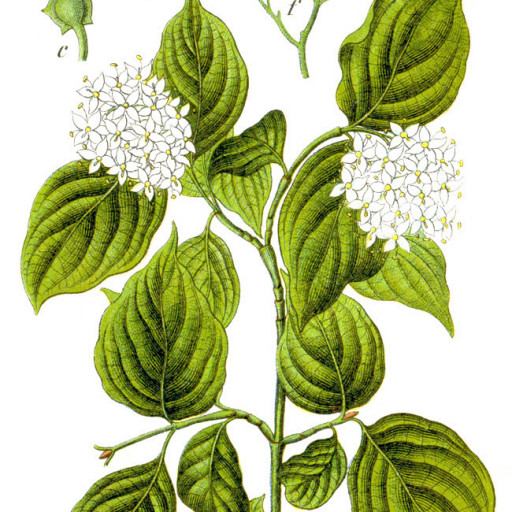
Plant Overview
Known as the Blood-twig Dogwood, this deciduous shrub is a true seasonal shapeshifter. While it blends into the green backdrop of summer, it commands the spotlight in winter when its stems turn a vibrant, fiery crimson against the cold landscape. Native to Europe and Western Asia, it has been a staple of wild hedgerows for centuries, prized for its toughness and dramatic flair.
🔍 How to Identify
- 🌿 The Leaves: Look for oval-shaped leaves with pointed tips and distinctively curved veins that follow the leaf edge. In autumn, these leaves transform from a bright green into a stunning deep purple or burnt orange.
- 🌼 The Flowers: In late spring, the shrub produces clusters of small, creamy-white blossoms. These "cymes" are flat-topped and have a slightly medicinal scent that attracts a wide variety of beetles and bees.
- 🍒 The Fruit: Following the flowers, the plant produces clusters of small, pea-sized berries. These transition from green to a deep, inky black (often called "dogberries") by late summer.
🏡 In Your Garden
- ✂️ Pruning for Color: The secret to a beautiful Cornus sanguinea is "hard pruning." The most intense red color occurs only on young stems. By cutting the plant back significantly in late winter (a technique called coppicing), you encourage the growth of new, brightly colored wood for the following year.
- 💧 Thirsty Roots: This plant is a champion of damp areas. While it is adaptable, it truly thrives in heavy clay or moist soils where other shrubs might struggle with "wet feet." It’s an excellent choice for stabilizing banks or planting near ponds.
- 🦋 A Wildlife Hub: In a garden setting, it acts as a vital "filling station." The early flowers support pollinators, while the high-fat berries are a crucial energy source for birds like thrushes and starlings preparing for winter.
⚠️ Safety & Toxicity
- 🚫 Non-Edible: While the berries are not considered deadly, they are incredibly bitter and contain compounds that can cause stomach upset, nausea, or vomiting if ingested by humans.
- 🐾 Pet Safety: The berries and foliage are mildly toxic to dogs and cats. If your pet has a habit of chewing on garden debris, it may lead to gastrointestinal distress.
- 🧤 Skin Sensitivity: Some gardeners find that the fine hairs on the leaves or the sap can cause mild skin irritation. It is always best to wear gloves when pruning this species.
✨ Fun Fact
🗡️ The Dagger Wood: The name "Dogwood" likely has nothing to do with dogs! It is believed to have evolved from the Old English word "daguthe," derived from "dag" (a skewer or dagger). Because the wood is incredibly hard, fine-grained, and doesn't splinter easily, it was historically the preferred material for making daggers, arrows, and tool handles.

Detailed Care Instructions
To grow Cornus Sanguinea, also known as the dogwood shrub, follow these steps:
- Choose a suitable location: Cornus Sanguinea thrives in well-drained soil and prefers full sun to partial shade. Ensure the location provides enough space for the shrub to grow.
- Planting: Select healthy young plants from a reputable nursery or propagate from cuttings. Dig a hole twice the size of the plant's root ball and place the plant in the hole. Fill the hole with soil and gently firm it around the base of the plant.
- Watering: Water the plant thoroughly after planting and ensure the soil remains consistently moist. However, avoid overwatering, as it can lead to root rot. Provide regular watering during dry periods, especially in the first year.
- Mulching: Apply a layer of organic mulch, such as wood chips or compost, around the base of the plant. Mulching helps retain soil moisture, suppresses weed growth, and improves overall soil health.
- Fertilizing: Cornus Sanguinea generally doesn't require heavy fertilization. However, you can apply a slow-release fertilizer in early spring to promote healthy growth and flowering. Follow the instructions on the fertilizer package for application rates.
- Pruning: Dogwood shrubs benefit from regular pruning to maintain their shape and health. Prune in late winter or early spring, before new growth appears. Remove any dead, damaged, or crossing branches. You can also prune back old wood to encourage new growth and maintain a more compact shape.
- Pests and Diseases: Cornus Sanguinea is usually resistant to pests and diseases. However, it may be prone to powdery mildew or leaf spot in humid or crowded conditions. To prevent these issues, ensure good air circulation around the plant and avoid overcrowding.
- Winter Protection: In colder climates, where winters are harsh, you may need to protect young Cornus Sanguinea plants with a layer of mulch around the base. This helps insulate the roots and prevents frost damage.
By following these steps, you can successfully grow Cornus Sanguinea plants and enjoy their vibrant foliage, colorful bark, and clusters of small white flowers.

Place in a bright room that is sun drenched almost all day. Or directly in a south-facing window.

Cornus Sanguinea plant requires regular watering to keep its soil consistently moist. However, overwatering can cause root rot and other diseases. The plant should be watered deeply and regularly during its growing season, especially during hot and dry weather conditions. To water the plant, slowly pour water onto the soil around the base of the plant, avoiding getting water on the leaves and stem. It is recommended to water the plant in the morning or evening to prevent evaporation due to the heat of the day. In addition, the plant should be watered less frequently during the winter when it is dormant.
To properly fertilize this plant, you should apply a balanced fertilizer in the early spring, just before new growth begins. Use a slow-release fertilizer with an N-P-K ratio of 10-10-10 or 12-12-12. Spread the granules evenly around the base of the plant, avoiding the stems and leaves. Water deeply after fertilizing to help the nutrients reach the roots. Repeat this process once or twice during the growing season, depending on the health and vigor of the plant.
Cornus Sanguinea prefers a well-drained soil that is rich in nutrients and organic matter. The soil should be slightly acidic, with a pH range of 5.5 to 7.0. It is also important that the soil is moist but not waterlogged, as this can lead to root rot. Adding compost or well-rotted manure to the soil before planting can help improve soil fertility and drainage. Mulching around the base of the plant can also help retain moisture in the soil and suppress weed growth.
To propagate this plant, you can take softwood cuttings in late spring or early summer from the plant's current growth. Choose stems that are at least 4 inches long and remove all the leaves except for the top two sets. Dip the cut end of the cutting in rooting hormone and plant it in a pot filled with a well-draining soil mix. Water the cutting thoroughly and place it in a bright, indirect light. Keep the soil moist and mist the cutting with water regularly. After a few weeks, the cutting should root and begin to produce new growth. Once the new growth is established, the cutting can be transplanted to its permanent location in the garden.
Common pests of the common dogwood include Scale insect, larvae. Make a habit of checking your common dogwood frequently for pests so that any infestations can be caught and managed early.








