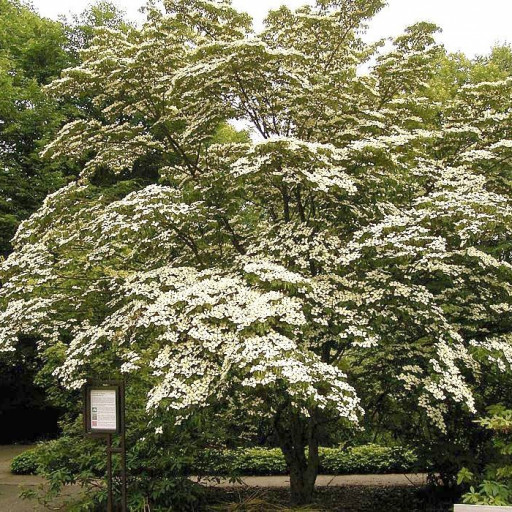
Plant Overview
Commonly known as Dogwoods, the Cornus genus is a collection of some of the most beloved landscape trees and shrubs in the Northern Hemisphere. From the iconic snowy bracts of the American Flowering Dogwood to the fiery red stems of the Red Osier, these plants are celebrated for providing "four-season interest." In many cultures, they symbolize endurance and rebirth, often serving as the first true herald of spring.
🔍 How to Identify
- 🌸 The "False" Flowers: What most people mistake for large petals are actually modified leaves called bracts. The true flowers are the tiny, greenish-yellow clusters tucked in the very center.
- 🍃 Curving Veins: A classic giveaway is "arcuate venation"—the leaf veins curve gracefully toward the leaf tip rather than running straight to the edges. If you gently break a leaf, you might even see thin, latex-like threads holding the veins together.
- 🌳 Alligator Bark: Mature species, such as the Flowering Dogwood, develop a distinctive bark texture that resembles small, scaly square blocks, often compared to alligator skin.
🏡 In Your Garden
- 🍂 Shallow Root Secrets: Dogwoods have notoriously shallow root systems. They "walk" the line between needing moisture and hating "wet feet." A thick layer of organic mulch is essential to keep their roots cool and hydrated during the summer heat.
- ☀️ The Understory Edge: Because they evolved as understory trees in forests, they thrive in dappled light. Too much direct afternoon sun can scorch their delicate leaves, while too much shade may reduce the spectacular flower show.
⚠️ Safety & Toxicity
- 🐾 Pet Friendly: Most common Dogwoods are considered non-toxic to dogs, cats, and horses, making them a safe choice for family backyards.
- 🍒 Berry Caution: While the fruit of the Kousa Dogwood is edible (and tastes like a mix of peach and pumpkin), the berries of other species like the Red Osier can cause mild stomach upset or vomiting if ingested by humans. It is best to admire the berries from afar and leave them for the birds.
✨ Fun Fact
- 🪓 The name "Dogwood" likely has nothing to do with dogs! It is believed to have evolved from "dagwood," derived from the word "dag" (a skewer or dagger). The wood is so incredibly hard and shock-resistant that it was historically used to make daggers, arrows, and even weaving shuttles.

Detailed Care Instructions
To grow Cornus plants, follow these steps:
- Choose the right location: Cornus plants prefer partial shade or full sun exposure. Ensure the location has well-drained soil.
- Prepare the soil: Cornus plants prefer fertile, moist soil. Improve the soil by adding organic matter like compost or well-rotted manure.
- Planting: Dig a hole that is twice as wide and deep as the plant's root ball. Place the plant in the hole, making sure it is level with or slightly above the soil surface. Backfill the hole with soil, firming it gently around the roots.
- Watering: Water the plant thoroughly after planting and keep the soil consistently moist but not waterlogged. Depending on the weather conditions, cornus plants generally require 1-2 inches of water per week.
- Pruning: Pruning is not necessary for Cornus plants, but if you want to shape or control their size, it is advisable to prune them during late winter or early spring before new growth starts.
- Mulching: Apply a layer of organic mulch around the base of the plant, such as wood chips or bark. This will help retain moisture, suppress weed growth, and protect the roots during extreme temperatures.
- Fertilizing: Cornus plants do not typically require excessive fertilization. However, you can apply a balanced, slow-release fertilizer in spring to promote healthy growth.
- Protection: Protect the young plants from extreme heat, frost, or harsh wind. Consider providing a temporary shade cover or windbreak until they establish themselves.
- Regular maintenance: Monitor the plants for pests or diseases. Remove any dead or damaged branches promptly. Regularly check the moisture level of the soil and adjust watering as needed.
With proper care and maintenance, your Cornus plants should thrive and grow into beautiful specimens.

Place in a bright room that is sun drenched almost all day. Or directly in a south-facing window.

To properly water this plant, it is important to first check the soil moisture level by touching the top layer of soil with your fingers. If the soil feels dry to the touch, it is time to water. When watering, it is best to use a watering can or hose with a gentle flow to avoid disturbing the soil and roots. Water the plant until the soil is evenly moist, but not overly saturated or standing in water. It is also important to avoid getting water on the leaves, as this can increase the risk of disease and pest problems. During hot and dry weather, it may be necessary to water this plant more frequently to prevent it from drying out.
Apply a balanced fertilizer with an N-P-K ratio of 10-10-10 in the spring before new growth appears. Mix the fertilizer according to the package instructions and apply it evenly around the base of the plant. Water thoroughly after fertilizing. Avoid fertilizing during drought conditions or when the plant is stressed.
Cornus plants thrive in moist but well-drained soil with a neutral to acidic pH level. It is advisable to use a loamy soil, which is a mix of sand, silt, and clay. Adding organic matter to the soil, such as compost or aged manure, can help improve soil structure, nutrient availability, and water retention. Cornus plants also require good drainage to prevent the soil from becoming waterlogged, as this can lead to root rot. Therefore, it is crucial to ensure that the soil has good drainage. In addition, it is recommended to plant Cornus in a location that receives partial shade, as full sun exposure can stress the plant and cause leaf scorch.
Cornus can be propagated through various methods including hardwood cuttings, softwood cuttings, and layering.
To propagate through hardwood cuttings, take a cutting of the plant in late fall or winter after the leaves have fallen off. The cutting should be about 6-8 inches long and have at least 2-3 buds. Remove the leaves from the bottom half of the cutting and dip the cut end in a rooting hormone. Plant the cutting in a well-draining soil mix and keep it moist but not waterlogged. The cutting should root within a few months.
Softwood cuttings should be taken in late spring or early summer when new growth is present. Cut a piece of the plant that is about 4-6 inches in length and has at least one node. Remove the leaves from the bottom half of the cutting and dip the cut end in rooting hormone. Plant the cutting in a well-draining soil mix and keep it moist but not waterlogged. The cutting should root within a few weeks.
Layering is another method of propagation for Cornus. In early spring, bend a low branch of the plant down to the ground and make a small cut or scrape on the bottom of the branch where it touches the soil. Apply rooting hormone to the cut area and cover it with soil. Keep the soil moist and wait for roots to form. Once roots have formed, cut the new plant from the original and transplant it elsewhere.
Propagation of Cornus can be successful with careful attention to timing, planting and environmental factors.







