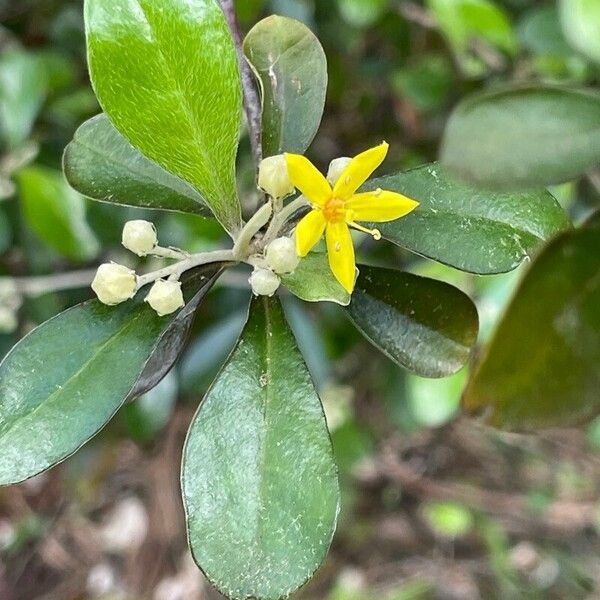
Plant Overview
Often called the Korokio or Whakataka in its native New Zealand, Corokia buddleioides is a structural masterpiece that looks like it stepped out of a misty mountain forest. Known for its sophisticated "zigzag" branching and striking silver-backed leaves, it is a favorite for gardeners looking to add architectural texture and a touch of wild, coastal elegance to their landscape.
🔍 How to Identify
- 🍃 Silver-Lined Foliage: The long, narrow leaves are a glossy olive-green on top, but flipping them over reveals a dense, velvety white-silver underside that "shimmers" in the wind.
- ⭐ Starry Blooms: In late spring, the shrub produces clusters of tiny, bright yellow flowers shaped like five-pointed stars that emit a delicate, sweet fragrance.
- 🔴 Dark Berries: Following the flowers, small drupes (berries) appear, transitioning from green to a dark red or near-black, providing a feast for local birds.
🏡 In Your Garden
- 💨 Coastal Resilience: This plant is a "coastal warrior," evolved to handle salty winds and harsh exposures, making it an excellent choice for windbreaks or seaside hedges.
- ✂️ Architectural Pruning: While it naturally grows into a large, airy shrub, it responds incredibly well to clipping. You can train it into a formal "living wall" or a tight, geometric topiary.
- 🌱 Drainage is Key: It hates "wet feet." To keep it happy, ensure your soil is well-draining; it much prefers a rocky or sandy mix over heavy, waterlogged clay.
⚠️ Safety & Toxicity
- ✅ Safe for Families: Corokia buddleioides is generally considered non-toxic to humans and is not known to cause skin irritation.
- 🐾 Pet Friendly: There are no recorded toxic effects for cats, dogs, or horses, making it a "worry-free" addition to a pet-filled backyard.
- 🍴 Not for Snacking: While the berries are technically edible and loved by birds, they are quite bitter and mealy—better left for the feathered visitors than the kitchen table.
✨ Fun Fact
The species name buddleioides literally means "looking like a Buddleia." It was named this because its long, pointed leaves reminded early botanists of the Butterfly Bush, even though the two plants are not closely related!

Detailed Care Instructions
To grow Corokia buddleioides, also known as Wire Netting Bush, you can follow these steps:
- Location: Choose a suitable location for planting the Corokia buddleioides. It prefers full sun to partial shade, so find an area that receives at least 6 hours of sunlight per day.
- Soil: The plant prefers well-draining soil that is fertile and slightly acidic. If your soil is heavy or clay-like, improve its drainage by adding organic matter like compost or peat moss.
- Planting: Dig a hole that is slightly wider and deeper than the plant's root ball. Place the plant in the hole and backfill it with the amended soil, ensuring that the top of the root ball is level with the ground. Firmly press the soil around the plant to remove any air pockets.
- Watering: After planting, water the Corokia buddleioides thoroughly to help settle the soil and encourage root establishment. Once established, the plant is generally drought-tolerant but benefits from regular watering during dry periods, especially in the first year.
- Mulching: Apply a layer of organic mulch, such as wood chips or shredded bark, around the base of the plant. Mulching helps conserve moisture, suppresses weeds, and maintains a consistent soil temperature.
- Pruning: Corokia buddleioides generally has a naturally compact shape but can be pruned to maintain its desired size and shape. Prune in early spring before new growth starts. Remove any dead, damaged, or crossing branches to improve air circulation and maintain a neat appearance.
- Fertilizing: Depending on the soil's fertility, you may need to fertilize annually in early spring with a balanced, slow-release fertilizer. Follow the manufacturer's instructions for application rates and methods.
- Pests and diseases: Corokia buddleioides is relatively resistant to pests and diseases. However, occasionally, it may encounter aphids or scale insects. Monitor the plant regularly and treat any infestations promptly with appropriate insecticides or insecticidal soaps.
Remember to check if this plant is suitable for your specific climate and ensure it is not considered invasive in your area.

Place in a bright room that is sun drenched almost all day. Or directly in a south-facing window.

Corokia buddleioides is a plant that requires proper watering to thrive. Here are some key details on how to water this plant effectively:
1. Understanding the water needs: Corokia buddleioides prefers a moderately moist soil environment. It is essential to strike a balance as overwatering or excessively dry soil can be detrimental to the plant's health.
2. Soil moisture assessment: Before watering, check the soil moisture level by inserting your finger about an inch deep into the soil. If it feels dry, it's an indication that watering is required.
3. Watering frequency: Generally, Corokia buddleioides should be watered once or twice a week, depending on the weather conditions and the moisture retention capacity of the soil. During hot summers or dry periods, it may require more frequent watering.
4. Watering technique: For Corokia buddleioides, it is advisable to use a gentle watering technique to avoid damaging the delicate foliage. A watering can with a narrow spout or a hose with a soft spray nozzle can be effective. It helps distribute water evenly around the plant without causing excessive soil erosion.
5. Depth of watering: Ensure that the water reaches the root zone, which is generally about 6-8 inches deep. Deep watering encourages the plant's roots to grow deeper, making it more resilient to drought conditions.
6. Water quantity: Aim to provide an adequate amount of water that but doesn't lead to waterlogging. Start by moistening the soil evenly around the base of the plant, allowing it to soak in. Continue watering until the top 6-8 inches of soil are adequately moist.
7. Mulching: Consider adding a layer of organic mulch around the plant to retain soil moisture, reduce evaporation, and regulate soil temperature. Mulching also helps prevent weed growth, which can compete with the Corokia buddleioides for water and nutrients.
8. Adjusting watering during different seasons: As the seasons change, adjust your watering routine accordingly. During cooler months or winter, reduce the watering frequency to match the reduced water requirements. This prevents the plant from sitting in overly wet soil, reducing the risk of root rot.
Remember, these guidelines are based on general principles, and factors specific to your garden, such as climate, soil type, and sun exposure, may influence your plant's water needs. Observing the plant closely and acquiring specific knowledge about its natural habitat can also help you provide optimal water conditions for Corokia buddleioides.
To fertilize Corokia buddleioides, follow these instructions:
- Choose a balanced fertilizer with equal amounts of nitrogen (N), phosphorus (P), and potassium (K).
- Dilute the fertilizer according to the recommended dosage on the packaging. Generally, a 10-10-10 or 20-20-20 NPK fertilizer is suitable.
- Apply the fertilizer in late winter or early spring, before the growing season begins. This helps provide the plant with essential nutrients for healthy growth.
- Sprinkle the diluted fertilizer evenly around the base of the plant, avoiding direct contact with the stems or foliage.
- Gently work the fertilizer into the top layer of soil using a garden fork or rake.
- Water the plant thoroughly after applying the fertilizer to allow nutrients to seep into the soil and reach the plant's roots.
- Monitor the plant for any signs of over-fertilization, such as yellowing leaves or wilting. If observed, reduce the amount of fertilizer in future applications.
- Repeat the fertilization process once or twice a year, preferably in late winter or early spring and again in early summer, to maintain optimal growth and health.
Remember to follow the recommended dosage and avoid over-fertilizing, as this can harm the plant. Always read and comply with the instructions provided on the fertilizer packaging for the best results.
Corokia buddleioides is a type of plant that requires specific soil conditions for its optimal growth. When growing Corokia buddleioides, it is important to choose the right soil composition to provide the necessary nutrients and drainage for the plant. The ideal soil for Corokia buddleioides should meet the following criteria:
- Loamy Texture: Corokia buddleioides prefers a well-draining soil with a loamy texture. Loam is a blend of sand, silt, and clay, which offers good drainage while retaining enough moisture for the plant's roots.
- pH Level: The pH level of the soil should be slightly acidic to neutral, ranging from 6.0 to 7.0. This range ensures that the plant can effectively absorb the nutrients from the soil.
- Organic Matter: Incorporating organic matter into the soil can greatly benefit Corokia buddleioides. Adding compost or well-rotted manure helps improve soil structure, provides essential nutrients, and enhances water retention.
- Moisture Retention: The soil should have the ability to retain some moisture while also allowing excess water to drain away. This balance is crucial, as excessive moisture can lead to root rot, while dry soil can cause stress to the plant.
- Nutrient-rich: Corokia buddleioides benefits from a soil rich in essential nutrients such as nitrogen, phosphorus, and potassium. Use a slow-release fertilizer or organic plant food specifically formulated for shrubs to ensure a healthy growth.
It is important to note that these general guidelines may vary slightly depending on your specific region and the existing soil conditions. It is always recommended to conduct a soil test to accurately determine the pH level and nutrient needs of your soil. This information will help you provide the best possible growing environment for Corokia buddleioides.
Corokia buddleioides, commonly known as __, can be propagated through several methods including seed propagation, softwood cuttings, and semi-hardwood cuttings. Here is a detailed guide on each technique:
- Seed Propagation:
- Harvest ripe seeds from mature __ plants. The seeds are usually small, dark, and hard.
- Prepare a seed-starting tray or pots with a well-draining potting mix.
- Moisten the potting mix without making it excessively wet.
- Sow the seeds on the surface of the potting mix and lightly press them into the soil. Do not cover the seeds with soil as they require light for germination.
- Place the tray or pots in a warm and bright location, ensuring they receive indirect sunlight.
- Maintain consistent moisture by misting the soil regularly but avoid overwatering.
- Germination generally occurs within 2-4 weeks.
- Once the seedlings have developed a few pairs of true leaves, you can transplant them into individual pots or a larger container for further growth.
- Harvest ripe seeds from mature __ plants. The seeds are usually small, dark, and hard.
- Softwood Cuttings:
- Select a healthy __ plant and choose a non-flowering stem that is relatively young and flexible.
- Using clean and sharp pruning shears, make a clean cut about 5-7 inches from the tip of the stem.
- Strip off any leaves from the lower portion of the cutting, leaving a few leaves at the top.
- Dip the cut end of the cutting into a rooting hormone powder or gel to promote root development (optional).
- Prepare a pot with a well-draining potting mix and make a hole using a pencil or similar tool.
- Insert the cutting into the hole and gently firm the soil around it to ensure good contact with the stem.
- Water the cutting thoroughly and place a plastic bag over the pot to create a mini greenhouse effect.
- Keep the cutting in a warm and bright location, but avoid direct sunlight as it can cause excessive heat buildup inside the bag.
- Check the cutting regularly for moisture levels and mist the leaves to maintain humidity if necessary.
- After a few weeks, gently tug on the cutting to check for resistance, indicating that roots have formed.
- Once the roots are well-established, you can transplant the cutting into a larger container or the desired planting location.
- Select a healthy __ plant and choose a non-flowering stem that is relatively young and flexible.
- Semi-hardwood Cuttings:
- Follow the same steps as softwood cuttings mentioned above, but select a slightly more mature stem with a firmer texture. Semi-hardwood cuttings are usually taken in late summer to early fall.
- Make sure to remove any flowers or buds from the cutting as they can divert energy from root development.
- Treat the semi-hardwood cutting with rooting hormone to increase the chances of successful rooting.
- Place the cutting in a well-draining potting mix, taking care to provide proper humidity and consistent moisture until roots form.
Remember to provide appropriate care after propagation, including regular watering, adequate sunlight, and protection from extreme temperatures, to ensure the healthy growth of your propagated Corokia buddleioides plants.
- Follow the same steps as softwood cuttings mentioned above, but select a slightly more mature stem with a firmer texture. Semi-hardwood cuttings are usually taken in late summer to early fall.








