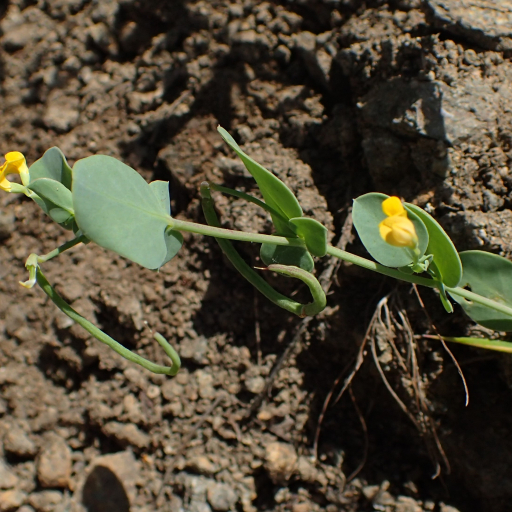
Plant Overview
Often referred to as the Yellow Scorpion Vetch, this charming annual is a master of mimicry. Native to the sun-drenched rocky slopes of the Mediterranean, it earned its "Scorpion" nickname not because it stings, but because of its oddly shaped seed pods that curve upward like a scorpion’s tail. It is a resilient little pioneer that brings a burst of sunny gold to dry, neglected corners of the landscape.
🔍 How to Identify
- 🦂 The "Scorpion" Pods: The most iconic feature is the seed pod. It is long, segmented, and curves dramatically as it matures, looking remarkably like a scorpion's stinger.
- 🍃 Fleshy Foliage: The leaves are a distinct bluish-green (glaucous) and feel slightly waxy. Interestingly, the lower leaves are simple and rounded, while the upper leaves are divided into three leaflets.
- 🌼 Pea-like Blooms: It produces small, bright yellow flowers that look like miniature sweet peas, usually clustered in groups of two to five on a single stalk.
🏡 In Your Garden
- 🌱 Nitrogen Fixer: Like many members of the legume family, this plant is a "soil builder." It works with soil bacteria to pull nitrogen from the air and store it in its roots, making the earth richer for surrounding plants.
- ☀️ Loves the Heat: This isn't a plant for soggy, rich garden beds. It thrives in well-drained, rocky, or sandy soil and prefers full sun. It is a great choice for rock gardens or "wild" meadow sections where other plants might struggle.
⚠️ Safety & Toxicity
- 🚫 Status: Potential Toxicity.
- 🐾 Details: While not considered "deadly," Coronilla scorpioides contains compounds known as cardiac glycosides. If ingested in significant amounts, it can cause stomach upset or more serious heart-related issues in pets and livestock. It is best kept as an ornamental plant and not for consumption.
✨ Fun Fact
The genus name Coronilla is Latin for "little crown," referring to the way the yellow flowers are arranged in a circular, crown-like cluster before they turn into their signature scorpion-tail pods!

Detailed Care Instructions

Place in a bright room that is sun drenched almost all day. Or directly in a south-facing window.

To water this plant, start by checking the soil moisture level. Stick your finger one inch into the soil to check if it is dry or moist. If it is dry, it's time to water. Use a watering can or hose with a fine-mist nozzle to gently water the soil around the base of the plant. Water slowly and evenly, making sure not to saturate the soil. It's important to avoid getting the foliage wet, as this can lead to diseases. Allow the water to soak in and check the soil again in a few days to determine if more water is needed. This plant prefers slightly moist soil, so make sure not to let it completely dry out between watering.
Coronilla Scorpioides is a type of plant that requires specific soil conditions to grow successfully. The soil should be well-drained and rich in nutrients, with a pH level ranging from slightly acidic to neutral. It should also be able to retain moisture without becoming waterlogged, as this can lead to root rot and other problems. Organic matter, such as compost or well-rotted manure, should be added to the soil before planting to improve its nutrient content and structure. Ideally, the soil should be prepared several weeks in advance to allow it to settle and for any added organic matter to break down and become fully integrated. Once the plant is established, it may benefit from occasional fertilization with a balanced, slow-release fertilizer to ensure it has all the nutrients it needs to continue growing healthily.








