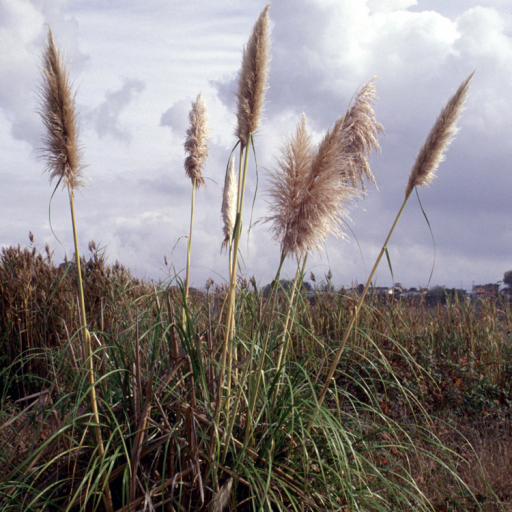
Plant Overview
Known as the Andean Pampas Grass or Purple Pampas Grass, this towering ornamental is a bit of a "garden villain" in disguise. While its shimmering, feathery plumes look like they belong in a high-end floral arrangement, this South American native is a fierce competitor. It is famous for its aggressive colonizing nature and its ability to transform from a decorative accent into a dominant landscape force overnight.
🔍 How to Identify
- 🌾 The Plumes: It produces tall, dense stalks topped with feathery, pyramid-shaped panicles. These start as a striking deep purple or dusty pink before fading to a tan-silver as they age.
- 🌱 Massive Tussocks: The plant forms huge, fountain-like clumps of narrow, arching leaves. These "tussocks" can reach heights of nearly 10 feet, creating a massive footprint in the garden.
- 🔪 Saw-Toothed Leaves: If you run your hand along a leaf, you’ll feel why it’s respected; the leaf margins are incredibly sharp and serrated, easily capable of drawing blood.
🏡 In Your Garden
- 🚜 Invasive Powerhouse: In many regions, particularly California, Hawaii, and New Zealand, this plant is considered a noxious weed. It loves disturbed soil and can quickly crowd out native species if not strictly managed.
- 🚿 Drought Warrior: It is exceptionally hardy, thriving in poor soil and coastal salt spray with almost no water. This resilience makes it difficult to remove once its deep, stubborn root system has been established.
⚠️ Safety & Toxicity
- 🚫 Physical Hazard: The plant is not chemically toxic to pets or humans, but it is physically dangerous. The "razor" leaves can cause deep cuts to curious children or pets.
- 🧤 Protective Gear: Always wear heavy leather gloves and long sleeves when pruning or handling this grass to avoid "pampas cuts."
- 🌬️ Allergy Alert: During its blooming season, the sheer volume of seeds and fluff released can be a significant irritant for those with respiratory sensitivities or hay fever.
✨ Fun Fact
- ✨ The Lone Mother: Cortaderia jubata is a master of "apomixis." This means it produces viable seeds without any pollination or male plants required. Every single plant is a female "clone" of its mother, capable of releasing millions of seeds that are ready to grow the moment they hit the dirt!

Detailed Care Instructions
| Color | Pink To Purple Tufts |
| Soil Ph | Tolerant Of Most Soils |
| Humidity | Normal |
| Invasive | Weed |
| Lighting | Full Sun |
| Toxicity | Poisonous |
| Soil Type | Rocky, Clay, Sandy, Moist |
| Bloom Time | Color Appears In Summer |
| Difficulty | Medium |
| Plant Type | Herbaceous Perennial |
| Hibernation | Cold Period |
| Mature Size | Up To 20 Feet |
| Native Area | South America |
| Temperature | Min 22°C |
| Sun Exposure | Full Sun |
| Hardiness Zones | 7-11 |
To grow Cortaderia jubata, also known as pampas grass, you can follow these steps:
- Choose the right location: Pampas grass requires a sunny spot with well-draining soil. The plant can tolerate a variety of soil types but prefers slightly acidic to mildly alkaline soils.
- Prepare the soil: Before planting, prepare the soil by loosening it and removing any weeds or grass. You can also mix in some compost or well-rotted manure to improve soil fertility.
- Planting: Dig a hole that is slightly wider and deeper than the plant's root ball. Place the plant in the hole, making sure the crown (where the roots meet the shoots) is at ground level. Fill the hole with soil, gently firming it around the plant.
- Watering: Water the plant thoroughly after planting and keep the soil evenly moist in the beginning. Once established, pampas grass is drought-tolerant and requires less frequent watering.
- Mulching: Mulch around the base of the plant to help conserve moisture, suppress weed growth, and protect the roots during extreme temperatures. Use organic mulch such as straw or wood chips.
- Pruning: In early spring, before new growth starts, prune the old, dead foliage down to about 6-12 inches above the ground. Be cautious while handling the blades, as the edges can cause cuts.
- Fertilizing: Pampas grass is generally low-maintenance and doesn't require much fertilization. However, applying a balanced, slow-release fertilizer in spring can help promote healthy growth.
- Controlling spread: Pampas grass can be invasive, so consider planting it in a large container or using a barrier in the ground to restrict its spread. Regularly remove any volunteer seedlings to prevent them from establishing elsewhere.
- Winter protection (optional): If you live in a cold climate, you can protect the plant during harsh winters by loosely wrapping the foliage with burlap or tying them together. This helps prevent damage from freezing temperatures and snow.
Remember to check your local regulations before planting pampas grass, as it is considered invasive in some regions.

Place in a window with dappled sun or a spot in the middle of a room. Or directly in a window facing west or east.

When it comes to watering this plant, it is essential to consider the weather and soil conditions. It thrives in moist and well-drained soil. The best way to water it is by providing a deep watering session once a week. This means that you need to water it slowly and deeply to allow the water to penetrate into the soil. Overwatering can lead to root rot, so it is crucial to allow the soil to almost dry out before watering it again. If you notice signs of wilting or the leaves turning yellow, it is an indication that the plant needs more water. Additionally, it is advisable to water the plant early in the morning or late in the evening to avoid excessive evaporation of water due to high temperatures during the day.
- In early spring, prepare the soil around the base of the plant by removing any debris or weeds.
- Use a slow-release fertilizer with a balanced ratio of nitrogen, phosphorus, and potassium, following the manufacturer's instructions for the appropriate amount and frequency of application.
- Spread the fertilizer evenly on the soil surface and work it into the top layer of soil using a garden fork or cultivator.
- Water the plant thoroughly after fertilizing to help the nutrients penetrate the soil.
- Repeat the fertilizing process every four to six weeks during the growing season, but avoid fertilizing during the winter months.
When choosing a soil for the Cortaderia Jubata plant, it is important to consider its natural habitat and the type of nutrients it requires. The soil should be well-draining and slightly acidic, with a pH level of around 5.5 to 6.5. The plant prefers a soil that is rich in organic matter, such as compost or leaf mold, which will help to retain moisture and promote healthy growth. It is also important to avoid heavy soils that may become waterlogged, as this can lead to root rot and other problems. When planting the Cortaderia Jubata, be sure to prepare the soil by loosening it up and adding any necessary amendments before placing the plant in the hole.
To propagate this plant, you can collect seeds from mature plants or take stem cuttings in the spring or early summer. For seed propagation, sow the seeds in a seed tray filled with a well-drained potting soil mix and cover with a thin layer of soil. Water regularly and maintain a temperature of 60-70°F until germination occurs. For stem cutting propagation, select a healthy branch and cut it about 6 inches from the tip. Remove the leaves from the bottom half of the cutting and dip the end in rooting hormone. Plant the cutting in a pot filled with a well-draining potting mix and keep it moist until roots develop. Once the new plant is established, it can be transplanted into the garden or a larger pot.








