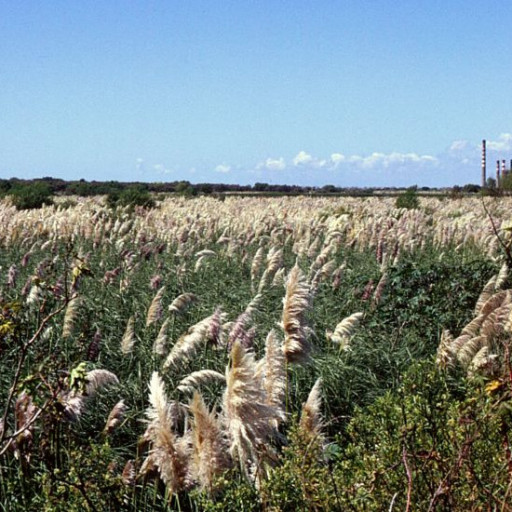
Plant Overview
Known as the "Pampas Grass," this dramatic South American native is the undisputed queen of garden textures. With its towering, feathery plumes that catch the sunlight, it has been a staple of landscape design and boho-chic interior decor for decades. While it looks soft and cloud-like from a distance, this grass is a rugged survivor capable of anchoring a landscape with its massive, fountain-like silhouette.
🔍 How to Identify
- 🌾 The Plumes: Large, silky panicles that can reach up to 3 feet in length. They typically appear in late summer in shades of creamy white, silver, or even soft pink.
- 🗡️ The Foliage: Deep green, narrow leaves that arch gracefully outward. The leaves are incredibly long and have a distinctively rough, "saw-toothed" texture.
- 📏 The Growth Habit: It forms massive, dense clumps (tussocks) that can explode to 10 feet in height and 6 feet in width, making it a formidable presence in any yard.
🏡 In Your Garden
- ✂️ The Annual Haircut: To keep it looking its best, Pampas Grass requires a heavy pruning in late winter or early spring. Cutting the entire clump back to about 12 inches allows fresh, vibrant green growth to emerge without being choked by old, brown foliage.
- 💨 Wind & Salt Resilience: It is a champion of coastal gardening. It stands up beautifully to salt spray and high winds, which is why you’ll often see it lining beach properties or acting as a living windbreak.
- 🌍 Invasive Awareness: Because it produces millions of wind-borne seeds, it is considered an invasive species in certain regions like California, Hawaii, and parts of Australia. Always check if the "sterile" varieties are recommended for your specific area.
⚠️ Safety & Toxicity
- ⚔️ Physical Hazard: The primary danger of Pampas Grass is physical. The leaf edges are lined with microscopic, razor-sharp serrations. Handling the plant without long sleeves and heavy-duty gloves often results in painful "grass cuts" that can easily become irritated.
- 🐾 Pets & Children: While the plant is generally considered non-toxic if ingested in small amounts, the sharp leaves pose a risk of internal and external cuts. It is best kept away from high-traffic play areas for dogs and kids.
✨ Fun Fact
In the 1970s and 80s in the United Kingdom, a persistent urban legend claimed that planting Pampas Grass in your front garden was a secret "coded signal" to neighbors that the homeowners were practitioners of swinging! While just a myth, it gave the plant a cheeky reputation for years.

Detailed Care Instructions
| Color | Pink, Yellow, White |
| Soil Ph | Acidic, Neutral |
| Humidity | Normal |
| Invasive | Weed |
| Lighting | Part Sun |
| Toxicity | Poisonous |
| Soil Type | Loamy, Moist But Well-Drained |
| Bloom Time | Summer, Fall |
| Difficulty | Medium |
| Plant Type | Herbaceous Perennial |
| Mature Size | 5-10 Ft. Tall, 5-10 Ft. Wide |
| Native Area | South America |
| Temperature | 20°C - 30°C |
| Sun Exposure | Full, Partial |
| Hardiness Zones | 7-11 |
To grow Cortaderia Selloana, also known as Pampas grass, you can follow these steps:
- Climate and location: Pampas grass thrives in temperate to subtropical climates. It prefers full sun exposure and well-draining soil.
- Soil preparation: Before planting, prepare the soil by removing any weeds, rocks, or debris. Loosen the soil and mix in organic matter, such as compost, to improve drainage and fertility.
- Planting: Pampas grass can be grown from seed or by dividing mature plants. If using seeds, sow them in early spring, covering them lightly with soil. For divisions, dig up established clumps and separate them into smaller sections, making sure each section has root fibers.
- Spacing: Depending on the variety, leave about 6 to 8 feet of space between each plant to allow for their large size when fully grown.
- Watering: Water the newly planted grass thoroughly and keep the soil evenly moist until the plant is established. Once established, pampas grass is relatively drought-tolerant and typically only requires occasional watering during dry spells.
- Pruning: In late winter or early spring, cut back the previous year's growth to a height of around 8 to 12 inches. Remove any dead or damaged foliage. This will rejuvenate the plant and encourage new growth.
- Fertilizing: Pampas grass generally does not require much fertilization. However, if you want to encourage vigorous growth, you can apply a slow-release balanced fertilizer in the spring.
- Maintenance: Pampas grass is a low-maintenance plant. Regularly remove dead foliage and flower stalks to keep the plant looking neat. Be cautious when handling the grass, as its leaves can be sharp and cut skin.
- Pests and diseases: Pampas grass is relatively resistant to pests and diseases. However, occasionally it may get infested with aphids or grasshoppers. Monitor the plant regularly and treat any issues promptly with appropriate insecticides, if necessary.
Remember that pampas grass can spread rapidly, so plan accordingly and provide enough space for its growth. Additionally, in some areas, it is considered an invasive species, so check if it is suitable for your location to prevent it from becoming a problem.

Place in a window with dappled sun or a spot in the middle of a room. Or directly in a window facing west or east.

To water this plant, it is important to take note of the soil moisture. The plant prefers consistently moist soil but does not like being waterlogged. It is important to water deeply once a week during the growing season, ensuring that the soil is moistened to a depth of at least 6 inches. Avoid watering the foliage as this can lead to fungal diseases. During the winter months, it is important to water less frequently but still ensure the soil does not dry out completely.
To fertilize this plant, use a balanced fertilizer with equal amounts of nitrogen, phosphorus, and potassium. Apply the fertilizer in early spring, before the growing season starts. Use a granular fertilizer and apply it according to the instructions on the label. Water the plant thoroughly after applying the fertilizer to help it absorb the nutrients. Do not over-fertilize, as this can lead to excessive growth and weaken the plant over time.
The soil for Cortaderia Selloana should be well-draining and nutrient-rich, with a pH level between 6 and 7. The ideal mixture would consist of one part loam, one part sand, and one part compost or well-rotted manure. Organic matter should be added to the soil regularly to maintain moisture and promote healthy growth. Additionally, the soil should be slightly moist but not waterlogged, and it should be kept consistently moist throughout the growing season. It is also recommended to plant the Cortaderia Selloana in an area with full sunlight exposure.
Cortaderia Selloana is a perennial plant that can be propagated by division. To do this, take a sharp knife or spade and carefully divide the plant's roots and crown. It is important to ensure that each divided section has a healthy root system and a sufficient amount of foliage, as this will increase the likelihood of successful growth.
The best time to propagate Cortaderia Selloana is in the early spring when new growth is just starting to form. Once the plant has been divided, it can be transplanted into a new location that has well-draining soil and receives full sun exposure.
Propagation by seed is also possible, but this method can be more challenging and time-consuming. To propagate by seed, collect the plant's seeds when they have fully matured and sow them in a tray or pot filled with well-draining soil. It is recommended to keep the soil consistently moist until the seeds have germinated, which can take up to several weeks. Once the seedlings have developed a few leaves, they can be transplanted into larger containers or directly into the ground.
Regardless of the propagation method used, it is important to regularly water, fertilize, and prune Cortaderia Selloana to ensure healthy growth.
Common pests of the pampas-grass include Thrips. Make a habit of checking your pampas-grass frequently for pests so that any infestations can be caught and managed early.








