Plant Overview
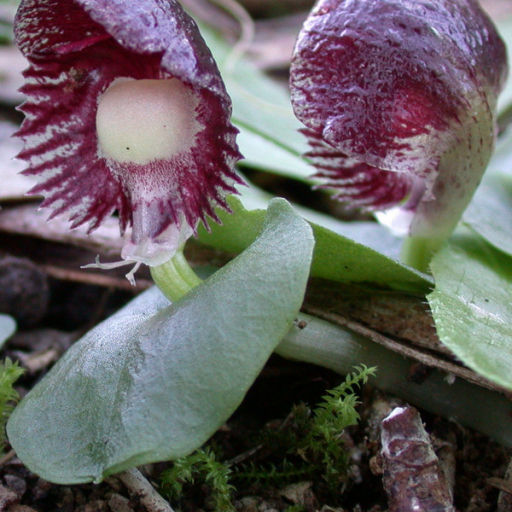
Known as the Stately Helmet Orchid, this tiny terrestrial marvel is a hidden gem of the Australian bush. Often found hugging the mossy floor of damp forests, it looks like a miniature purple helmet lost in a fairy garden. Its species name, diemenicus, pays homage to Tasmania’s historical name, Van Diemen’s Land, where these shy beauties are frequently spotted.
🔍 How to Identify
- 🍃 Single Heart-Leaf: It produces a solitary, ground-hugging leaf that is broadly heart-shaped, often appearing silvery-green on the underside.
- 🪖 The Helmet: The flower is dominated by a large "dorsal sepal" that curves forward like a protective hood or helmet, shielding the inner parts of the bloom.
- 🎨 Intricate Veining: The flower is typically a deep reddish-purple with a translucent white center, featuring delicate "teeth" or fringes along the edge of the labellum (lip).
🏡 In Your Garden
- 🍄 Fungal Friendships: This orchid is notoriously difficult to grow at home because it relies on a complex symbiotic relationship with specific soil fungi to survive and bloom.
- 💧 Cool & Damp: In the wild, it thrives in high-humidity microclimates, often tucked into mossy banks or under the shade of tree ferns where the soil never fully dries out.
- 🌱 Don't Disturb: It has a very sensitive tuberous root system; even slight compaction of the soil or moving the plant can cause it to decline rapidly.
⚠️ Safety & Toxicity
- ✅ Safe Status: The Stately Helmet Orchid is generally considered non-toxic to humans and common household pets.
- 🚫 Look, Don't Touch: While safe to handle, these plants are highly sensitive to skin oils and physical damage. Furthermore, many wild populations are protected by law—never "poach" or move them from their natural habitat.
✨ Fun Fact
The Stately Helmet Orchid is a master of deception! It emits a faint scent of decaying organic matter to trick tiny fungus gnats into thinking it's a mushroom, leading them inside the "helmet" to inadvertently act as its personal delivery service for pollen.

Detailed Care Instructions
To successfully grow Corybas Diemenicus plants, also known as the Veined Helmet Orchid, follow these guidelines:
- Temperature: These plants prefer cool to moderate temperatures, typically ranging between 50-75°F (10-24°C). They thrive in slightly cooler temperatures at night.
- Light: Corybas Diemenicus needs bright, indirect light but not direct sunlight. Place them near a window with filtered light or use artificial grow lights to provide adequate lighting.
- Humidity: They require high humidity levels. You can increase humidity by placing the pot on a tray filled with water and pebbles, without allowing the pot to directly touch the water. Regular misting also helps maintain humidity.
- Watering: Do not let the orchid dry out completely because it prefers consistently damp soil. Water the plant regularly, ensuring the potting mix remains slightly moist but not waterlogged. Using rainwater or distilled water is preferred over tap water due to the orchid's sensitivity to minerals and chemicals.
- Potting mix: Use a well-draining potting mix suitable for orchids. A mixture of sphagnum moss, perlite, and bark chips can be ideal. Avoid using regular potting soil as it retains too much moisture and can cause root rot.
- Fertilizer: Feed your Corybas Diemenicus with a balanced orchid fertilizer diluted to half the strength recommended on the package. Apply it every 2-4 weeks during the growing season (spring to fall). Reduce or stop fertilizer during the dormant period (winter).
- Dormancy: These orchids typically enter a dormant period during winter. Reduce watering and let the plant rest in cooler temperatures (around 50°F or 10°C). New growth will emerge in spring.
- Repotting: Repot the orchid every 2-3 years or when the pot becomes overcrowded. Wait until the dormant period ends or new growth begins before repotting. Handle the plant carefully as the delicate roots are sensitive to disturbance.
- Pest control: Watch out for common orchid pests like aphids, mealybugs, and spider mites. Regularly check the leaves, stems, and roots for any signs of infestation. If detected, treat the plant with appropriate methods or organic insecticides.
- Patience: Growing Corybas Diemenicus can be challenging due to its specific requirements. Be patient and observe the plant closely to understand its needs and adjust conditions accordingly.
Remember that orchid care can be highly individualized, and different conditions may be necessary based on your specific environment and plant's needs.

Place in a dark room with little light, like a dark bedroom or a spot far away from a window or directly in a north-facing window.

Corybas Diemenicus plant requires frequent watering to maintain its optimum growth. It is recommended to provide the plant with adequate water to keep the soil moist at all times but ensure not to overwater it. Overwatering can lead to root rot and other fungal diseases that can be detrimental to the plant's health.
Watering should be done in the early morning or late evening to avoid water evaporation due to heat. The ideal watering method is to pour water gently at the base of the plant, ensuring not to wet the foliage. The plant should be watered with room temperature water, as cold or hot water can shock the delicate roots of the plant and cause damage.
One can keep a check on the soil moisture by sticking a finger in the soil and checking for dryness. If the soil feels dry, then it's time to water the plant, but if the soil is moist, then it can wait for a few more days before watering again.
Proper watering is essential for the healthy growth of the Corybas Diemenicus plant, and one should avoid underwatering or overwatering the plant.
To properly fertilize this plant, use a balanced fertilizer with equal amounts of nitrogen, phosphorus, and potassium. Apply the fertilizer only during the plant's active growth period, typically in the spring or summer months. Follow the manufacturer's instructions for the amount and frequency of fertilizer application. It is important not to over-fertilize this plant as it can cause damage. Always be cautious when handling and applying any fertilizer.
For optimal growth and development, Corybas Diemenicus plants require a well-draining, nutrient-rich soil that is slightly acidic to neutral in pH. A mixture of peat moss, perlite, and sand can create a suitable soil blend. It is important to avoid heavy, clay soils that retain too much moisture and can lead to root rot. Additionally, adding a slow-release fertilizer can provide the necessary nutrients to sustain healthy growth. Overall, a well-draining, slightly acidic to neutral soil and proper fertilization will support the health and vitality of Corybas Diemenicus plants.
To propagate this plant, it is important to select a healthy and mature specimen. The plant can be grown from seed or division.
To grow from seed, collect ripe seed pods when they have turned brown and beginning to split. Remove the seeds from the pods and sow them in a mixture of peat moss and perlite. Cover the seeds with a thin layer of the mixture and keep them moist. Place the pot in a warm area that receives bright, indirect sunlight. Germination can take several weeks or even months, but patience is key.
To propagate by division, carefully remove the plant from its pot and gently tease apart the roots to separate the individual plantlets. Make sure each plantlet has some roots attached. Pot each plantlet into its own pot using a well-draining soil mixture. Water thoroughly and place the pots in a warm, brightly lit area.
It's important to note that corybas diemenicus is a delicate plant that requires specific care. It prefers cool temperatures and high humidity levels, as well as a well-draining soil that is rich in organic matter. Avoid exposing the plant to direct sunlight and keep it away from cold drafts. Water the plant when the top inch of soil is dry, but do not let it sit in standing water.








