Plant Overview
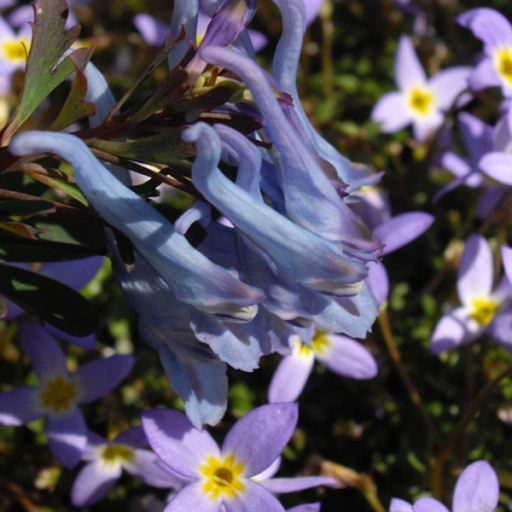
Often called the "Electric Blue Corydalis," this Chinese native looks like a fragment of the summer sky has fallen into the shade of the forest floor. Originating from the high-altitude woodlands of Sichuan, it was a relatively recent "discovery" for Western gardeners in the 1980s. Its neon, crystalline blue hue is so vivid it almost appears to glow in the dim light of a woodland garden.
🔍 How to Identify
- 🌸 The "Dolphin" Flowers: Long, slender, tubular flowers with a distinct curved spur at the back. They hang in clusters and look remarkably like tiny, leaping blue dolphins.
- 🌿 Fern-like Foliage: Delicate, lacy, bipinnate leaves that resemble a fine fern. The foliage is often a soft sea-foam green, though some varieties show a bronzy tint in early spring.
- 🌱 Low Clumping Habit: It stays relatively low to the ground, forming lush, mounded carpets about 10 to 12 inches tall.
🏡 In Your Garden
- 😴 The Summer Vanishing Act: One of the most important things to know is that this plant is "summer dormant." If the thermometer climbs too high, the plant will completely die back to the ground to protect itself. Don't dig it up—it’s just sleeping until the cooler autumn or spring weather returns!
- ☁️ Cool and Constant: It craves "cool feet." It thrives in dappled shade and soil that is rich in organic matter (like leaf mold). While it loves moisture, it requires excellent drainage; it cannot survive in heavy, waterlogged clay.
⚠️ Safety & Toxicity
- 🐾 Toxic to Pets: Like many members of its family, it contains isoquinoline alkaloids. If ingested by dogs, cats, or horses, it can cause trembling, staggering, or gastrointestinal upset.
- 👶 Keep Away from Children: All parts of the plant are considered toxic if eaten. It is best placed in a decorative border where it won't be mistaken for an edible herb.
- 🧤 Skin Sensitivity: The sap can occasionally cause mild skin irritation for those with sensitive skin. Wearing gloves while dividing the clumps is recommended.
✨ Fun Fact
Despite its delicate, lacy appearance, Corydalis flexuosa is a rugged relative of the Poppy family (Papaveraceae). While it shares the family's chemical defenses, it traded the poppy's giant, papery petals for its signature "spurred" nectar tubes designed specifically for long-tongued pollinators.

Detailed Care Instructions

Place in a window with dappled sun or a spot in the middle of a room. Or directly in a window facing west or east.

Some plants require more regular watering than others, which should be done every few days. It's critical to maintain the soil moist all of the time. The water requirements of the same plant placed in pots with varying sizes will differ. Because the water in the smaller pot evaporates faster than the water in the larger pot, it will require more watering. Regardless of pot size, the surface should constantly be maintained moist.
These plant needs regular fertilizing during growing seasons. Fertilizing your plants in dormant state during the winter, might result in scorching or browning of the leaf tips. If mature plants display signs of nutrient insufficiency, fertilizer administration is necessary to restore the plant to its previous state.
You may use All Purpose Plant Food or Flower Fertilizer for your Blue Corydalis








